

observed transports across the WOCE A11 section
(Saunders and King, 1995b) with the corresponding section in the HadCM3 model. She finds
that insufficient transport of Antarctic Bottom
Water in the model leads to an overestimate (by
O(0.1 PW)) of the northward heat transport across
the section. Such detailed comparison against
observations provides valuable guidance to model
development.
Freshwater transports are less well studied in
models and less well constrained by observations
(see Section 2.3.2.6; see also Wijffels, Chapter 6.2).
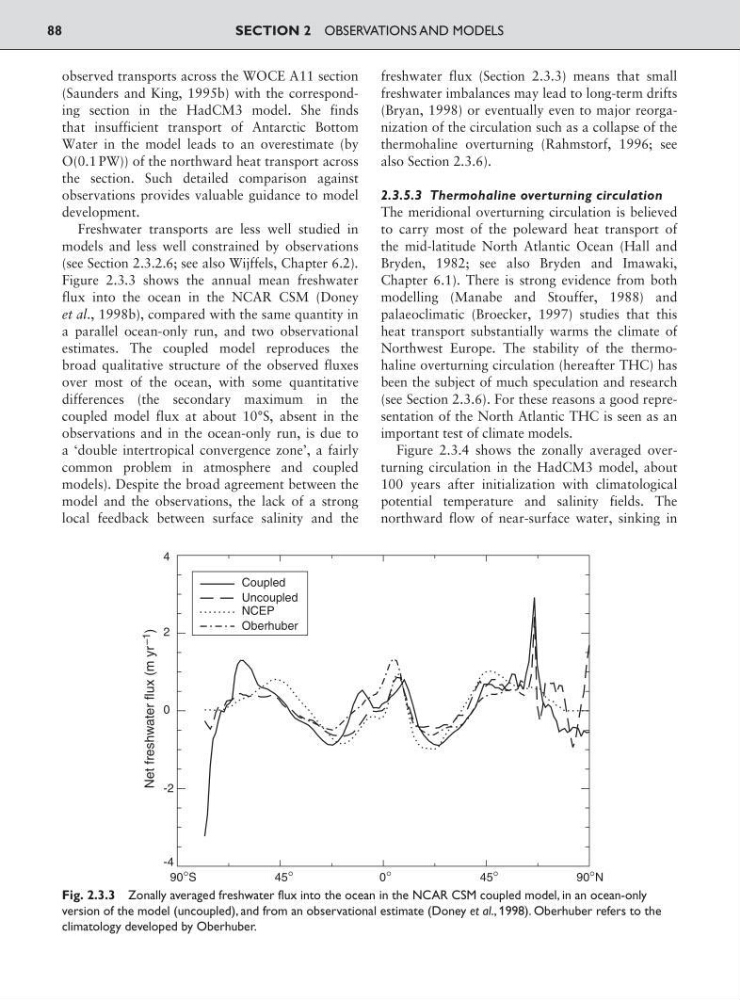
Figure 2.3.3 shows the annual mean freshwater
flux into the ocean in the NCAR CSM (Doney
et al., 1998b), compared with the same quantity in
a parallel ocean-only run, and two observational
estimates. The coupled model reproduces the
broad qualitative structure of the observed fluxes
over most of the ocean, with some quantitative
differences (the secondary maximum in the
coupled model flux at about 10°S, absent in the
observations and in the ocean-only run, is due to
a ‘double intertropical convergence zone’, a fairly
common problem in atmosphere and coupled
models). Despite the broad agreement between the
model and the observations, the lack of a strong
local feedback between surface salinity and the
freshwater flux (Section 2.3.3) means that small
freshwater imbalances may lead to long-term drifts
(Bryan, 1998) or eventually even to major reorganization of the circulation such as a collapse of the
thermohaline overturning (Rahmstorf, 1996; see
also Section 2.3.6).
2.3.5.3 Thermohaline overturning circulation
The meridional overturning circulation is believed
to carry most of the poleward heat transport of
the mid-latitude North Atlantic Ocean (Hall and
Bryden, 1982; see also Bryden and Imawaki,
Chapter 6.1). There is strong evidence from both
modelling (Manabe and Stouffer, 1988) and
palaeoclimatic (Broecker, 1997) studies that this
heat transport substantially warms the climate of
Northwest Europe. The stability of the thermohaline overturning circulation (hereafter THC) has
been the subject of much speculation and research
(see Section 2.3.6). For these reasons a good representation of the North Atlantic THC is seen as an
important test of climate models.
Figure 2.3.4 shows the zonally averaged overturning circulation in the HadCM3 model, about
100 years after initialization with climatological
potential temperature and salinity fields. The
northward flow of near-surface water, sinking in
SECTION 2 OBSERVATIONS AND MODELS
88
Coupled
Uncoupled
NCEP
Oberhuber
4
2
0
-2
-4
Net freshwater flux (m yr –1
)
90°S
4 5 °
0°
45°
90°N
Fig. 2.3.3 Zonally averaged freshwater flux into the ocean in the NCAR CSM coupled model, in an ocean-only
version of the model (uncoupled), and from an observational estimate (Doney et al., 1998). Oberhuber refers to the
climatology developed by Oberhuber.
(Saunders and King, 1995b) with the corresponding section in the HadCM3 model. She finds
that insufficient transport of Antarctic Bottom
Water in the model leads to an overestimate (by
O(0.1 PW)) of the northward heat transport across
the section. Such detailed comparison against
observations provides valuable guidance to model
development.
Freshwater transports are less well studied in
models and less well constrained by observations
(see Section 2.3.2.6; see also Wijffels, Chapter 6.2).
Figure 2.3.3 shows the annual mean freshwater
flux into the ocean in the NCAR CSM (Doney
et al., 1998b), compared with the same quantity in
a parallel ocean-only run, and two observational
estimates. The coupled model reproduces the
broad qualitative structure of the observed fluxes
over most of the ocean, with some quantitative
differences (the secondary maximum in the
coupled model flux at about 10°S, absent in the
observations and in the ocean-only run, is due to
a ‘double intertropical convergence zone’, a fairly
common problem in atmosphere and coupled
models). Despite the broad agreement between the
model and the observations, the lack of a strong
local feedback between surface salinity and the
freshwater flux (Section 2.3.3) means that small
freshwater imbalances may lead to long-term drifts
(Bryan, 1998) or eventually even to major reorganization of the circulation such as a collapse of the
thermohaline overturning (Rahmstorf, 1996; see
also Section 2.3.6).
2.3.5.3 Thermohaline overturning circulation
The meridional overturning circulation is believed
to carry most of the poleward heat transport of
the mid-latitude North Atlantic Ocean (Hall and
Bryden, 1982; see also Bryden and Imawaki,
Chapter 6.1). There is strong evidence from both
modelling (Manabe and Stouffer, 1988) and
palaeoclimatic (Broecker, 1997) studies that this
heat transport substantially warms the climate of
Northwest Europe. The stability of the thermohaline overturning circulation (hereafter THC) has
been the subject of much speculation and research
(see Section 2.3.6). For these reasons a good representation of the North Atlantic THC is seen as an
important test of climate models.
Figure 2.3.4 shows the zonally averaged overturning circulation in the HadCM3 model, about
100 years after initialization with climatological
potential temperature and salinity fields. The
northward flow of near-surface water, sinking in
SECTION 2 OBSERVATIONS AND MODELS
88
Coupled
Uncoupled
NCEP
Oberhuber
4
2
0
-2
-4
Net freshwater flux (m yr –1
)
90°S
4 5 °
0°
45°
90°N
Fig. 2.3.3 Zonally averaged freshwater flux into the ocean in the NCAR CSM coupled model, in an ocean-only
version of the model (uncoupled), and from an observational estimate (Doney et al., 1998). Oberhuber refers to the
climatology developed by Oberhuber.