

reservoir on the timescale of glacial–interglacial climate change feasible.
Long Time-scale Phosphorus Cycling, and Links to
Other Biogeochemical Cycles
The biogeochemical cycles of phosphorus and carbon are linked through photosynthetic uptake and
release during respiration. During times of elevated
marine biological productivity, enhanced uptake of
surface water CO 2 by photosynthetic organisms results in increased CO 2 evasion from the atmosphere,
which persists until the supply of the least abundant
nutrient is exhausted. On geological timescales,
phosphorus is likely to function as the limiting nutrient and thus play a role in atmospheric CO 2
regulation by limiting CO 2 drawdown by oceanic
photosynthetic activity. This connection between
nutrients and atmospheric CO 2 could have played a
role in triggering or enhancing the global cooling
that resulted in glacial episodes in the geological
past. It has recently been proposed that tectonics
may play the ultimate role in controlling the exogenic phosphorus mass, resulting in long-term
phosphorus-limited productivity in the ocean. In this
formulation, the balance between subduction of
phosphorus bound up in marine sediments and
underlying crust and creation of new crystalline rock
sets the mass of exogenic phosphorus.
Phosphorus and oxygen cycles are linked through
the redox chemistry of iron. Ferrous iron is unstable
at the Earth’s surface in the presence of oxygen, and
oxidizes to form ferric iron oxyhydroxide precipitates, which are extremely efficient scavengers of
dissolved phosphate. Resupply of phosphate to surface waters where it can fertilize biological productivity is reduced when oceanic bottom waters are
well oxygenated owing to scavenging of phosphate
by ferric oxyhydroxides. In contrast, during times in
Earth’s history when oxygen was not abundant in the
atmosphere (Precambrian), and when expanses of
the deep ocean were anoxic (e.g., Cretaceous), the
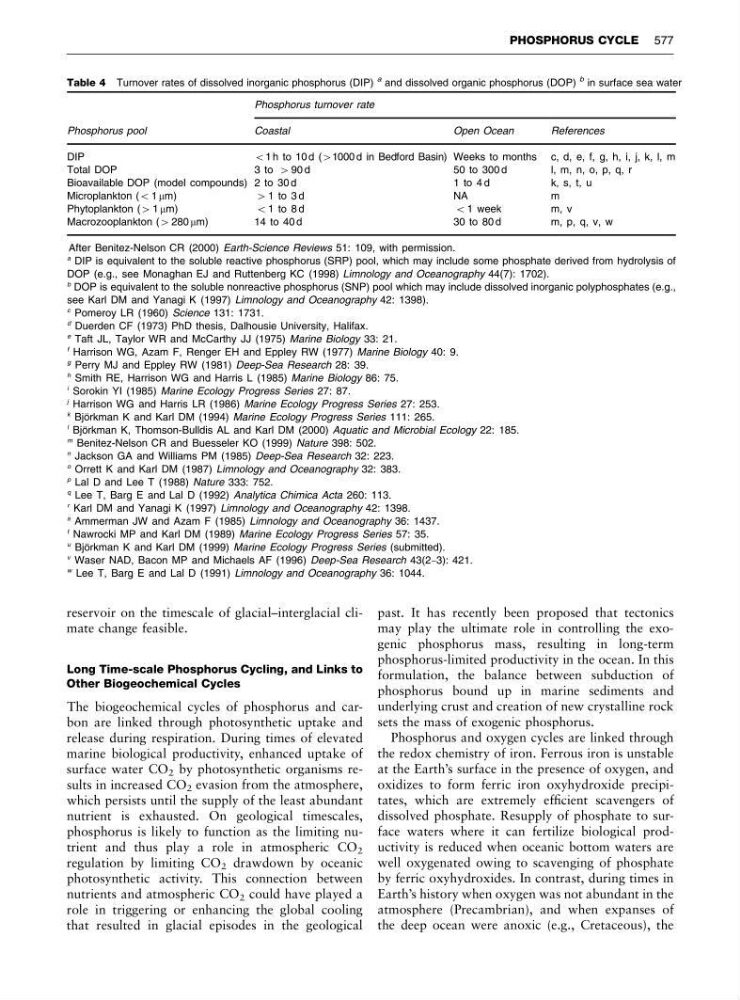
Table 4 Turnover rates of dissolved inorganic phosphorus (DIP)
a and dissolved organic phosphorus (DOP)
b in surface sea water
PHOSPHORUS CYCLE 577