

For example, some plants can increase root volume
and surface area to optimize uptake potential. Alternatively, plant roots and/or associated fungi can
produce chelating compounds that solubilize ferric
iron and calcium-bound phosphorus, enzymes and/or
acids that solubilize phosphate in the root vicinity.
Plants also minimize phosphorus loss by resorbing
much of their phosphorus prior to litterfall, and by
efficient recycling from fallen litter. In extremely
unfertile soils (e.g., in tropical rain forests) phosphorus recycling is so efficient that topsoil contains
virtually no phosphorus; it is all tied up in biomass.
Systematic changes in the total amount and chemical form of phosphorus occur during soil
development. In initial stages, phosphorus is present
mainly as primary minerals such as apatite. In midstage soils, the reservoir of primary apatite is
diminished; less-soluble secondary minerals and organic phosphorus make up an increasing fraction of
soil phosphorus. Late in soil development, phosphorus is partitioned mainly between refractory
minerals and organic phosphorus (Figure 2).
Transport of Phosphorus from Continents to the
Ocean
Phosphorus is transferred from the continental to the
oceanic reservoir primarily by rivers (F 24 ). Deposition
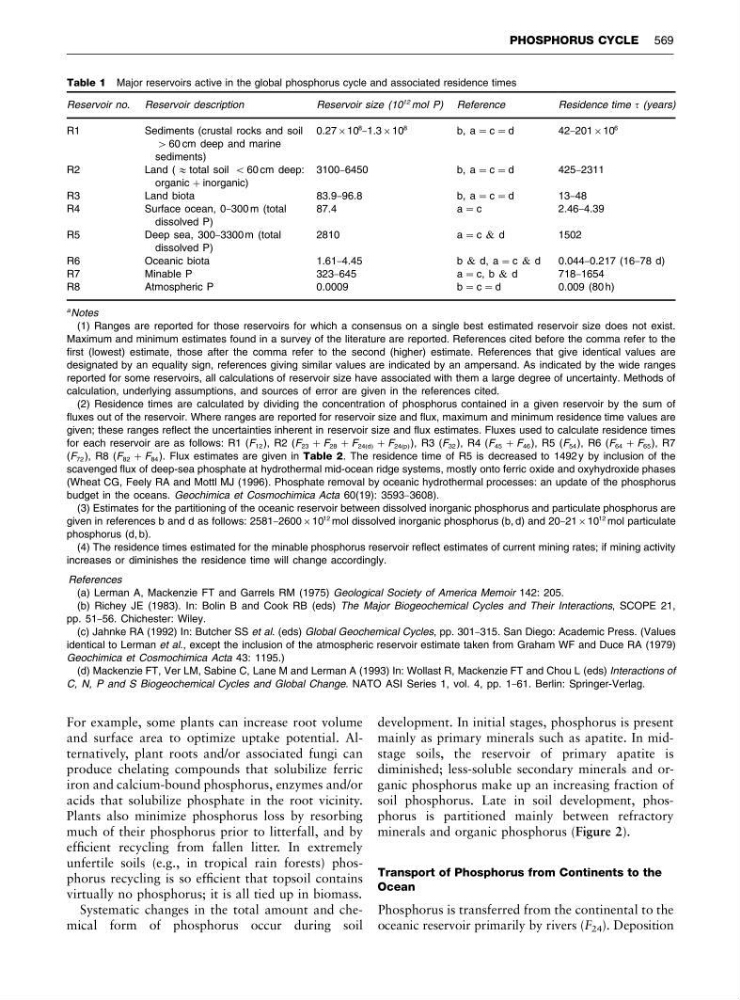
Table 1 Major reservoirs active in the global phosphorus cycle and associated residence times
PHOSPHORUS CYCLE 569
and surface area to optimize uptake potential. Alternatively, plant roots and/or associated fungi can
produce chelating compounds that solubilize ferric
iron and calcium-bound phosphorus, enzymes and/or
acids that solubilize phosphate in the root vicinity.
Plants also minimize phosphorus loss by resorbing
much of their phosphorus prior to litterfall, and by
efficient recycling from fallen litter. In extremely
unfertile soils (e.g., in tropical rain forests) phosphorus recycling is so efficient that topsoil contains
virtually no phosphorus; it is all tied up in biomass.
Systematic changes in the total amount and chemical form of phosphorus occur during soil
development. In initial stages, phosphorus is present
mainly as primary minerals such as apatite. In midstage soils, the reservoir of primary apatite is
diminished; less-soluble secondary minerals and organic phosphorus make up an increasing fraction of
soil phosphorus. Late in soil development, phosphorus is partitioned mainly between refractory
minerals and organic phosphorus (Figure 2).
Transport of Phosphorus from Continents to the
Ocean
Phosphorus is transferred from the continental to the
oceanic reservoir primarily by rivers (F 24 ). Deposition
Table 1 Major reservoirs active in the global phosphorus cycle and associated residence times
PHOSPHORUS CYCLE 569