

around the metabolic activities of selected microorganisms and it is reasonable to refer to it as the
microbial nitrogen cycle because it depends on bacteria (Table 1). During most of these nitrogen
transformations there is a gain or loss of electrons
and, therefore, a change in the oxidation state of
nitrogen from the most oxidized form, NO 3
À ( þ 5),
to the most reduced form, NH 4
þ ( À 3). Transformations in the nitrogen cycle are generally either
energy-requiring (reductions) or energy-yielding
(oxidations). The gaseous forms of nitrogen in the
surface ocean can freely exchange with the
atmosphere, so there is a constant flux of nitrogen
between these two pools.
The natural, stepwise process for the regeneration
of NO 3
À from PON can be reproduced in a simple
‘decomposition experiment’ in an enclosed bottle of
sea water (Figure 2). During a 3-month incubation
period, the nitrogen contained in particulate matter is
first released as NH 4
þ (the process of ammonification), then transformed to NO 2
À (first step of nitrification), and finally, and quantitatively, to NO 3
À (the
second step of nitrification). These transformations
are almost exclusively a result of the metabolic
_ 3
_ 2
_ 1
0
1
2
3
4
5
Oxidation state of nitrogen
NH 3
N 2
N O
2
NO
NO 2
−
NO 3
−
NH 4
+
Organic N
Export
Import
Ammonium oxidation
NITRIFICATION
Nitrite
oxidation
Ammonification
Biosynthesis N i t r o g e n
f i x a t i o n
NO reduction
2
−
DENITRIFICATION
NO reduction
3
−
Ocean
Atmosphere
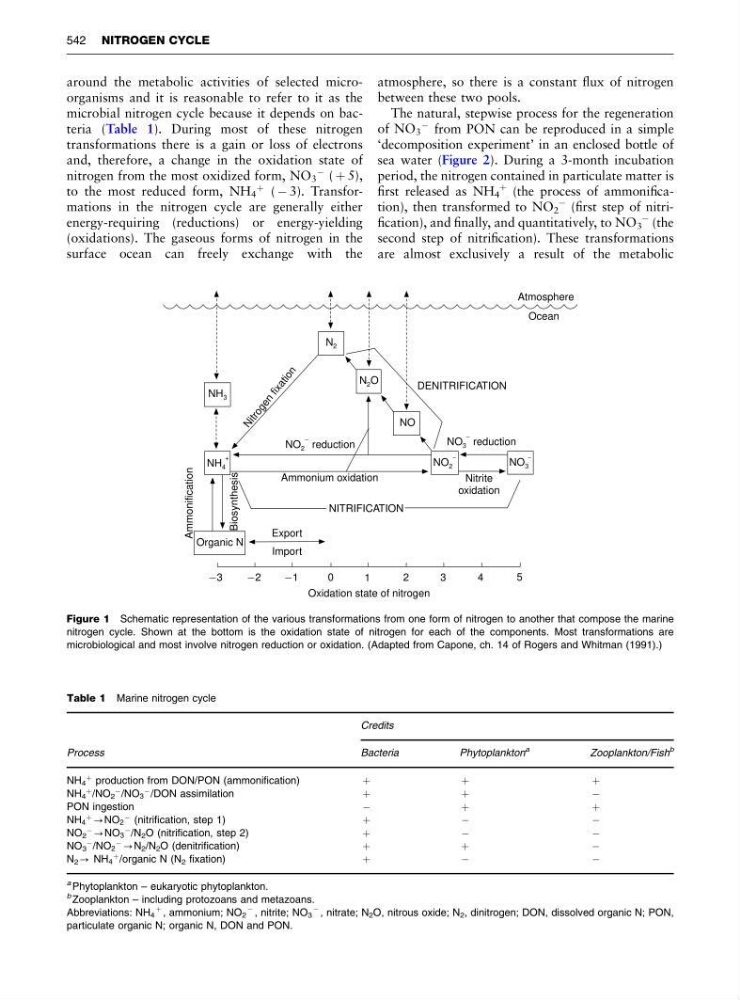
Figure 1 Schematic representation of the various transformations from one form of nitrogen to another that compose the marine
nitrogen cycle. Shown at the bottom is the oxidation state of nitrogen for each of the components. Most transformations are
microbiological and most involve nitrogen reduction or oxidation. (Adapted from Capone, ch. 14 of Rogers and Whitman (1991).)
Table 1 Marine nitrogen cycle
Credits
Process
Bacteria
Phytoplankton
a
Zooplankton/Fish
b
NH 4
þ production from DON/PON (ammonification)
þ
þ
þ
NH 4
þ /NO 2
À /NO 3
À /DON assimilation
þ
þ
À
PON ingestion
À
þ
þ
NH 4
þ -NO 2
À (nitrification, step 1)
þ
À
À
NO 2
À -NO 3
À /N 2 O (nitrification, step 2)
þ
À
À
NO 3
À /NO 2
À -N 2 /N 2 O (denitrification)
þ
þ
À
N 2 - NH 4
þ /organic N (N 2 fixation)
þ
À
À
a Phytoplankton – eukaryotic phytoplankton.
b Zooplankton – including protozoans and metazoans.
Abbreviations: NH 4
þ , ammonium; NO 2
À , nitrite; NO 3
À , nitrate; N 2 O, nitrous oxide; N 2 , dinitrogen; DON, dissolved organic N; PON,
particulate organic N; organic N, DON and PON.
542 NITROGEN CYCLE
microbial nitrogen cycle because it depends on bacteria (Table 1). During most of these nitrogen
transformations there is a gain or loss of electrons
and, therefore, a change in the oxidation state of
nitrogen from the most oxidized form, NO 3
À ( þ 5),
to the most reduced form, NH 4
þ ( À 3). Transformations in the nitrogen cycle are generally either
energy-requiring (reductions) or energy-yielding
(oxidations). The gaseous forms of nitrogen in the
surface ocean can freely exchange with the
atmosphere, so there is a constant flux of nitrogen
between these two pools.
The natural, stepwise process for the regeneration
of NO 3
À from PON can be reproduced in a simple
‘decomposition experiment’ in an enclosed bottle of
sea water (Figure 2). During a 3-month incubation
period, the nitrogen contained in particulate matter is
first released as NH 4
þ (the process of ammonification), then transformed to NO 2
À (first step of nitrification), and finally, and quantitatively, to NO 3
À (the
second step of nitrification). These transformations
are almost exclusively a result of the metabolic
_ 3
_ 2
_ 1
0
1
2
3
4
5
Oxidation state of nitrogen
NH 3
N 2
N O
2
NO
NO 2
−
NO 3
−
NH 4
+
Organic N
Export
Import
Ammonium oxidation
NITRIFICATION
Nitrite
oxidation
Ammonification
Biosynthesis N i t r o g e n
f i x a t i o n
NO reduction
2
−
DENITRIFICATION
NO reduction
3
−
Ocean
Atmosphere
Figure 1 Schematic representation of the various transformations from one form of nitrogen to another that compose the marine
nitrogen cycle. Shown at the bottom is the oxidation state of nitrogen for each of the components. Most transformations are
microbiological and most involve nitrogen reduction or oxidation. (Adapted from Capone, ch. 14 of Rogers and Whitman (1991).)
Table 1 Marine nitrogen cycle
Credits
Process
Bacteria
Phytoplankton
a
Zooplankton/Fish
b
NH 4
þ production from DON/PON (ammonification)
þ
þ
þ
NH 4
þ /NO 2
À /NO 3
À /DON assimilation
þ
þ
À
PON ingestion
À
þ
þ
NH 4
þ -NO 2
À (nitrification, step 1)
þ
À
À
NO 2
À -NO 3
À /N 2 O (nitrification, step 2)
þ
À
À
NO 3
À /NO 2
À -N 2 /N 2 O (denitrification)
þ
þ
À
N 2 - NH 4
þ /organic N (N 2 fixation)
þ
À
À
a Phytoplankton – eukaryotic phytoplankton.
b Zooplankton – including protozoans and metazoans.
Abbreviations: NH 4
þ , ammonium; NO 2
À , nitrite; NO 3
À , nitrate; N 2 O, nitrous oxide; N 2 , dinitrogen; DON, dissolved organic N; PON,
particulate organic N; organic N, DON and PON.
542 NITROGEN CYCLE