

sediments and their role in creating sedimentary environments that are important in coastal carbon,
nutrient, and contaminant cycles. Therefore, a single
type of coastal sediment – muddy, impermeable
sediments underlying oxic bottom water – is discussed. Other sediment types are important: for example, permeable, sandy sediments are widespread,
and sediments underlying permanently or seasonally
anoxic bottom water can be important. In some
high-energy areas, the effects of sediment resuspension can dominate sediment–water-column exchange. Although this article emphasizes sediments
as sites of respiration, primary production at the
surface of sediments in shallow waters can be important. There are important differences between
sedimentary environments that determine their involvement in coastal biogeochemical processes.
Nonetheless, similar chemical processes occur in all
of these environments. The goal of this article is to
illustrate these fundamental chemical processes, so
that their role in a range of sedimentary environments can be examined.
Oxidation/Reduction Reactions
The distinctive chemical environment of estuarine and
coastal sediments is determined to a large extent by
electron transfer, or ‘redox’ reactions, in which a
chemical species with a greater affinity for electrons
accepts these carriers of negative charge from a species with a lesser affinity. In the process, energy is
released. Although these reactions are often slow, they
are catalyzed by organisms – in particular, microbes –
that can harness the released energy. To understand
the chemical environment of sediments, it is necessary
to know which redox reactions will occur.
Oxidants and Reductants
In chemical terms, we can consider some constituents
of sediments as oxidants, capable of accepting electrons under conditions extant in the sediments, and
reductants, capable of donating them. The primary
sources of reductants are the organic matter, formed
by production in the water column or on the sediment surface or by anthropogenic activities, that
reaches the sediments, and the reduced products of
sedimentary reactions. Oxidants diffuse from bottom
water (O 2 , NO 3
À , and SO 4
2À ), arrive to the sediments with the particulate flux (Fe and Mn oxides),
or are formed by sedimentary processes (NO 3
À and
authigenic Fe and Mn oxides). The principal electron
donors and acceptors are listed in Table 1.
pe: A Measure of the Affinity to Accept Electrons
Free electrons do not exist in aqueous solution.
Nonetheless, since each electron acceptor (or donor)
Particulate
inputs
Particulate
Dissolved
Accumulating
sediments
Solute
exchanges
Interface
Mixing
Mixing
Chemical
transformations
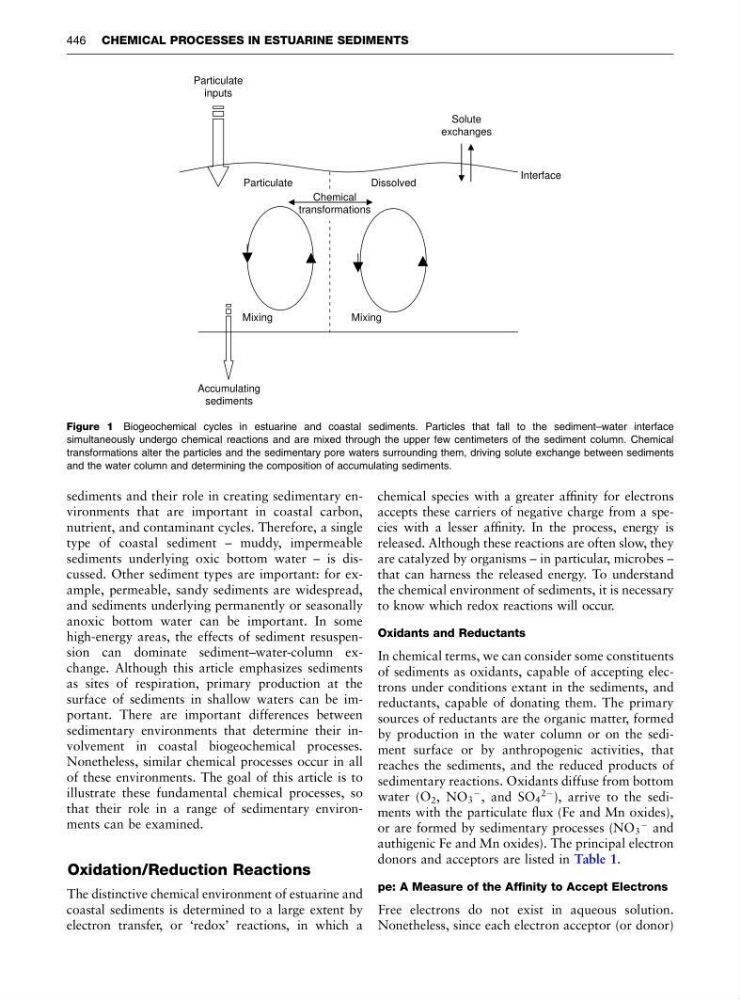
Figure 1 Biogeochemical cycles in estuarine and coastal sediments. Particles that fall to the sediment–water interface
simultaneously undergo chemical reactions and are mixed through the upper few centimeters of the sediment column. Chemical
transformations alter the particles and the sedimentary pore waters surrounding them, driving solute exchange between sediments
and the water column and determining the composition of accumulating sediments.
446 CHEMICAL PROCESSES IN ESTUARINE SEDIMENTS
nutrient, and contaminant cycles. Therefore, a single
type of coastal sediment – muddy, impermeable
sediments underlying oxic bottom water – is discussed. Other sediment types are important: for example, permeable, sandy sediments are widespread,
and sediments underlying permanently or seasonally
anoxic bottom water can be important. In some
high-energy areas, the effects of sediment resuspension can dominate sediment–water-column exchange. Although this article emphasizes sediments
as sites of respiration, primary production at the
surface of sediments in shallow waters can be important. There are important differences between
sedimentary environments that determine their involvement in coastal biogeochemical processes.
Nonetheless, similar chemical processes occur in all
of these environments. The goal of this article is to
illustrate these fundamental chemical processes, so
that their role in a range of sedimentary environments can be examined.
Oxidation/Reduction Reactions
The distinctive chemical environment of estuarine and
coastal sediments is determined to a large extent by
electron transfer, or ‘redox’ reactions, in which a
chemical species with a greater affinity for electrons
accepts these carriers of negative charge from a species with a lesser affinity. In the process, energy is
released. Although these reactions are often slow, they
are catalyzed by organisms – in particular, microbes –
that can harness the released energy. To understand
the chemical environment of sediments, it is necessary
to know which redox reactions will occur.
Oxidants and Reductants
In chemical terms, we can consider some constituents
of sediments as oxidants, capable of accepting electrons under conditions extant in the sediments, and
reductants, capable of donating them. The primary
sources of reductants are the organic matter, formed
by production in the water column or on the sediment surface or by anthropogenic activities, that
reaches the sediments, and the reduced products of
sedimentary reactions. Oxidants diffuse from bottom
water (O 2 , NO 3
À , and SO 4
2À ), arrive to the sediments with the particulate flux (Fe and Mn oxides),
or are formed by sedimentary processes (NO 3
À and
authigenic Fe and Mn oxides). The principal electron
donors and acceptors are listed in Table 1.
pe: A Measure of the Affinity to Accept Electrons
Free electrons do not exist in aqueous solution.
Nonetheless, since each electron acceptor (or donor)
Particulate
inputs
Particulate
Dissolved
Accumulating
sediments
Solute
exchanges
Interface
Mixing
Mixing
Chemical
transformations
Figure 1 Biogeochemical cycles in estuarine and coastal sediments. Particles that fall to the sediment–water interface
simultaneously undergo chemical reactions and are mixed through the upper few centimeters of the sediment column. Chemical
transformations alter the particles and the sedimentary pore waters surrounding them, driving solute exchange between sediments
and the water column and determining the composition of accumulating sediments.
446 CHEMICAL PROCESSES IN ESTUARINE SEDIMENTS