

Southern Oscillation (ENSO)
1
. Several of the longer
Pacific d
18
O coral records reveal that the frequency
of ENSO has changed on decadal timescales over the
past few centuries. Over the last 300 years, the
dominant mode of ENSO recorded by a Gala ´ pagos
coral has been at 4.6 years. However, during that
time period there have been shifts in that mode from
4.6 to 7 years during the 1600s, 3–4.6 years from
1700–1750, and 3.5 years from 1800–1850. These
major shifts in ENSO frequency may indicate major
reorganizations in Pacific climate at various intervals
over time. A 101-year long d
18 O record from Clipperton Atoll reveals a pronounced period of reduced
ENSO frequency from B1925 to 1940 suggesting a
reduced coupling between the eastern and western
Pacific. At Clipperton, decadal timescale variability
represents the largest percentage of the variance in
d
18 O and appears to be related to the processes influencing the Pacific Decadal Oscillation phenomenon (PDO)
2 .
Another component of ENSO variability recovered from coral d
18
O records is the shift in rainfall patterns during El Nin ˜ os associated with: (1) the
migration of the Indonesian Low pressure cell to the
region of the date line and the equator in the western
Pacific, and (2) the northern migration of the intertropical convergence zone (ITCZ) in the eastern Pacific. Eastward migration of the Indonesian Low
results in decreased precipitation in the Indian Ocean
and increased precipitation in the western and central Pacific. These phenomena are reflected in the
d
18 O record of Seychelles and Tarawa Atoll corals,
respectively. Decadal variability in the Seychelles
1
2
3
4
5
6
7
8
9
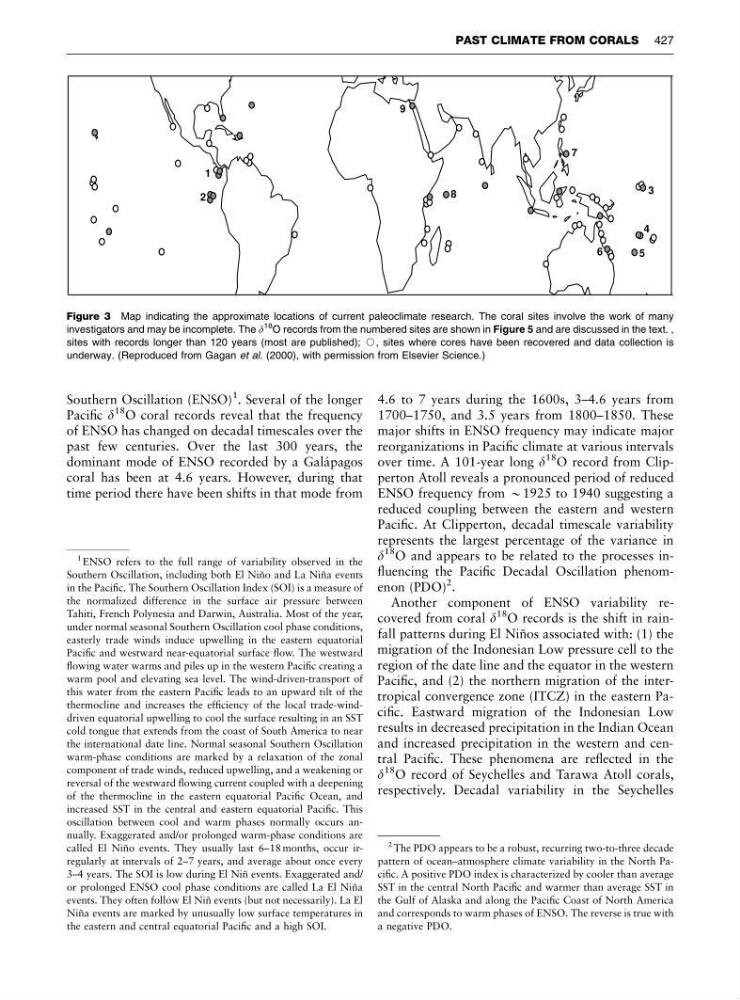
Figure 3 Map indicating the approximate locations of current paleoclimate research. The coral sites involve the work of many
investigators and may be incomplete. The d
18 O records from the numbered sites are shown in Figure 5 and are discussed in the text. ,
sites with records longer than 120 years (most are published); J, sites where cores have been recovered and data collection is
underway. (Reproduced from Gagan et al. (2000), with permission from Elsevier Science.)
1 ENSO refers to the full range of variability observed in the
Southern Oscillation, including both El Nin ˜ o and La Nin ˜ a events
in the Pacific. The Southern Oscillation Index (SOI) is a measure of
the normalized difference in the surface air pressure between
Tahiti, French Polynesia and Darwin, Australia. Most of the year,
under normal seasonal Southern Oscillation cool phase conditions,
easterly trade winds induce upwelling in the eastern equatorial
Pacific and westward near-equatorial surface flow. The westward
flowing water warms and piles up in the western Pacific creating a
warm pool and elevating sea level. The wind-driven-transport of
this water from the eastern Pacific leads to an upward tilt of the
thermocline and increases the efficiency of the local trade-winddriven equatorial upwelling to cool the surface resulting in an SST
cold tongue that extends from the coast of South America to near
the international date line. Normal seasonal Southern Oscillation
warm-phase conditions are marked by a relaxation of the zonal
component of trade winds, reduced upwelling, and a weakening or
reversal of the westward flowing current coupled with a deepening
of the thermocline in the eastern equatorial Pacific Ocean, and
increased SST in the central and eastern equatorial Pacific. This
oscillation between cool and warm phases normally occurs annually. Exaggerated and/or prolonged warm-phase conditions are
called El Nin ˜ o events. They usually last 6–18 months, occur irregularly at intervals of 2–7 years, and average about once every
3–4 years. The SOI is low during El Nin ˜ events. Exaggerated and/
or prolonged ENSO cool phase conditions are called La El Nin ˜ a
events. They often follow El Nin ˜ events (but not necessarily). La El
Nin ˜ a events are marked by unusually low surface temperatures in
the eastern and central equatorial Pacific and a high SOI.
2 The PDO appears to be a robust, recurring two-to-three decade
pattern of ocean–atmosphere climate variability in the North Pacific. A positive PDO index is characterized by cooler than average
SST in the central North Pacific and warmer than average SST in
the Gulf of Alaska and along the Pacific Coast of North America
and corresponds to warm phases of ENSO. The reverse is true with
a negative PDO.
PAST CLIMATE FROM CORALS 427
1
. Several of the longer
Pacific d
18
O coral records reveal that the frequency
of ENSO has changed on decadal timescales over the
past few centuries. Over the last 300 years, the
dominant mode of ENSO recorded by a Gala ´ pagos
coral has been at 4.6 years. However, during that
time period there have been shifts in that mode from
4.6 to 7 years during the 1600s, 3–4.6 years from
1700–1750, and 3.5 years from 1800–1850. These
major shifts in ENSO frequency may indicate major
reorganizations in Pacific climate at various intervals
over time. A 101-year long d
18 O record from Clipperton Atoll reveals a pronounced period of reduced
ENSO frequency from B1925 to 1940 suggesting a
reduced coupling between the eastern and western
Pacific. At Clipperton, decadal timescale variability
represents the largest percentage of the variance in
d
18 O and appears to be related to the processes influencing the Pacific Decadal Oscillation phenomenon (PDO)
2 .
Another component of ENSO variability recovered from coral d
18
O records is the shift in rainfall patterns during El Nin ˜ os associated with: (1) the
migration of the Indonesian Low pressure cell to the
region of the date line and the equator in the western
Pacific, and (2) the northern migration of the intertropical convergence zone (ITCZ) in the eastern Pacific. Eastward migration of the Indonesian Low
results in decreased precipitation in the Indian Ocean
and increased precipitation in the western and central Pacific. These phenomena are reflected in the
d
18 O record of Seychelles and Tarawa Atoll corals,
respectively. Decadal variability in the Seychelles
1
2
3
4
5
6
7
8
9
Figure 3 Map indicating the approximate locations of current paleoclimate research. The coral sites involve the work of many
investigators and may be incomplete. The d
18 O records from the numbered sites are shown in Figure 5 and are discussed in the text. ,
sites with records longer than 120 years (most are published); J, sites where cores have been recovered and data collection is
underway. (Reproduced from Gagan et al. (2000), with permission from Elsevier Science.)
1 ENSO refers to the full range of variability observed in the
Southern Oscillation, including both El Nin ˜ o and La Nin ˜ a events
in the Pacific. The Southern Oscillation Index (SOI) is a measure of
the normalized difference in the surface air pressure between
Tahiti, French Polynesia and Darwin, Australia. Most of the year,
under normal seasonal Southern Oscillation cool phase conditions,
easterly trade winds induce upwelling in the eastern equatorial
Pacific and westward near-equatorial surface flow. The westward
flowing water warms and piles up in the western Pacific creating a
warm pool and elevating sea level. The wind-driven-transport of
this water from the eastern Pacific leads to an upward tilt of the
thermocline and increases the efficiency of the local trade-winddriven equatorial upwelling to cool the surface resulting in an SST
cold tongue that extends from the coast of South America to near
the international date line. Normal seasonal Southern Oscillation
warm-phase conditions are marked by a relaxation of the zonal
component of trade winds, reduced upwelling, and a weakening or
reversal of the westward flowing current coupled with a deepening
of the thermocline in the eastern equatorial Pacific Ocean, and
increased SST in the central and eastern equatorial Pacific. This
oscillation between cool and warm phases normally occurs annually. Exaggerated and/or prolonged warm-phase conditions are
called El Nin ˜ o events. They usually last 6–18 months, occur irregularly at intervals of 2–7 years, and average about once every
3–4 years. The SOI is low during El Nin ˜ events. Exaggerated and/
or prolonged ENSO cool phase conditions are called La El Nin ˜ a
events. They often follow El Nin ˜ events (but not necessarily). La El
Nin ˜ a events are marked by unusually low surface temperatures in
the eastern and central equatorial Pacific and a high SOI.
2 The PDO appears to be a robust, recurring two-to-three decade
pattern of ocean–atmosphere climate variability in the North Pacific. A positive PDO index is characterized by cooler than average
SST in the central North Pacific and warmer than average SST in
the Gulf of Alaska and along the Pacific Coast of North America
and corresponds to warm phases of ENSO. The reverse is true with
a negative PDO.
PAST CLIMATE FROM CORALS 427