

zone, and interpreted this as evidence that Os was
subject to removal from sea water under reducing
conditions.
Although it is widely believed that Os is redox
active is sea water, as first indicated by the strong
enrichment of Os in anoxic marine sediments, detailed knowledge of Os speciation in sea water does
not exist. Inorganic speciation calculations considering the major ions in sea water indicate that in
fully oxic sea water Os should be stable in it highest
valence, Os(VIII), and exist as an oxyanion. As
mentioned above in the case of Ru, the paucity of
data constraining the stability constants for potential
Os ligands in sea water precludes any rigorous assessment of the likely redox state of Os in sea water.
Some working on separation of Os from sea water
have suggested that Os is strongly complexed by
organic ligands in sea water. The fact that Os(VIII) is
highly reactive toward many organic compounds,
and is subject to reduction by them in the laboratory,
lends some credibility to this inference.
Iridium (Ir)
Among the stable elements that have been measured
in sea water Ir is the least abundant, with concentrations on the order of 1 fmol kg
À1
. Although a full
vertical profile from the open ocean is not available,
a vertical profile from the Baltic Sea has been reported (Figure 4). These data provide compelling
evidence that Ir, unlike Os, is not subject to enhanced
removal from solution under reducing conditions.
Rather, these data are suggestive of Ir scavenging in
Baltic surface waters, likely by Fe- and Mn-oxyhydroxides, and subsequent release in deeper anoxic
waters. Ir(III) is likely to be the stable valence of Ir in
sea water. Given that Ir and Rh are believed to exist
in the þ 3 valence, have a d
6 and electron configuration, and reside in the same group in the periodic
table, it is surprising that the apparent crustal partition coefficients for these two elements differ so
dramatically (Table 1). This inconsistency suggests
either that this simplistic view of the speciation of
these metals is incorrect, or that there is a large
systematic error in the available concentration data
for Rh or Ir. The former seems more likely than the
later, and Ir removal from sea water via oxidation to
an insoluble form of Ir(IV) has been proposed in
previous discussions of the marine chemistry of Ir.
Platinum (Pt)
Though relatively little work has been done on the
water column distribution of Pt in recent years, several studies were conducted from the mid-1980s to
the early 1990s. As is the case for Os, only a general
consensus regarding deep-water concentrations was
achieved, constraining values to fall between 1 and
0.3 pmol kg
À1
. The depth variations reported in each
of the three separate studies differed (Figure 5). Because each of these three studies employed different
analytical methodologies, it is unclear to what extent
the contrasting vertical profiles reflect true variability
among the various ocean basins. Its seems unlikely
that the strong near-surface Pt enrichment present in
the Indian Ocean profile would be restricted to this
ocean basin, or that deep water Pt concentrations
would exhibit a fourfold difference between eastern
and western Pacific. Though the differing vertical
profiles suggest that some of the available sea water
Pt data are subject to analytical artifact, it is uncertain which data are most reliable.
The uncertainties regarding the vertical distribution
of Pt are mirrored in our understanding of the chemical form of Pt in sea water. There is agreement among
different workers that the two relevant valances of Pt
are Pt(II) and Pt(IV). Some workers argue that Pt(II),
stabilized by strong chloro-complexes, is the primary
form of Pt in sea water, whereas others argue that
Pt(II) is only significant in surface waters and that
Pt(IV) dominates in oxic deep water. This author believes these types of inferences must be regarded as
largely speculative because the relevant complexing
ligands are unknown and consequently appropriate
redox potentials cannot be prescribed. Moreover
marine chemistry is replete with examples of persistent
disequilibrium and the slow kinetics of ligand exchange are a persistent theme in discussions of the
aqueous chemistry of Pt. Consequently even if the required thermodynamic data were available for Pt and
the other PGEs, they would not necessarily inform us
of the true speciation of these metals in sea water.
Topics of Special Interest in Marine
PGE Research
Os Isotope Geochemistry
The isotopic composition of Os in natural materials
varies as a result of the decay of two long-lived
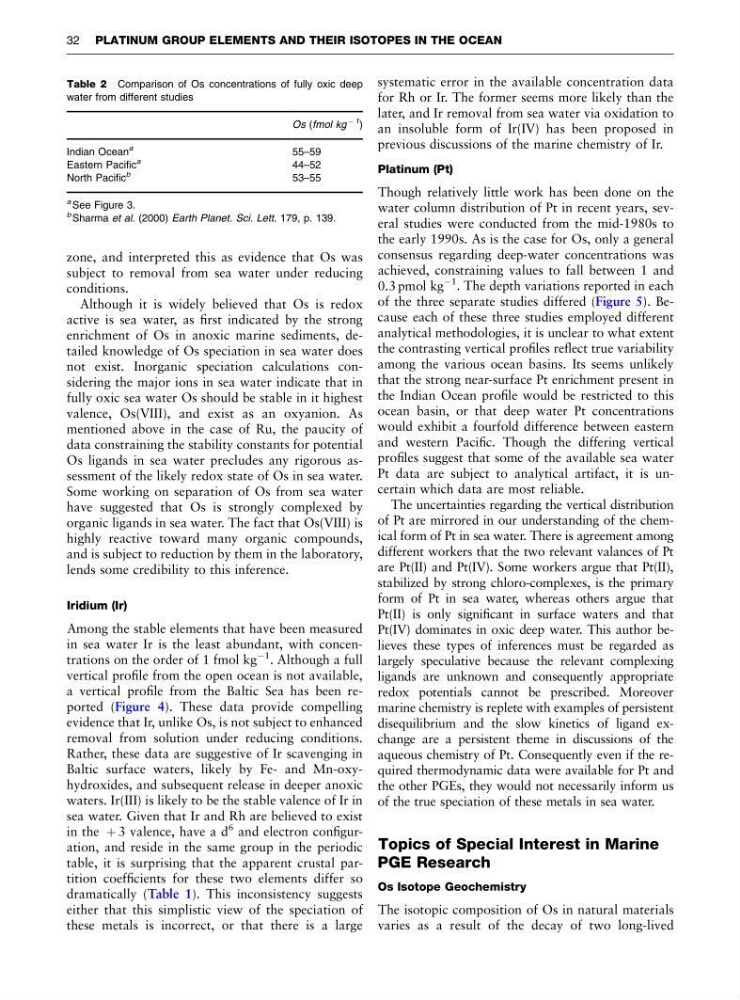
Table 2 Comparison of Os concentrations of fully oxic deep
water from different studies
Os (fmol kg
À 1
)
Indian Ocean
a
55–59
Eastern Pacific
a
44–52
North Pacific
b
53–55
a See Figure 3.
b Sharma et al. (2000) Earth Planet. Sci. Lett. 179, p. 139.
32 PLATINUM GROUP ELEMENTS AND THEIR ISOTOPES IN THE OCEAN
subject to removal from sea water under reducing
conditions.
Although it is widely believed that Os is redox
active is sea water, as first indicated by the strong
enrichment of Os in anoxic marine sediments, detailed knowledge of Os speciation in sea water does
not exist. Inorganic speciation calculations considering the major ions in sea water indicate that in
fully oxic sea water Os should be stable in it highest
valence, Os(VIII), and exist as an oxyanion. As
mentioned above in the case of Ru, the paucity of
data constraining the stability constants for potential
Os ligands in sea water precludes any rigorous assessment of the likely redox state of Os in sea water.
Some working on separation of Os from sea water
have suggested that Os is strongly complexed by
organic ligands in sea water. The fact that Os(VIII) is
highly reactive toward many organic compounds,
and is subject to reduction by them in the laboratory,
lends some credibility to this inference.
Iridium (Ir)
Among the stable elements that have been measured
in sea water Ir is the least abundant, with concentrations on the order of 1 fmol kg
À1
. Although a full
vertical profile from the open ocean is not available,
a vertical profile from the Baltic Sea has been reported (Figure 4). These data provide compelling
evidence that Ir, unlike Os, is not subject to enhanced
removal from solution under reducing conditions.
Rather, these data are suggestive of Ir scavenging in
Baltic surface waters, likely by Fe- and Mn-oxyhydroxides, and subsequent release in deeper anoxic
waters. Ir(III) is likely to be the stable valence of Ir in
sea water. Given that Ir and Rh are believed to exist
in the þ 3 valence, have a d
6 and electron configuration, and reside in the same group in the periodic
table, it is surprising that the apparent crustal partition coefficients for these two elements differ so
dramatically (Table 1). This inconsistency suggests
either that this simplistic view of the speciation of
these metals is incorrect, or that there is a large
systematic error in the available concentration data
for Rh or Ir. The former seems more likely than the
later, and Ir removal from sea water via oxidation to
an insoluble form of Ir(IV) has been proposed in
previous discussions of the marine chemistry of Ir.
Platinum (Pt)
Though relatively little work has been done on the
water column distribution of Pt in recent years, several studies were conducted from the mid-1980s to
the early 1990s. As is the case for Os, only a general
consensus regarding deep-water concentrations was
achieved, constraining values to fall between 1 and
0.3 pmol kg
À1
. The depth variations reported in each
of the three separate studies differed (Figure 5). Because each of these three studies employed different
analytical methodologies, it is unclear to what extent
the contrasting vertical profiles reflect true variability
among the various ocean basins. Its seems unlikely
that the strong near-surface Pt enrichment present in
the Indian Ocean profile would be restricted to this
ocean basin, or that deep water Pt concentrations
would exhibit a fourfold difference between eastern
and western Pacific. Though the differing vertical
profiles suggest that some of the available sea water
Pt data are subject to analytical artifact, it is uncertain which data are most reliable.
The uncertainties regarding the vertical distribution
of Pt are mirrored in our understanding of the chemical form of Pt in sea water. There is agreement among
different workers that the two relevant valances of Pt
are Pt(II) and Pt(IV). Some workers argue that Pt(II),
stabilized by strong chloro-complexes, is the primary
form of Pt in sea water, whereas others argue that
Pt(II) is only significant in surface waters and that
Pt(IV) dominates in oxic deep water. This author believes these types of inferences must be regarded as
largely speculative because the relevant complexing
ligands are unknown and consequently appropriate
redox potentials cannot be prescribed. Moreover
marine chemistry is replete with examples of persistent
disequilibrium and the slow kinetics of ligand exchange are a persistent theme in discussions of the
aqueous chemistry of Pt. Consequently even if the required thermodynamic data were available for Pt and
the other PGEs, they would not necessarily inform us
of the true speciation of these metals in sea water.
Topics of Special Interest in Marine
PGE Research
Os Isotope Geochemistry
The isotopic composition of Os in natural materials
varies as a result of the decay of two long-lived
Table 2 Comparison of Os concentrations of fully oxic deep
water from different studies
Os (fmol kg
À 1
)
Indian Ocean
a
55–59
Eastern Pacific
a
44–52
North Pacific
b
53–55
a See Figure 3.
b Sharma et al. (2000) Earth Planet. Sci. Lett. 179, p. 139.
32 PLATINUM GROUP ELEMENTS AND THEIR ISOTOPES IN THE OCEAN