

Although MORB are petrologically similar to
tholeiitic basalts erupted on oceanic islands (OIB),
MORB are readily distinguished from OIB based on
their comparatively low concentrations of large ion
lithophile elements (including K, Rb, Ba, Cs), light
rare earth elements (LREE), volatile elements and
other trace elements such as Th, U, Nb, Ta, and Pb
that are considered highly incompatible during
melting of mantle mineral assemblages. In other
words, the most incompatible elements will be the
most highly concentrated in partial melts from
primitive mantle peridotite. On normalized elemental abundance diagrams and rare earth element
plots (Figure 4), normal MORB (N-type or NMORB) exhibit characteristic smooth concave-down
patterns reflecting the fact that they were derived
from incompatible element-depleted mantle. Isotopic
investigations have conclusively shown that values of
the radiogenic isotopes of Sr, Nd, Hf and Pb in NMORB are consistent with their depleted characteristics and indicate incompatible element depletion
via one or more episodes of partial melting of upper
mantle sources beginning more than 1 billion years
ago. Compared to ocean island basalts and lavas
erupted in arc or continental settings, MORB comprise a relatively homogeneous and easily distiguishable rock association. Even so, MORB vary
from very depleted varieties (D-MORB) to those
containing moderately elevated incompatible element abundances and more radiogenic isotopes. These
less-depleted MORB are called E-types (E-MORB)
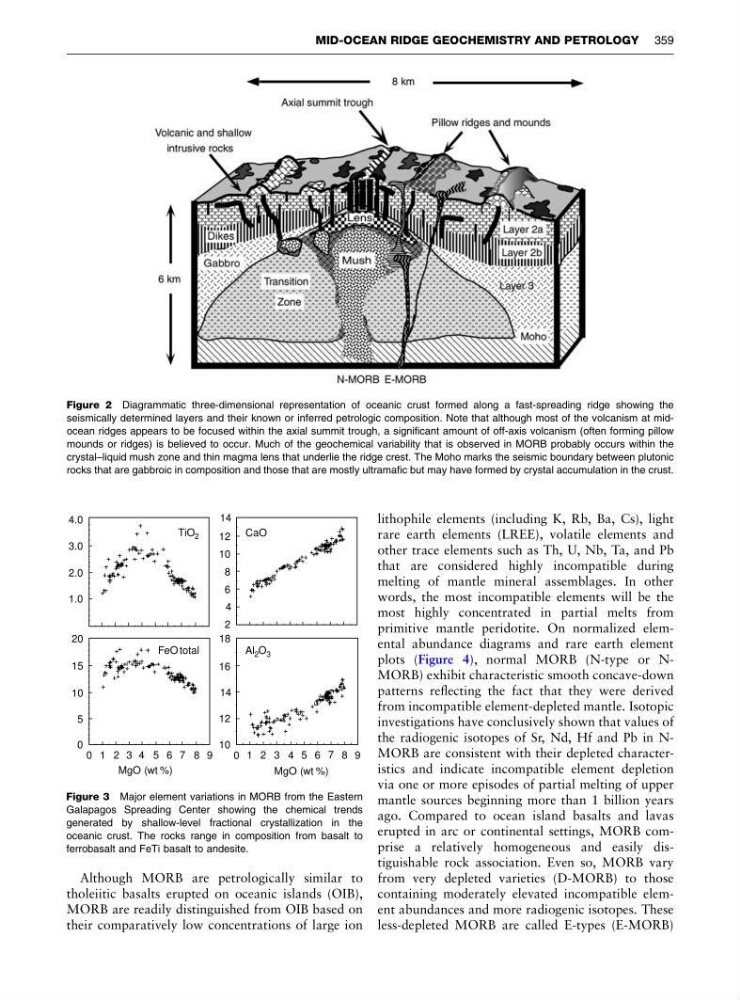
Figure 2 Diagrammatic three-dimensional representation of oceanic crust formed along a fast-spreading ridge showing the
seismically determined layers and their known or inferred petrologic composition. Note that although most of the volcanism at midocean ridges appears to be focused within the axial summit trough, a significant amount of off-axis volcanism (often forming pillow
mounds or ridges) is believed to occur. Much of the geochemical variability that is observed in MORB probably occurs within the
crystal–liquid mush zone and thin magma lens that underlie the ridge crest. The Moho marks the seismic boundary between plutonic
rocks that are gabbroic in composition and those that are mostly ultramafic but may have formed by crystal accumulation in the crust.
FeO total
0
5
10
15
20
10
12
14
16
18
0 1 2 3 4 5 6 7 8 9
TiO 2
1.0
2.0
3.0
4.0
CaO
2
4
6
8
10
12
14
Al 2 O 3
MgO (wt %)
MgO (wt %)
0 1 2 3 4 5 6 7 8 9
Figure 3 Major element variations in MORB from the Eastern
Galapagos Spreading Center showing the chemical trends
generated by shallow-level fractional crystallization in the
oceanic crust. The rocks range in composition from basalt to
ferrobasalt and FeTi basalt to andesite.
MID-OCEAN RIDGE GEOCHEMISTRY AND PETROLOGY 359
tholeiitic basalts erupted on oceanic islands (OIB),
MORB are readily distinguished from OIB based on
their comparatively low concentrations of large ion
lithophile elements (including K, Rb, Ba, Cs), light
rare earth elements (LREE), volatile elements and
other trace elements such as Th, U, Nb, Ta, and Pb
that are considered highly incompatible during
melting of mantle mineral assemblages. In other
words, the most incompatible elements will be the
most highly concentrated in partial melts from
primitive mantle peridotite. On normalized elemental abundance diagrams and rare earth element
plots (Figure 4), normal MORB (N-type or NMORB) exhibit characteristic smooth concave-down
patterns reflecting the fact that they were derived
from incompatible element-depleted mantle. Isotopic
investigations have conclusively shown that values of
the radiogenic isotopes of Sr, Nd, Hf and Pb in NMORB are consistent with their depleted characteristics and indicate incompatible element depletion
via one or more episodes of partial melting of upper
mantle sources beginning more than 1 billion years
ago. Compared to ocean island basalts and lavas
erupted in arc or continental settings, MORB comprise a relatively homogeneous and easily distiguishable rock association. Even so, MORB vary
from very depleted varieties (D-MORB) to those
containing moderately elevated incompatible element abundances and more radiogenic isotopes. These
less-depleted MORB are called E-types (E-MORB)
Figure 2 Diagrammatic three-dimensional representation of oceanic crust formed along a fast-spreading ridge showing the
seismically determined layers and their known or inferred petrologic composition. Note that although most of the volcanism at midocean ridges appears to be focused within the axial summit trough, a significant amount of off-axis volcanism (often forming pillow
mounds or ridges) is believed to occur. Much of the geochemical variability that is observed in MORB probably occurs within the
crystal–liquid mush zone and thin magma lens that underlie the ridge crest. The Moho marks the seismic boundary between plutonic
rocks that are gabbroic in composition and those that are mostly ultramafic but may have formed by crystal accumulation in the crust.
FeO total
0
5
10
15
20
10
12
14
16
18
0 1 2 3 4 5 6 7 8 9
TiO 2
1.0
2.0
3.0
4.0
CaO
2
4
6
8
10
12
14
Al 2 O 3
MgO (wt %)
MgO (wt %)
0 1 2 3 4 5 6 7 8 9
Figure 3 Major element variations in MORB from the Eastern
Galapagos Spreading Center showing the chemical trends
generated by shallow-level fractional crystallization in the
oceanic crust. The rocks range in composition from basalt to
ferrobasalt and FeTi basalt to andesite.
MID-OCEAN RIDGE GEOCHEMISTRY AND PETROLOGY 359