

system is dependent on the reduction potential of the
ferric complexes; consequently, readily reducible ferric species such as dissolved inorganic ferric hydroxide complexes are accessed much more readily by this
system than are strongly bound ferric siderophore
chelates. Thus, iron uptake by this system is highly
dependent on the chemical speciation of iron in seawater. Photo-reductive dissociation of ferric chelates
increases iron availability to this system, since the
released ferrous ions can directly react with the
membrane transport protein and the reoxidized ferric
hydrolysis species are readily reduced and taken up.
Metabolic Requirements and their
Relation to Other Limiting Resources
Trace element micronutrients are essential for the
growth and metabolism of all marine algae and bacteria. They play critical roles in photosynthesis, respiration, and the assimilation and transformation of
essential macronutrients (nitrogen, phosphorus, and
silicic acid). Thus trace metal requirements can be
influenced by the availability of light, CO 2 , and major
nutrients and the cycles of major nutrient elements are
influenced by trace element nutrients. Of the micronutrient metals, iron is needed in the greatest amount
and is the metal that most frequently limits algal
growth. Iron serves essential metabolic functions in
photosynthetic electron transport, respiration, nitrate
assimilation, N 2 fixation, and detoxification of reactive oxygen species (e.g., superoxide radicals and
hydrogen peroxide). Because of its heavy involvement
in photosynthetic electron transport, cellular iron requirements increase with decreasing light intensity
and photoperiod. Such effects can lead to iron–light
co-limitation in low-light environments such as regions where the depth of the surface wind mixed layer
greatly exceeds the depth of light penetration (as often
occurs in the Southern Ocean and at high latitudes
during the winter) or in the deep chlorophyll maximum at the bottom of the euphotic zone (the sunlit
layer) in thermally stratified surface waters.
Iron also occurs in the enzymes (nitrate and nitrite
reductases) involved in the reduction of nitrate to
ammonium in phytoplankton and the enzyme complex (nitrogenase) that fixes nitrogen (reduces dinitrogen molecules to ammonia) in cyanobacteria.
Both processes require cellular energy (in the form of
ATP molecules) and reductant molecules (NADPH),
and iron is also needed in high amounts for the
photosynthetic production of the needed ATP and
NADPH. Algal cells growing on nitrate need B50%
more iron to support a given growth rate than cells
growing on ammonium. Consequently, iron can be
especially limiting in oceanic upwelling systems (such
as the equatorial and subarctic Pacific) where waters
containing high nitrate concentrations, but low iron,
are advected to the surface (see Figures 3(a) and
3(b)). Even higher amounts of iron (up to 5 times as
much) are needed for diazotrophic growth (growth
on N 2 ) than for equivalent growth on ammonium
due to high energetic (ATP) cost for nitrogen fixation
and the large amount of iron in the nitrogenase enzyme complex. As a result, iron appears to limit N 2
fixation in large regions of the ocean and is thought
to control oceanic inventories of fixed nitrogen. As a
consequence, nitrogen is the primary limiting major
nutrient in most ocean waters, while in lakes, where
0
2
4
6
8
10
0
Zinc (nmol kg
−1
)
Zinc, T-5
Zinc, T-6
0
10
20
30
40
50
Phosphate (μmol kg
−1 )
Cobalt (pmol kg
−1
)
Cobalt, T-5
Cobalt, T-6
(b)
(a)
1
2
3
0
1
2
3
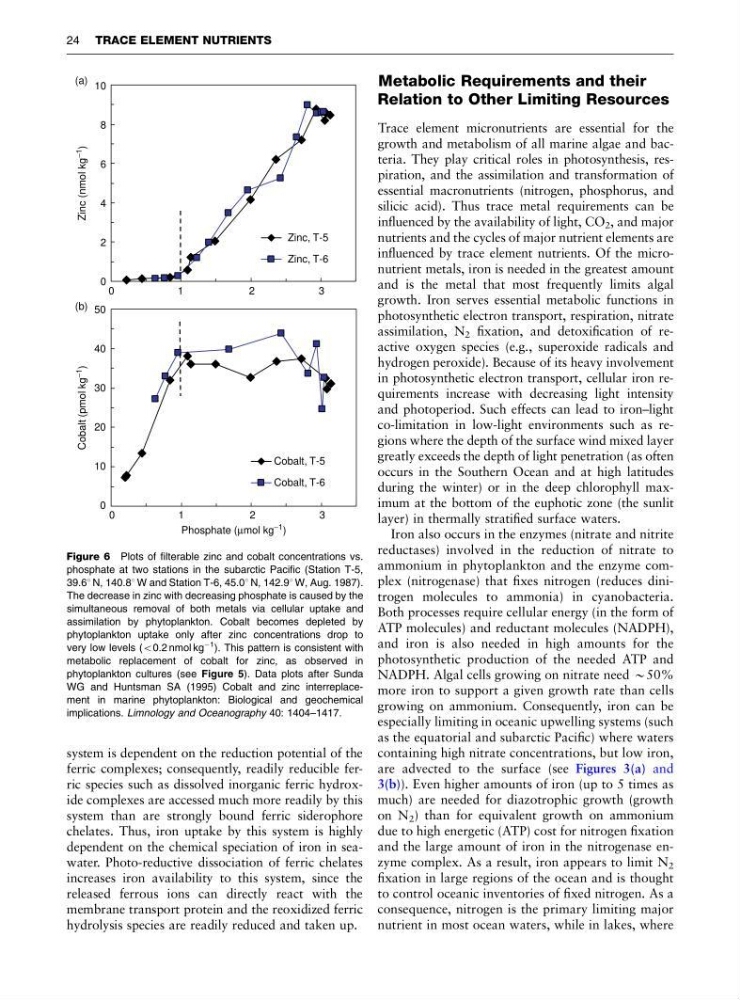
Figure 6 Plots of filterable zinc and cobalt concentrations vs.
phosphate at two stations in the subarctic Pacific (Station T-5,
39.61 N, 140.81 W and Station T-6, 45.01 N, 142.91 W, Aug. 1987).
The decrease in zinc with decreasing phosphate is caused by the
simultaneous removal of both metals via cellular uptake and
assimilation by phytoplankton. Cobalt becomes depleted by
phytoplankton uptake only after zinc concentrations drop to
very low levels (o0.2 nmol kg
À1 ). This pattern is consistent with
metabolic replacement of cobalt for zinc, as observed in
phytoplankton cultures (see Figure 5). Data plots after Sunda
WG and Huntsman SA (1995) Cobalt and zinc interreplacement in marine phytoplankton: Biological and geochemical
implications. Limnology and Oceanography 40: 1404–1417.
24 TRACE ELEMENT NUTRIENTS
ferric complexes; consequently, readily reducible ferric species such as dissolved inorganic ferric hydroxide complexes are accessed much more readily by this
system than are strongly bound ferric siderophore
chelates. Thus, iron uptake by this system is highly
dependent on the chemical speciation of iron in seawater. Photo-reductive dissociation of ferric chelates
increases iron availability to this system, since the
released ferrous ions can directly react with the
membrane transport protein and the reoxidized ferric
hydrolysis species are readily reduced and taken up.
Metabolic Requirements and their
Relation to Other Limiting Resources
Trace element micronutrients are essential for the
growth and metabolism of all marine algae and bacteria. They play critical roles in photosynthesis, respiration, and the assimilation and transformation of
essential macronutrients (nitrogen, phosphorus, and
silicic acid). Thus trace metal requirements can be
influenced by the availability of light, CO 2 , and major
nutrients and the cycles of major nutrient elements are
influenced by trace element nutrients. Of the micronutrient metals, iron is needed in the greatest amount
and is the metal that most frequently limits algal
growth. Iron serves essential metabolic functions in
photosynthetic electron transport, respiration, nitrate
assimilation, N 2 fixation, and detoxification of reactive oxygen species (e.g., superoxide radicals and
hydrogen peroxide). Because of its heavy involvement
in photosynthetic electron transport, cellular iron requirements increase with decreasing light intensity
and photoperiod. Such effects can lead to iron–light
co-limitation in low-light environments such as regions where the depth of the surface wind mixed layer
greatly exceeds the depth of light penetration (as often
occurs in the Southern Ocean and at high latitudes
during the winter) or in the deep chlorophyll maximum at the bottom of the euphotic zone (the sunlit
layer) in thermally stratified surface waters.
Iron also occurs in the enzymes (nitrate and nitrite
reductases) involved in the reduction of nitrate to
ammonium in phytoplankton and the enzyme complex (nitrogenase) that fixes nitrogen (reduces dinitrogen molecules to ammonia) in cyanobacteria.
Both processes require cellular energy (in the form of
ATP molecules) and reductant molecules (NADPH),
and iron is also needed in high amounts for the
photosynthetic production of the needed ATP and
NADPH. Algal cells growing on nitrate need B50%
more iron to support a given growth rate than cells
growing on ammonium. Consequently, iron can be
especially limiting in oceanic upwelling systems (such
as the equatorial and subarctic Pacific) where waters
containing high nitrate concentrations, but low iron,
are advected to the surface (see Figures 3(a) and
3(b)). Even higher amounts of iron (up to 5 times as
much) are needed for diazotrophic growth (growth
on N 2 ) than for equivalent growth on ammonium
due to high energetic (ATP) cost for nitrogen fixation
and the large amount of iron in the nitrogenase enzyme complex. As a result, iron appears to limit N 2
fixation in large regions of the ocean and is thought
to control oceanic inventories of fixed nitrogen. As a
consequence, nitrogen is the primary limiting major
nutrient in most ocean waters, while in lakes, where
0
2
4
6
8
10
0
Zinc (nmol kg
−1
)
Zinc, T-5
Zinc, T-6
0
10
20
30
40
50
Phosphate (μmol kg
−1 )
Cobalt (pmol kg
−1
)
Cobalt, T-5
Cobalt, T-6
(b)
(a)
1
2
3
0
1
2
3
Figure 6 Plots of filterable zinc and cobalt concentrations vs.
phosphate at two stations in the subarctic Pacific (Station T-5,
39.61 N, 140.81 W and Station T-6, 45.01 N, 142.91 W, Aug. 1987).
The decrease in zinc with decreasing phosphate is caused by the
simultaneous removal of both metals via cellular uptake and
assimilation by phytoplankton. Cobalt becomes depleted by
phytoplankton uptake only after zinc concentrations drop to
very low levels (o0.2 nmol kg
À1 ). This pattern is consistent with
metabolic replacement of cobalt for zinc, as observed in
phytoplankton cultures (see Figure 5). Data plots after Sunda
WG and Huntsman SA (1995) Cobalt and zinc interreplacement in marine phytoplankton: Biological and geochemical
implications. Limnology and Oceanography 40: 1404–1417.
24 TRACE ELEMENT NUTRIENTS