

in these metals than those from the Indian and
Atlantic Oceans, but metal concentrations can vary
widely within basins and nodule fields. For at least the
better-studied Pacific, concentrations of nickel and
copper show good correlation to the nodule Mn/Fe
ratio, suggesting that manganese-rich, todorokitecontaining diagenetic nodules are the major
depositories of these metals (Figure 4A, B). There is
also a regional trend of nickel and copper enrichments
and Mn/Fe ratios in the Pacific that is highest in the
equatorial NE Pacific, the Peru Basin, and the SE
Pacific near the Antarctic Convergence. The
distribution of nodule cobalt concentrations shows
little correlation to the Mn/Fe ratio, however, being
enriched instead near the Mid-Pacific Mountains and
in the South Central Pacific (Figure 4C).
The ultimate source for the minor metals in ferromanganese nodules is again the Earth’s crust and
mantle, but with minor metals the case for continental weathering versus seafloor hydrothermal activity is stronger. First, hydrothermal ferromanganese
crusts, like many rapidly accumulating diagenetic
crusts, are known to have very low concentrations of
minor metals. Second, studies of copper and nickel
distributions in pelagic surface sediments suggest
that the highest concentrations are nearest to regions
of high surface productivity, implying that plankton
are involved in the enrichment process. There is an
inverse relationship of depth of copper and nickel
concentration in Pacific nodules with the sedimentary concentration of calcium carbonate tests from
planktonic organisms, with deeper sediment deposits
containing lesser CaCO 3 because of increased dissolution. Comparative studies of copper, nickel, and
cobalt in plankton and the labile or easily mobilized
fraction of pelagic sediment and associated deep-sea
nodules has also suggested that diagenesis of organic
matter in the sediments leads to an enrichment of
these metals in the nodules. All told, scavenging by
organisms in the surface waters enriches the particle
rain in minor metals that originally enter the world’s
oceans by winds and rivers, and further concentration of these metals occurs within the surface
sediments during suboxic diagenesis, with ferromanganese nodules as the final metals depository.
Ferromanganese Crusts
Crust deposits differ from nodules in form, occurrence,
and composition. Hydrogenetic crusts are principally
composed of vernadite with iron oxides and minor
detrital mineral and carbonate fluorapatite (CFA) contaminates. They grow at extremely slow rates from less
than 1 mm to tens of millimeters per million years.
Because the cobalt flux is for the most part invariant
throughout the world’s oceans, cobalt concentrations
approach 2 wt% on comparatively shallow seamount
slopes between 800 and 2000 m water depth within the
Western Equatorial Pacific (Figure 3 – compare with
Figure 4C) where crust growth rates are slowest. Above
approximately 800 m dilution and coverage of crustal
pavements by principally carbonate-rich sediments
limits their growth, and below 2000 m incorporation of
increasing fluxes of seamount and wind-blown detritus
and ferromanganese oxides causes crust growth rates to
increase, effectively decreasing the cobalt concentration.
The oxygen minimum zone (OMZ) presently intersects
seamounts and island slopes in the Central Pacific at
between 500 and 1500 m water depth. Although not
presently anoxic enough to inhibit manganese oxide
precipitation in this area, the OMZ was probably more
intense in the past, thereby providing a mechanism for
both transport of dissolved Mn
2þ and inhibition of
crust growth. Cobalt concentrations also show a general trend of decreasing values within older crustal
layers, suggesting that past seafloor conditions favored
increased manganese fluxes and growth.
Relative to nodules, crusts are on average enriched in
Fe, Ca, P, Ti, Pb, Ce, As, and Pt, as well as cobalt, and
are depleted in Si, Al, Ni, Cu, and Zn. Manganese
concentrations are similar. The relative enrichments of
calcium and phosphorus in crusts reflect the more
widespread incorporation of CFA in seamount crusts
120˚
160˚
160˚
140˚
180˚
140˚
120˚
100˚
80˚
60˚
40˚
0˚
40˚
60˚
20˚
20˚
R (mm/Myr)
120˚
160˚
160˚
140˚
180˚
140˚
120˚
100˚
80˚
60˚
40˚
0˚
40˚
60˚
20˚
20˚
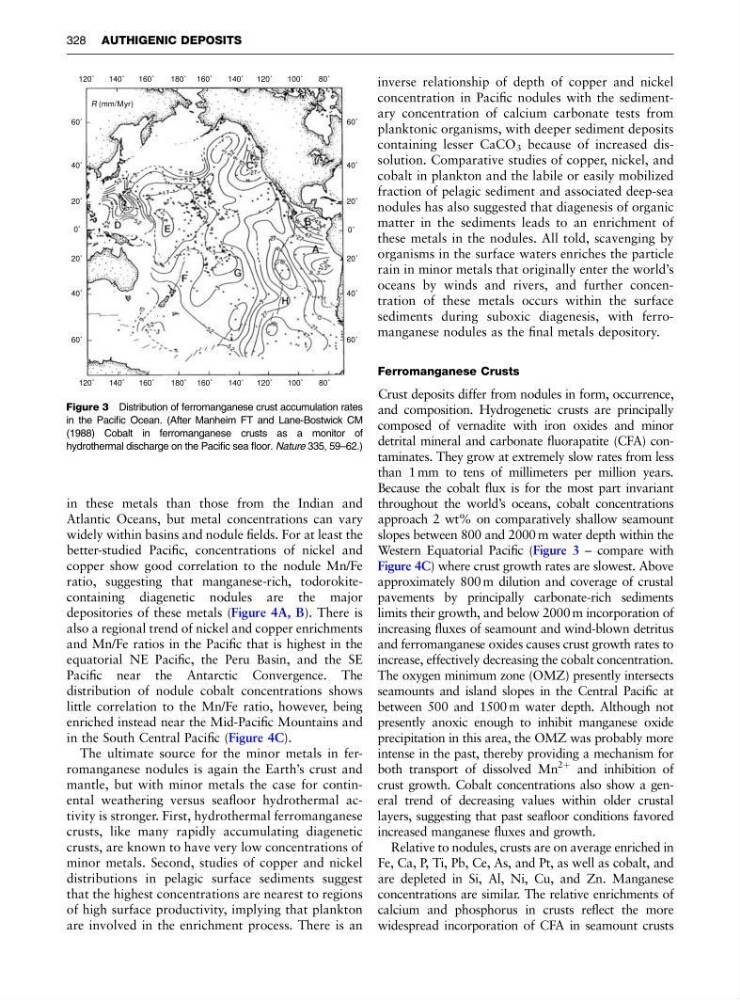
Figure 3 Distribution of ferromanganese crust accumulation rates
in the Pacific Ocean. (After Manheim FT and Lane-Bostwick CM
(1988) Cobalt in ferromanganese crusts as a monitor of
hydrothermal discharge on the Pacific sea floor. Nature 335, 59–62.)
328 AUTHIGENIC DEPOSITS
Atlantic Oceans, but metal concentrations can vary
widely within basins and nodule fields. For at least the
better-studied Pacific, concentrations of nickel and
copper show good correlation to the nodule Mn/Fe
ratio, suggesting that manganese-rich, todorokitecontaining diagenetic nodules are the major
depositories of these metals (Figure 4A, B). There is
also a regional trend of nickel and copper enrichments
and Mn/Fe ratios in the Pacific that is highest in the
equatorial NE Pacific, the Peru Basin, and the SE
Pacific near the Antarctic Convergence. The
distribution of nodule cobalt concentrations shows
little correlation to the Mn/Fe ratio, however, being
enriched instead near the Mid-Pacific Mountains and
in the South Central Pacific (Figure 4C).
The ultimate source for the minor metals in ferromanganese nodules is again the Earth’s crust and
mantle, but with minor metals the case for continental weathering versus seafloor hydrothermal activity is stronger. First, hydrothermal ferromanganese
crusts, like many rapidly accumulating diagenetic
crusts, are known to have very low concentrations of
minor metals. Second, studies of copper and nickel
distributions in pelagic surface sediments suggest
that the highest concentrations are nearest to regions
of high surface productivity, implying that plankton
are involved in the enrichment process. There is an
inverse relationship of depth of copper and nickel
concentration in Pacific nodules with the sedimentary concentration of calcium carbonate tests from
planktonic organisms, with deeper sediment deposits
containing lesser CaCO 3 because of increased dissolution. Comparative studies of copper, nickel, and
cobalt in plankton and the labile or easily mobilized
fraction of pelagic sediment and associated deep-sea
nodules has also suggested that diagenesis of organic
matter in the sediments leads to an enrichment of
these metals in the nodules. All told, scavenging by
organisms in the surface waters enriches the particle
rain in minor metals that originally enter the world’s
oceans by winds and rivers, and further concentration of these metals occurs within the surface
sediments during suboxic diagenesis, with ferromanganese nodules as the final metals depository.
Ferromanganese Crusts
Crust deposits differ from nodules in form, occurrence,
and composition. Hydrogenetic crusts are principally
composed of vernadite with iron oxides and minor
detrital mineral and carbonate fluorapatite (CFA) contaminates. They grow at extremely slow rates from less
than 1 mm to tens of millimeters per million years.
Because the cobalt flux is for the most part invariant
throughout the world’s oceans, cobalt concentrations
approach 2 wt% on comparatively shallow seamount
slopes between 800 and 2000 m water depth within the
Western Equatorial Pacific (Figure 3 – compare with
Figure 4C) where crust growth rates are slowest. Above
approximately 800 m dilution and coverage of crustal
pavements by principally carbonate-rich sediments
limits their growth, and below 2000 m incorporation of
increasing fluxes of seamount and wind-blown detritus
and ferromanganese oxides causes crust growth rates to
increase, effectively decreasing the cobalt concentration.
The oxygen minimum zone (OMZ) presently intersects
seamounts and island slopes in the Central Pacific at
between 500 and 1500 m water depth. Although not
presently anoxic enough to inhibit manganese oxide
precipitation in this area, the OMZ was probably more
intense in the past, thereby providing a mechanism for
both transport of dissolved Mn
2þ and inhibition of
crust growth. Cobalt concentrations also show a general trend of decreasing values within older crustal
layers, suggesting that past seafloor conditions favored
increased manganese fluxes and growth.
Relative to nodules, crusts are on average enriched in
Fe, Ca, P, Ti, Pb, Ce, As, and Pt, as well as cobalt, and
are depleted in Si, Al, Ni, Cu, and Zn. Manganese
concentrations are similar. The relative enrichments of
calcium and phosphorus in crusts reflect the more
widespread incorporation of CFA in seamount crusts
120˚
160˚
160˚
140˚
180˚
140˚
120˚
100˚
80˚
60˚
40˚
0˚
40˚
60˚
20˚
20˚
R (mm/Myr)
120˚
160˚
160˚
140˚
180˚
140˚
120˚
100˚
80˚
60˚
40˚
0˚
40˚
60˚
20˚
20˚
Figure 3 Distribution of ferromanganese crust accumulation rates
in the Pacific Ocean. (After Manheim FT and Lane-Bostwick CM
(1988) Cobalt in ferromanganese crusts as a monitor of
hydrothermal discharge on the Pacific sea floor. Nature 335, 59–62.)
328 AUTHIGENIC DEPOSITS