

materials. However, a portion of the assimilated
nutrients is continuously lost from the euphotic zone
by vertical settling of intact algal cells or zooplankton fecal pellets. The macro- and micronutrients contained within these settling biogenic
particles are then returned to solution at depth in the
ocean via bacterial degradation processes. Ultimately
the uptake, settling, and regeneration processes deplete nutrients within the euphotic zone to low levels
while concentrations at depth are increased. This
process also transfers CO 2 to the deep sea and is
often refered to as the biological CO 2 pump. The
cycle is completed when the nutrient and CO 2 reservoirs at depth are returned to the surface via vertical advection (upwelling) and mixing processes.
The deep-water concentrations of both major nutrient elements (N, P, and Si) and many micronutrients (Zn, Cd, Ni, and Cu) are much higher in
deep waters of the Pacific than the Atlantic (Figure 2)
because of large-scale ocean circulation patterns, in
which deep waters are formed via subduction at high
latitudes in the North Atlantic and are returned to
the surface via upwelling in the northern regions of
the North Pacific and Indian Oceans. Because of
these patterns, the deep North Pacific contains
waters that have resided at the bottom for much
longer (B1000 years) than the deep Atlantic waters
and thus have had a much longer time to accumulate
major nutrient and micronutrient elements from
biological regeneration processes.
Several trace element nutrients (molybdenum,
manganese, and cobalt) provide exceptions to the
general trend of increasing concentrations with
depth. Molybdenum occurs almost exclusively as
soluble, nonreactive molybdate ions MoO 4
2À , which
occur at a high concentration (B105 nM) relative to
their biological demand (Table 1). Consequently,
there is minimal biological removal of molybdenum
from surface seawater and its concentration varies in
proportion to salinity. By contrast, concentrations of
manganese (Figure 2(h)) and cobalt (Figure 3(d)) are
typically maximum near the surface and depleted at
depth owing to deep-water scavenging processes.
Chemical Speciation
Trace element nutrients exist as a variety of chemical
species in the sea, which strongly influences their
chemical behavior and biological availability. All but
Se and Mo occur as cationic metal ions that are
complexed (bound) to varying degrees by inorganic
0
200
400
600
800
1000
0.0
0.5
1.0
1.5
2.0
2.5
Selenium (nmol kg
−1 )
Depth (m)
Selenate
Selenite
Organic Se
Total Se
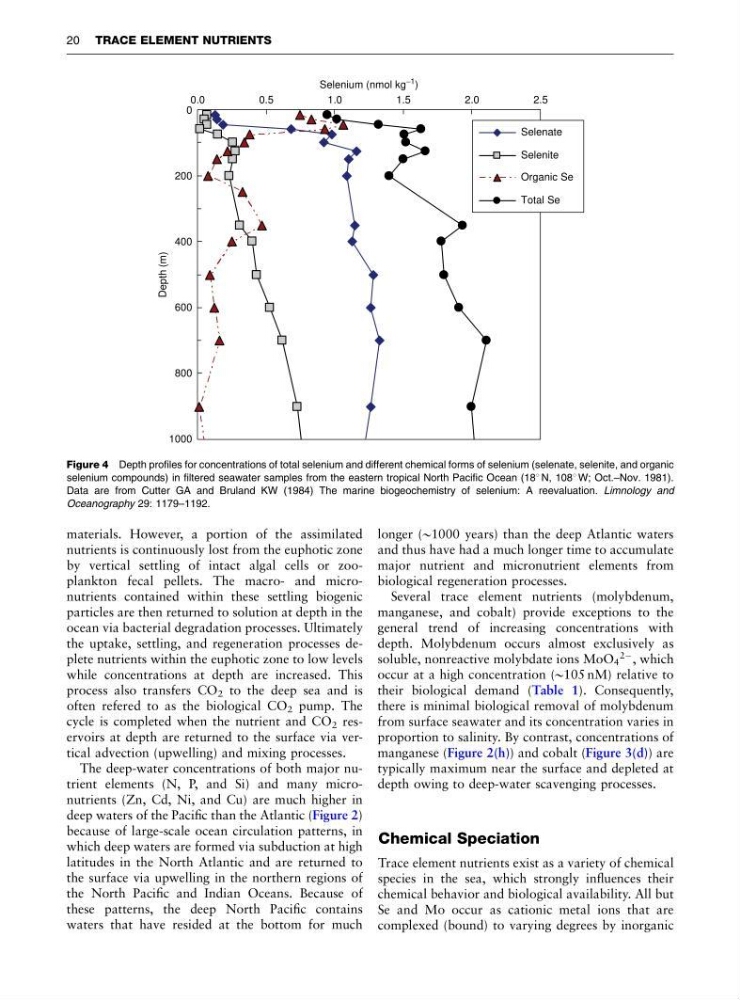
Figure 4 Depth profiles for concentrations of total selenium and different chemical forms of selenium (selenate, selenite, and organic
selenium compounds) in filtered seawater samples from the eastern tropical North Pacific Ocean (181 N, 1081 W; Oct.–Nov. 1981).
Data are from Cutter GA and Bruland KW (1984) The marine biogeochemistry of selenium: A reevaluation. Limnology and
Oceanography 29: 1179–1192.
20 TRACE ELEMENT NUTRIENTS
nutrients is continuously lost from the euphotic zone
by vertical settling of intact algal cells or zooplankton fecal pellets. The macro- and micronutrients contained within these settling biogenic
particles are then returned to solution at depth in the
ocean via bacterial degradation processes. Ultimately
the uptake, settling, and regeneration processes deplete nutrients within the euphotic zone to low levels
while concentrations at depth are increased. This
process also transfers CO 2 to the deep sea and is
often refered to as the biological CO 2 pump. The
cycle is completed when the nutrient and CO 2 reservoirs at depth are returned to the surface via vertical advection (upwelling) and mixing processes.
The deep-water concentrations of both major nutrient elements (N, P, and Si) and many micronutrients (Zn, Cd, Ni, and Cu) are much higher in
deep waters of the Pacific than the Atlantic (Figure 2)
because of large-scale ocean circulation patterns, in
which deep waters are formed via subduction at high
latitudes in the North Atlantic and are returned to
the surface via upwelling in the northern regions of
the North Pacific and Indian Oceans. Because of
these patterns, the deep North Pacific contains
waters that have resided at the bottom for much
longer (B1000 years) than the deep Atlantic waters
and thus have had a much longer time to accumulate
major nutrient and micronutrient elements from
biological regeneration processes.
Several trace element nutrients (molybdenum,
manganese, and cobalt) provide exceptions to the
general trend of increasing concentrations with
depth. Molybdenum occurs almost exclusively as
soluble, nonreactive molybdate ions MoO 4
2À , which
occur at a high concentration (B105 nM) relative to
their biological demand (Table 1). Consequently,
there is minimal biological removal of molybdenum
from surface seawater and its concentration varies in
proportion to salinity. By contrast, concentrations of
manganese (Figure 2(h)) and cobalt (Figure 3(d)) are
typically maximum near the surface and depleted at
depth owing to deep-water scavenging processes.
Chemical Speciation
Trace element nutrients exist as a variety of chemical
species in the sea, which strongly influences their
chemical behavior and biological availability. All but
Se and Mo occur as cationic metal ions that are
complexed (bound) to varying degrees by inorganic
0
200
400
600
800
1000
0.0
0.5
1.0
1.5
2.0
2.5
Selenium (nmol kg
−1 )
Depth (m)
Selenate
Selenite
Organic Se
Total Se
Figure 4 Depth profiles for concentrations of total selenium and different chemical forms of selenium (selenate, selenite, and organic
selenium compounds) in filtered seawater samples from the eastern tropical North Pacific Ocean (181 N, 1081 W; Oct.–Nov. 1981).
Data are from Cutter GA and Bruland KW (1984) The marine biogeochemistry of selenium: A reevaluation. Limnology and
Oceanography 29: 1179–1192.
20 TRACE ELEMENT NUTRIENTS