

is Cd4Pb4Cu, Zn; reflecting the relative significance of anthropogenic inputs to the estuarine environment and modification by different particle–
water reactivities. The Scheldt Estuary has a history
of metal pollution; and in comparison with other
estuaries, Baeyens (see Further Reading) classifies
the Scheldt as ‘moderately polluted for all metals in
the dissolved phase and fairly highly polluted in the
particulate phase, especially for cadmium.’ Efforts
are being made to reduce the concentrations of
cadmium in SPM in the Scheldt, and in the low-salinity region concentrations have declined from 400
nmol g
À1 in 1978 to 79 nmol g
À1 in 1995.
Metal contamination can also be registered in indicator organisms (that is, organisms that are able to
accumulate metals rather than regulate them), affording a measure of the contamination of the marine food chain. Across a broad range of phyla (from
macroalgae to dophins), copper, zinc, and possibly
cadmium exhibit a relatively low spread of concentrations, indicating efficient regulation of these
metals. For lead, the concentrations are lower in
vertebrates, which may be due to effective regulation
or reduced bioavailability of the metal. Mercury is
exceptional because of its biomagnification along the
food chain as a result of its being present mainly as
methyl mercury which is eliminated slowly from the
organism. Mercury is retained by long-lived species,
such as seals and dolphins, owing to their biochemical ability to isolate mercury as mercuric selenide granules. Fucus is a representative indicator
species and baseline concentrations of selected
metals occur in samples from an uncontaminated
area of the Western Irish Sea (Table 4). Concentrations of copper, lead, and zinc are generally
highest in industrialized estuaries (e.g., Humber) and
fiords (e.g., Hardangefjord) and those that drain
mineralized catchments and old mine workings (e.g.,
Restronguet Creek). Elevated concentrations of
metals impact the growth, respiration, reproduction,
recruitment and species diversity of marine organism, for example in Restronguet Creek the absence of
bivalves has been ascribed to high levels of copper
and zinc which prevent the settlement of juvenile
bivalves.
Human Health
The toxicity of metals depends on their rate of excretion from an organism and their chemical form.
Table 3 Enrichment factors calculated according to eqn [2] for
metals in suspended particulate matter or fine sediment from
estuarine and coastal environments
Location
Cadmium Copper Lead Zinc
Rhine Estuary,
The Netherlands
310
21
84
23
Scheldt Estuary, Belgium
38
3.1
8.9
4.9
Seine Estuary, France
18
3.1
9.6
3.3
Humber Estuary, UK
N/A
2.1
7.4
2.4
Restronguet Creek, UK
N/A
88
28
28
Lena Estuary, Russia
N/A
0.8
1.4
1.1
Baseline (Norwegian
Coastal Sediments)
0.6
0.2
2.2
1.9
N/A, not available.
Table 4 Mean concentration (nmol g
À1 ) of metals in Fucus
spp. in estuaries and coastal waters
Location
Cadmium Copper Lead Zinc
Hardangefjord, Norway 63
330 220
21 000
Humber Estuary, UK
46
680
39
8 500
Restronguet Creek, UK
7.3
14 000 140
26 000
Baseline (Western Irish
Sea)
4.4
60
6
1 100
200
150
100
50
0
0
100
200
300
400
500
600
700
800
900
1000
Depth (m)
[Pb] (pmol kg )
−1
1993
1989
1984
1979
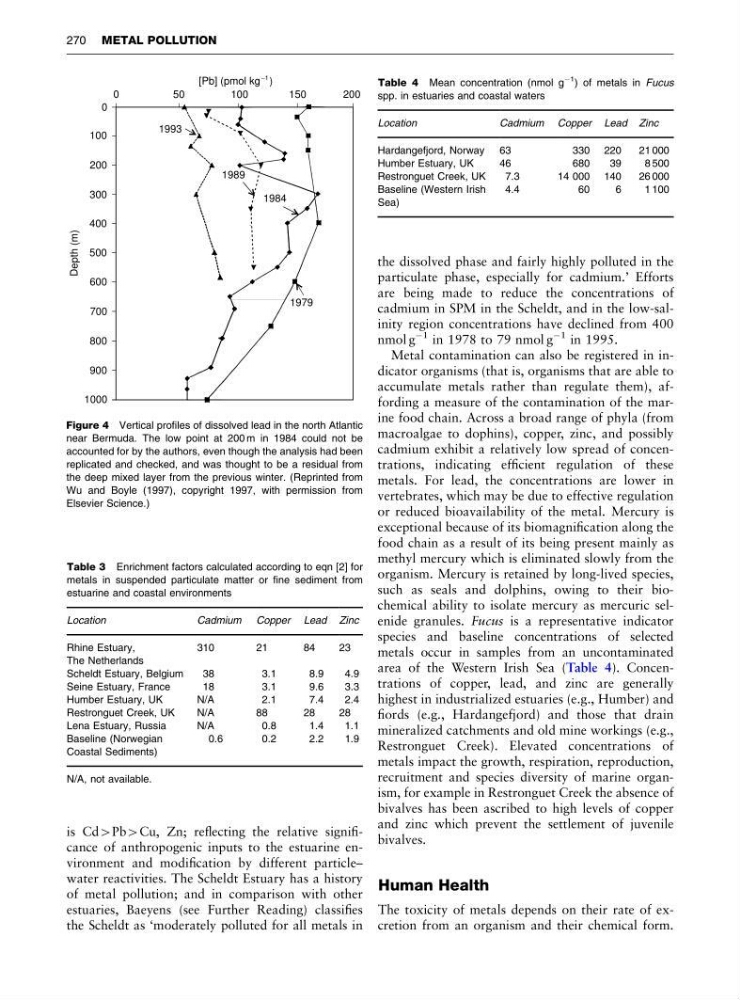
Figure 4 Vertical profiles of dissolved lead in the north Atlantic
near Bermuda. The low point at 200 m in 1984 could not be
accounted for by the authors, even though the analysis had been
replicated and checked, and was thought to be a residual from
the deep mixed layer from the previous winter. (Reprinted from
Wu and Boyle (1997), copyright 1997, with permission from
Elsevier Science.)
270 METAL POLLUTION
water reactivities. The Scheldt Estuary has a history
of metal pollution; and in comparison with other
estuaries, Baeyens (see Further Reading) classifies
the Scheldt as ‘moderately polluted for all metals in
the dissolved phase and fairly highly polluted in the
particulate phase, especially for cadmium.’ Efforts
are being made to reduce the concentrations of
cadmium in SPM in the Scheldt, and in the low-salinity region concentrations have declined from 400
nmol g
À1 in 1978 to 79 nmol g
À1 in 1995.
Metal contamination can also be registered in indicator organisms (that is, organisms that are able to
accumulate metals rather than regulate them), affording a measure of the contamination of the marine food chain. Across a broad range of phyla (from
macroalgae to dophins), copper, zinc, and possibly
cadmium exhibit a relatively low spread of concentrations, indicating efficient regulation of these
metals. For lead, the concentrations are lower in
vertebrates, which may be due to effective regulation
or reduced bioavailability of the metal. Mercury is
exceptional because of its biomagnification along the
food chain as a result of its being present mainly as
methyl mercury which is eliminated slowly from the
organism. Mercury is retained by long-lived species,
such as seals and dolphins, owing to their biochemical ability to isolate mercury as mercuric selenide granules. Fucus is a representative indicator
species and baseline concentrations of selected
metals occur in samples from an uncontaminated
area of the Western Irish Sea (Table 4). Concentrations of copper, lead, and zinc are generally
highest in industrialized estuaries (e.g., Humber) and
fiords (e.g., Hardangefjord) and those that drain
mineralized catchments and old mine workings (e.g.,
Restronguet Creek). Elevated concentrations of
metals impact the growth, respiration, reproduction,
recruitment and species diversity of marine organism, for example in Restronguet Creek the absence of
bivalves has been ascribed to high levels of copper
and zinc which prevent the settlement of juvenile
bivalves.
Human Health
The toxicity of metals depends on their rate of excretion from an organism and their chemical form.
Table 3 Enrichment factors calculated according to eqn [2] for
metals in suspended particulate matter or fine sediment from
estuarine and coastal environments
Location
Cadmium Copper Lead Zinc
Rhine Estuary,
The Netherlands
310
21
84
23
Scheldt Estuary, Belgium
38
3.1
8.9
4.9
Seine Estuary, France
18
3.1
9.6
3.3
Humber Estuary, UK
N/A
2.1
7.4
2.4
Restronguet Creek, UK
N/A
88
28
28
Lena Estuary, Russia
N/A
0.8
1.4
1.1
Baseline (Norwegian
Coastal Sediments)
0.6
0.2
2.2
1.9
N/A, not available.
Table 4 Mean concentration (nmol g
À1 ) of metals in Fucus
spp. in estuaries and coastal waters
Location
Cadmium Copper Lead Zinc
Hardangefjord, Norway 63
330 220
21 000
Humber Estuary, UK
46
680
39
8 500
Restronguet Creek, UK
7.3
14 000 140
26 000
Baseline (Western Irish
Sea)
4.4
60
6
1 100
200
150
100
50
0
0
100
200
300
400
500
600
700
800
900
1000
Depth (m)
[Pb] (pmol kg )
−1
1993
1989
1984
1979
Figure 4 Vertical profiles of dissolved lead in the north Atlantic
near Bermuda. The low point at 200 m in 1984 could not be
accounted for by the authors, even though the analysis had been
replicated and checked, and was thought to be a residual from
the deep mixed layer from the previous winter. (Reprinted from
Wu and Boyle (1997), copyright 1997, with permission from
Elsevier Science.)
270 METAL POLLUTION