

It is convenient to further designate the tracers
according to their chemical behavior in the system:
1. conservative tracers, which follow the motion of
the ‘fluid’ in the system;
2. nonconservative tracers, which do not follow the
motion of the ‘fluid’ in the system.
The first naturally occurring radiotracer to be used
in oceanography was
226 Ra. The first successful tracer measurements of the cosmogenic
14
C with a view
to understanding timescales in large-scale water circulation were made in 1960 and demonstrated the
great value of this tracer in oceanography. The discovery of cosmogenic
32 Si in marine siliceous sponges opened up the possibility of using this as a tracer
for studying biogenic silica fluxes to the deep sea,
and the nutrient cycle of silicon. As the techniques
for the measurement of weak activities of the nuclides became available, additional nuclides were
measured in the oceans. To date 12 cosmogenic nuclides have been studied in the oceans, some
during the 1960s, several during the 1980s. It is
important to realize that all tracers are important
because of their particular unique attributes (cf.
Table 4).
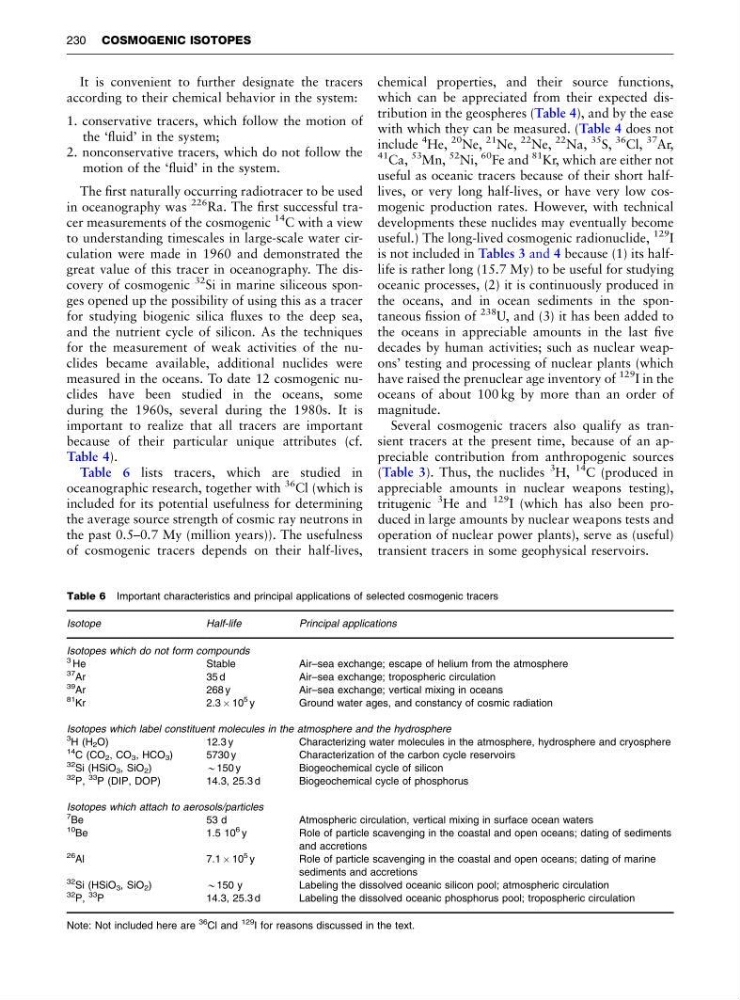
Table 6 lists tracers, which are studied in
oceanographic research, together with
36
Cl (which is
included for its potential usefulness for determining
the average source strength of cosmic ray neutrons in
the past 0.5–0.7 My (million years)). The usefulness
of cosmogenic tracers depends on their half-lives,
chemical properties, and their source functions,
which can be appreciated from their expected distribution in the geospheres (Table 4), and by the ease
with which they can be measured. (Table 4 does not
include
4
He,
20 Ne,
21
Ne,
22
Ne,
22
Na,
35 S,
36
Cl,
37
Ar,
41 Ca,
53
Mn,
52
Ni,
60 Fe and
81
Kr, which are either not
useful as oceanic tracers because of their short halflives, or very long half-lives, or have very low cosmogenic production rates. However, with technical
developments these nuclides may eventually become
useful.) The long-lived cosmogenic radionuclide,
129 I
is not included in Tables 3 and 4 because (1) its halflife is rather long (15.7 My) to be useful for studying
oceanic processes, (2) it is continuously produced in
the oceans, and in ocean sediments in the spontaneous fission of
238
U, and (3) it has been added to
the oceans in appreciable amounts in the last five
decades by human activities; such as nuclear weapons’ testing and processing of nuclear plants (which
have raised the prenuclear age inventory of
129 I in the
oceans of about 100 kg by more than an order of
magnitude.
Several cosmogenic tracers also qualify as transient tracers at the present time, because of an appreciable contribution from anthropogenic sources
(Table 3). Thus, the nuclides
3
H,
14
C (produced in
appreciable amounts in nuclear weapons testing),
tritugenic
3 He and
129 I (which has also been produced in large amounts by nuclear weapons tests and
operation of nuclear power plants), serve as (useful)
transient tracers in some geophysical reservoirs.
Table 6 Important characteristics and principal applications of selected cosmogenic tracers
Isotope
Half-life
Principal applications
Isotopes which do not form compounds
3 He
Stable
Air–sea exchange; escape of helium from the atmosphere
37
Ar
35 d
Air–sea exchange; tropospheric circulation
39
Ar
268 y
Air–sea exchange; vertical mixing in oceans
81
Kr
2.3 Â 10
5 y
Ground water ages, and constancy of cosmic radiation
Isotopes which label constituent molecules in the atmosphere and the hydrosphere
3
H (H 2 O)
12.3 y
Characterizing water molecules in the atmosphere, hydrosphere and cryosphere
14
C (CO 2 , CO 3 , HCO 3 )
5730 y
Characterization of the carbon cycle reservoirs
32
Si (HSiO 3 , SiO 2 )
B150 y
Biogeochemical cycle of silicon
32
P,
33
P (DIP, DOP)
14.3, 25.3 d
Biogeochemical cycle of phosphorus
Isotopes which attach to aerosols/particles
7
Be
53 d
Atmospheric circulation, vertical mixing in surface ocean waters
10
Be
1.5 10
6 y
Role of particle scavenging in the coastal and open oceans; dating of sediments
and accretions
26
Al
7.1 Â 10
5 y
Role of particle scavenging in the coastal and open oceans; dating of marine
sediments and accretions
32
Si (HSiO 3 , SiO 2 )
B150 y
Labeling the dissolved oceanic silicon pool; atmospheric circulation
32
P,
33
P
14.3, 25.3 d
Labeling the dissolved oceanic phosphorus pool; tropospheric circulation
Note: Not included here are
36 Cl and
129
I for reasons discussed in the text.
230 COSMOGENIC ISOTOPES
according to their chemical behavior in the system:
1. conservative tracers, which follow the motion of
the ‘fluid’ in the system;
2. nonconservative tracers, which do not follow the
motion of the ‘fluid’ in the system.
The first naturally occurring radiotracer to be used
in oceanography was
226 Ra. The first successful tracer measurements of the cosmogenic
14
C with a view
to understanding timescales in large-scale water circulation were made in 1960 and demonstrated the
great value of this tracer in oceanography. The discovery of cosmogenic
32 Si in marine siliceous sponges opened up the possibility of using this as a tracer
for studying biogenic silica fluxes to the deep sea,
and the nutrient cycle of silicon. As the techniques
for the measurement of weak activities of the nuclides became available, additional nuclides were
measured in the oceans. To date 12 cosmogenic nuclides have been studied in the oceans, some
during the 1960s, several during the 1980s. It is
important to realize that all tracers are important
because of their particular unique attributes (cf.
Table 4).
Table 6 lists tracers, which are studied in
oceanographic research, together with
36
Cl (which is
included for its potential usefulness for determining
the average source strength of cosmic ray neutrons in
the past 0.5–0.7 My (million years)). The usefulness
of cosmogenic tracers depends on their half-lives,
chemical properties, and their source functions,
which can be appreciated from their expected distribution in the geospheres (Table 4), and by the ease
with which they can be measured. (Table 4 does not
include
4
He,
20 Ne,
21
Ne,
22
Ne,
22
Na,
35 S,
36
Cl,
37
Ar,
41 Ca,
53
Mn,
52
Ni,
60 Fe and
81
Kr, which are either not
useful as oceanic tracers because of their short halflives, or very long half-lives, or have very low cosmogenic production rates. However, with technical
developments these nuclides may eventually become
useful.) The long-lived cosmogenic radionuclide,
129 I
is not included in Tables 3 and 4 because (1) its halflife is rather long (15.7 My) to be useful for studying
oceanic processes, (2) it is continuously produced in
the oceans, and in ocean sediments in the spontaneous fission of
238
U, and (3) it has been added to
the oceans in appreciable amounts in the last five
decades by human activities; such as nuclear weapons’ testing and processing of nuclear plants (which
have raised the prenuclear age inventory of
129 I in the
oceans of about 100 kg by more than an order of
magnitude.
Several cosmogenic tracers also qualify as transient tracers at the present time, because of an appreciable contribution from anthropogenic sources
(Table 3). Thus, the nuclides
3
H,
14
C (produced in
appreciable amounts in nuclear weapons testing),
tritugenic
3 He and
129 I (which has also been produced in large amounts by nuclear weapons tests and
operation of nuclear power plants), serve as (useful)
transient tracers in some geophysical reservoirs.
Table 6 Important characteristics and principal applications of selected cosmogenic tracers
Isotope
Half-life
Principal applications
Isotopes which do not form compounds
3 He
Stable
Air–sea exchange; escape of helium from the atmosphere
37
Ar
35 d
Air–sea exchange; tropospheric circulation
39
Ar
268 y
Air–sea exchange; vertical mixing in oceans
81
Kr
2.3 Â 10
5 y
Ground water ages, and constancy of cosmic radiation
Isotopes which label constituent molecules in the atmosphere and the hydrosphere
3
H (H 2 O)
12.3 y
Characterizing water molecules in the atmosphere, hydrosphere and cryosphere
14
C (CO 2 , CO 3 , HCO 3 )
5730 y
Characterization of the carbon cycle reservoirs
32
Si (HSiO 3 , SiO 2 )
B150 y
Biogeochemical cycle of silicon
32
P,
33
P (DIP, DOP)
14.3, 25.3 d
Biogeochemical cycle of phosphorus
Isotopes which attach to aerosols/particles
7
Be
53 d
Atmospheric circulation, vertical mixing in surface ocean waters
10
Be
1.5 10
6 y
Role of particle scavenging in the coastal and open oceans; dating of sediments
and accretions
26
Al
7.1 Â 10
5 y
Role of particle scavenging in the coastal and open oceans; dating of marine
sediments and accretions
32
Si (HSiO 3 , SiO 2 )
B150 y
Labeling the dissolved oceanic silicon pool; atmospheric circulation
32
P,
33
P
14.3, 25.3 d
Labeling the dissolved oceanic phosphorus pool; tropospheric circulation
Note: Not included here are
36 Cl and
129
I for reasons discussed in the text.
230 COSMOGENIC ISOTOPES