

produced by Haslea ostrearia. Several species of
microalgae and, in particular, Haematococcus,
Dunaliella, and Spirulina are now grown on large
commercial scale to accommodate the growing
demand for natural pigments.
In addition to being rich in phycobiliproteins,
Spirulina, a filamentous cyanobacterium, contains a
wide variety of nutrients including potentially beneficial proteins, lipids, vitamins, and antioxidants.
Spirulina is also reported to have various beneficial
effects including antiviral activity, immunomodulatory effects, and a role in modulating metabolic
function in humans which could be of value in
managing diseases involving lipids and carbohydrates such as diabetes. Furthermore, studies indicate that pretreatment with Spirulina may reduce
the toxic side effects observed with some drugs on
mammalian organs such as the heart and kidneys.
HO
OH
O
O
O
H
OH
Astaxanthin
Lutein
B,B-carotene
(a)
(b)
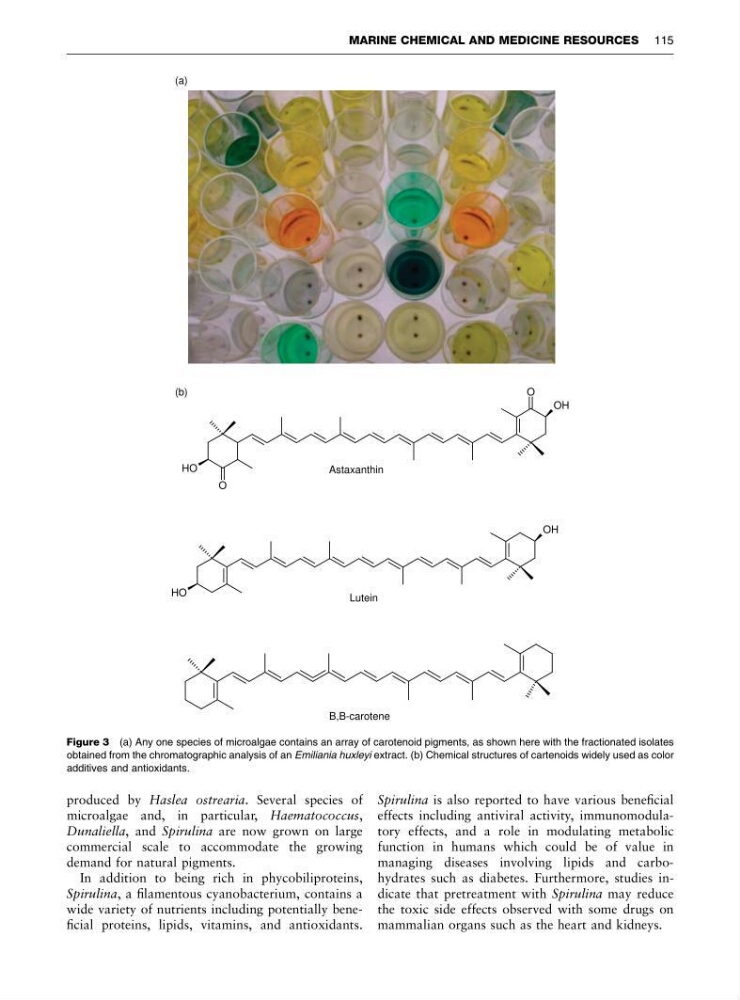
Figure 3 (a) Any one species of microalgae contains an array of carotenoid pigments, as shown here with the fractionated isolates
obtained from the chromatographic analysis of an Emiliania huxleyi extract. (b) Chemical structures of cartenoids widely used as color
additives and antioxidants.
MARINE CHEMICAL AND MEDICINE RESOURCES 115
microalgae and, in particular, Haematococcus,
Dunaliella, and Spirulina are now grown on large
commercial scale to accommodate the growing
demand for natural pigments.
In addition to being rich in phycobiliproteins,
Spirulina, a filamentous cyanobacterium, contains a
wide variety of nutrients including potentially beneficial proteins, lipids, vitamins, and antioxidants.
Spirulina is also reported to have various beneficial
effects including antiviral activity, immunomodulatory effects, and a role in modulating metabolic
function in humans which could be of value in
managing diseases involving lipids and carbohydrates such as diabetes. Furthermore, studies indicate that pretreatment with Spirulina may reduce
the toxic side effects observed with some drugs on
mammalian organs such as the heart and kidneys.
HO
OH
O
O
O
H
OH
Astaxanthin
Lutein
B,B-carotene
(a)
(b)
Figure 3 (a) Any one species of microalgae contains an array of carotenoid pigments, as shown here with the fractionated isolates
obtained from the chromatographic analysis of an Emiliania huxleyi extract. (b) Chemical structures of cartenoids widely used as color
additives and antioxidants.
MARINE CHEMICAL AND MEDICINE RESOURCES 115