

respond to increasing food availability to the point
where the growth rates of the smaller phytoplankton
can be overwhelmed by grazing. Thus there is a much
more rapid turnover of fixed carbon and nitrogen in
iron replete systems. M. Landry and co-workers
have documented this in dilution experiments conducted during IronEx II. These results appear to
be consistent with the recent SOIREE experiments
as well.
Nutrient Uptake Ratios
An imbalance in production and consumption,
however, can arise at the larger trophic levels. Because the reproduction rates of the larger micro- and
mesozooplankton are long with respect to diatom
division rates, iron-replete diatoms can escape the
pressures of grazing on short timescales (weeks). This
is thought to be the reason why, in every iron enrichment experiment, diatoms ultimately dominate
in biomass. This result is important for a variety of
reasons. It suggests that transient additions of iron
would be most effective in producing net carbon
uptake and it implicates an important role of silicate
in carbon flux. The role of iron in silicate uptake has
been studied extensively by Franck and colleagues.
The results, together with those of Takeda and coworkers, show that iron alters the uptake ratio of
nitrate and silicate at very low levels (Figure 8). This
is thought to be brought about by the increase in
nitrate uptake rates relative to silica.
Organic Ligands
Consistent with the role of iron as a limiting nutrient
in HNLC systems is the notion that organisms may
have evolved competitive mechanisms to increase
iron solubility and uptake. In terrestrial systems this
is accomplished using extracellularly excreted or
membrane-bound siderophores. Similar compounds
have been shown to exist in sea water where the
competition for iron may be as fierce as it is on land.
In open ocean systems where it has been measured,
iron-binding ligand production increases with the
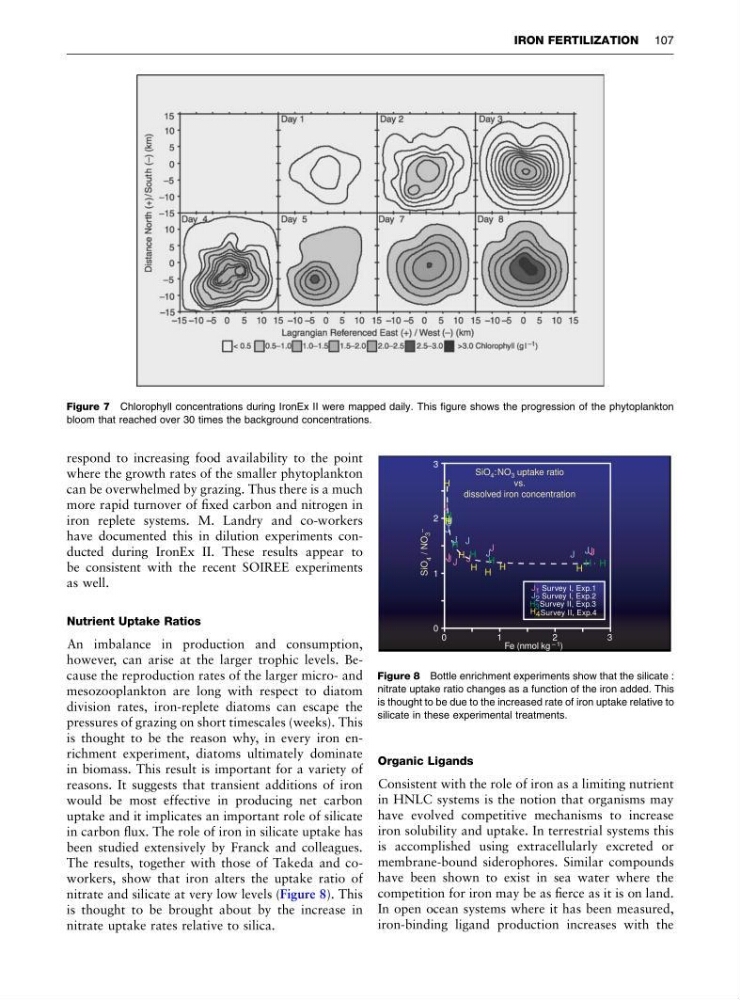
Figure 7 Chlorophyll concentrations during IronEx II were mapped daily. This figure shows the progression of the phytoplankton
bloom that reached over 30 times the background concentrations.
J
J
J
J J
J
J
J
J
J
J J
J
H
H H
H
H H
H H
H H
H
H
H H
H
H
0
1
2
3
0
1
2
3
J 2
J 1
H 3
H 4
SiO 4 :NO 3 uptake ratio
vs.
dissolved iron concentration
Fe (nmol kg – 1 )
J J
J
Survey I, Exp.1
Survey I, Exp.2
Survey II, Exp.3
Survey II, Exp.4
SiO
4
/ NO
3
–
Figure 8 Bottle enrichment experiments show that the silicate :
nitrate uptake ratio changes as a function of the iron added. This
is thought to be due to the increased rate of iron uptake relative to
silicate in these experimental treatments.
IRON FERTILIZATION 107
where the growth rates of the smaller phytoplankton
can be overwhelmed by grazing. Thus there is a much
more rapid turnover of fixed carbon and nitrogen in
iron replete systems. M. Landry and co-workers
have documented this in dilution experiments conducted during IronEx II. These results appear to
be consistent with the recent SOIREE experiments
as well.
Nutrient Uptake Ratios
An imbalance in production and consumption,
however, can arise at the larger trophic levels. Because the reproduction rates of the larger micro- and
mesozooplankton are long with respect to diatom
division rates, iron-replete diatoms can escape the
pressures of grazing on short timescales (weeks). This
is thought to be the reason why, in every iron enrichment experiment, diatoms ultimately dominate
in biomass. This result is important for a variety of
reasons. It suggests that transient additions of iron
would be most effective in producing net carbon
uptake and it implicates an important role of silicate
in carbon flux. The role of iron in silicate uptake has
been studied extensively by Franck and colleagues.
The results, together with those of Takeda and coworkers, show that iron alters the uptake ratio of
nitrate and silicate at very low levels (Figure 8). This
is thought to be brought about by the increase in
nitrate uptake rates relative to silica.
Organic Ligands
Consistent with the role of iron as a limiting nutrient
in HNLC systems is the notion that organisms may
have evolved competitive mechanisms to increase
iron solubility and uptake. In terrestrial systems this
is accomplished using extracellularly excreted or
membrane-bound siderophores. Similar compounds
have been shown to exist in sea water where the
competition for iron may be as fierce as it is on land.
In open ocean systems where it has been measured,
iron-binding ligand production increases with the
Figure 7 Chlorophyll concentrations during IronEx II were mapped daily. This figure shows the progression of the phytoplankton
bloom that reached over 30 times the background concentrations.
J
J
J
J J
J
J
J
J
J
J J
J
H
H H
H
H H
H H
H H
H
H
H H
H
H
0
1
2
3
0
1
2
3
J 2
J 1
H 3
H 4
SiO 4 :NO 3 uptake ratio
vs.
dissolved iron concentration
Fe (nmol kg – 1 )
J J
J
Survey I, Exp.1
Survey I, Exp.2
Survey II, Exp.3
Survey II, Exp.4
SiO
4
/ NO
3
–
Figure 8 Bottle enrichment experiments show that the silicate :
nitrate uptake ratio changes as a function of the iron added. This
is thought to be due to the increased rate of iron uptake relative to
silicate in these experimental treatments.
IRON FERTILIZATION 107