

Actinomycetes in general are a large bacterial group with several genera and a lot of
species. The bulk of our isolates from the sea sediments could be classified only in three
taxonomic groups : streptomycetes, Micromonosporae and nocardioforms. Isolates not
belonging to these taxa only constituted a minority (Weyland H.1981 b).
Area
number
of
sampling
sites
Streptomycetes
per
site
Micro
monosporae
per
site
Nocardio
forms
per
site
all
strains
per
site
Norwegian Sea
83
0.9
3.4
5.5
9.8
North Atlantic
21
0.2
1.0
11.4
12.6
Off Faeroes
45
1.6
1.9
7.1
10.6
Biscay
47
0.5
7.2
2.1
9.8
Iberian Sea
27
1.8
3.6
0.6
6.0
Off NW-Africa
22
0.6
3.1
0.6
4.3
North Sea
106
4.4
4.6
0.7
9.7
Mangrove, Mexico
10
9.2
3.6
0.4
13.2
Antarctic sea
25
0.0
0.0
0.0
0.0
All regions
386
2.1
3.6
4.7
9.3
All region
except North Sea,
Antartic Sea
245
1.0
3.6
4.7
9.3
and Mangrove
11 %
39%
50 %
100%
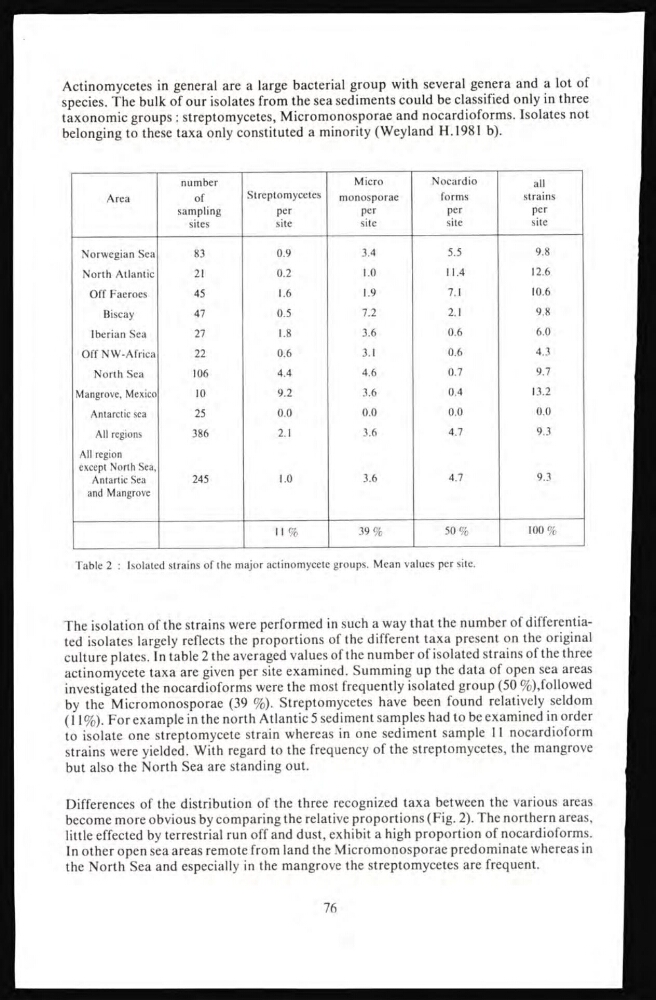
Table 2 : Isolated strains of the major actinomycete groups. Mean values per site.
The isolation of the strains were performed in such a way that the number of differentiated isolates largely reflects the proportions of the different taxa present on the original
culture plates. In table 2 the averaged values of the number of isolated strains of the three
actinomycete taxa are given per site examined. Summing up the data of open sea areas
investigated the nocardioforms were the most frequently isolated group (50 %), followed
by the Micromonosporae (39 %). Streptomycetes have been found relatively seldom
(11%). For example in the north Atlantic 5 sediment samples had to be examined in order
to isolate one streptomycete strain whereas in one sediment sample 11 nocardioform
strains were yielded. With regard to the frequency of the streptomycetes, the mangrove
but also the North Sea are standing out.
Differences of the distribution of the three recognized taxa between the various areas
become more obvious by comparing the relative proportions (Fig. 2). The northern areas,
little effected by terrestrial run off and dust, exhibit a high proportion of nocardioforms.
In other open sea areas remote from land the Micromonosporae predominate whereas in
the North Sea and especially in the mangrove the streptomycetes are frequent.
76
species. The bulk of our isolates from the sea sediments could be classified only in three
taxonomic groups : streptomycetes, Micromonosporae and nocardioforms. Isolates not
belonging to these taxa only constituted a minority (Weyland H.1981 b).
Area
number
of
sampling
sites
Streptomycetes
per
site
Micro
monosporae
per
site
Nocardio
forms
per
site
all
strains
per
site
Norwegian Sea
83
0.9
3.4
5.5
9.8
North Atlantic
21
0.2
1.0
11.4
12.6
Off Faeroes
45
1.6
1.9
7.1
10.6
Biscay
47
0.5
7.2
2.1
9.8
Iberian Sea
27
1.8
3.6
0.6
6.0
Off NW-Africa
22
0.6
3.1
0.6
4.3
North Sea
106
4.4
4.6
0.7
9.7
Mangrove, Mexico
10
9.2
3.6
0.4
13.2
Antarctic sea
25
0.0
0.0
0.0
0.0
All regions
386
2.1
3.6
4.7
9.3
All region
except North Sea,
Antartic Sea
245
1.0
3.6
4.7
9.3
and Mangrove
11 %
39%
50 %
100%
Table 2 : Isolated strains of the major actinomycete groups. Mean values per site.
The isolation of the strains were performed in such a way that the number of differentiated isolates largely reflects the proportions of the different taxa present on the original
culture plates. In table 2 the averaged values of the number of isolated strains of the three
actinomycete taxa are given per site examined. Summing up the data of open sea areas
investigated the nocardioforms were the most frequently isolated group (50 %), followed
by the Micromonosporae (39 %). Streptomycetes have been found relatively seldom
(11%). For example in the north Atlantic 5 sediment samples had to be examined in order
to isolate one streptomycete strain whereas in one sediment sample 11 nocardioform
strains were yielded. With regard to the frequency of the streptomycetes, the mangrove
but also the North Sea are standing out.
Differences of the distribution of the three recognized taxa between the various areas
become more obvious by comparing the relative proportions (Fig. 2). The northern areas,
little effected by terrestrial run off and dust, exhibit a high proportion of nocardioforms.
In other open sea areas remote from land the Micromonosporae predominate whereas in
the North Sea and especially in the mangrove the streptomycetes are frequent.
76