

Exoenzymes were produced and fermentations were carried out according to the methods
reported by Colwell and Williams (1970).
Grams stains, morphological observations and maintenance of cultures were made using
cultures growing on Zobell medium.
Numerical methods were applied in the analysis of the data, employing the Jaccard S
sj
similarity coefficient, and the unweighting average linkage as a cluster method.
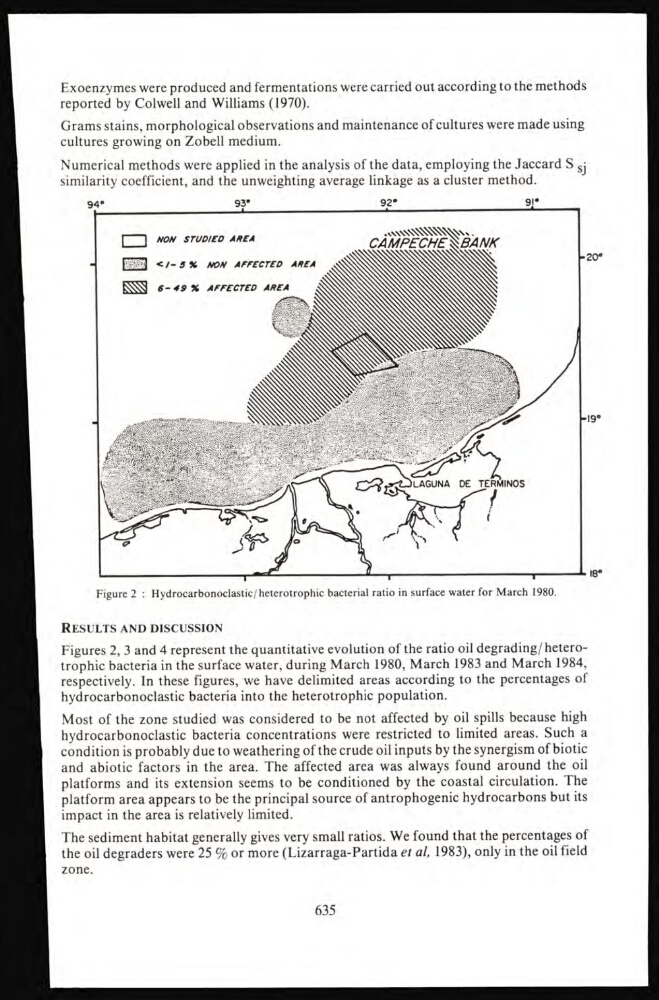
Figure 2 : Hydrocarbonoclastic/heterotrophic bacterial ratio in surface water for March 1980.
RESULTS AND DISCUSSION
Figures 2, 3 and 4 represent the quantitative evolution of the ratio oil degrading/heterotrophic bacteria in the surface water, during March 1980, March 1983 and March 1984,
respectively. In these figures, we have delimited areas according to the percentages of
hydrocarbonoclastic bacteria into the heterotrophic population.
Most of the zone studied was considered to be not affected by oil spills because high
hydrocarbonoclastic bacteria concentrations were restricted to limited areas. Such a
condition is probably due to weathering of the crude oil inputs by the synergism of biotic
and abiotic factors in the area. The affected area was always found around the oil
platforms and its extension seems to be conditioned by the coastal circulation. The
platform area appears to be the principal source of antrophogenic hydrocarbons but its
impact in the area is relatively limited.
The sediment habitat generally gives very small ratios. We found that the percentages of
the oil degraders were 25 % or more (Lizarraga-Partida et al, 1983), only in the oil field
zone.
635