

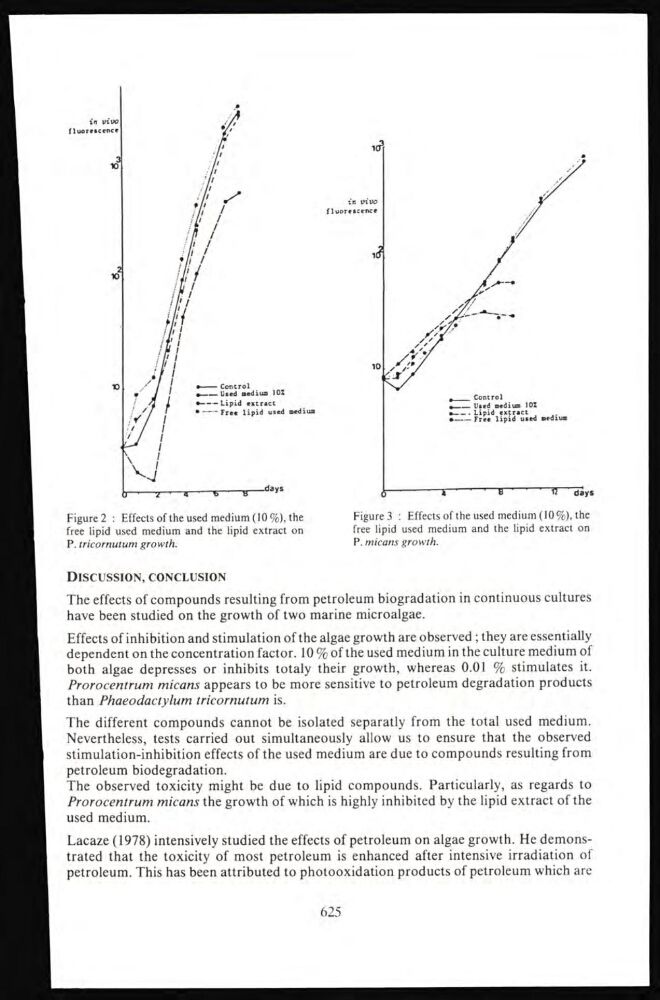
Figure 2 : Effects of the used medium (10 %), the
free lipid used medium and the lipid extract on
P. tricornutum growth.
Figure 3 : Effects of the used medium (10%), the
free lipid used medium and the lipid extract on
P. micans growth.
DISCUSSION, CONCLUSION
The effects of compounds resulting from petroleum biogradation in continuous cultures
have been studied on the growth of two marine microalgae.
Effects of inhibition and stimulation of the algae growth are observed ; they are essentially
dependent on the concentration factor. 10 % of the used medium in the culture medium of
both algae depresses or inhibits totaly their growth, whereas 0.01 % stimulates it.
Prorocentrum micans appears to be more sensitive to petroleum degradation products
than Phaeodactylum tricornutum is.
The different compounds cannot be isolated separatly from the total used medium.
Nevertheless, tests carried out simultaneously allow us to ensure that the observed
stimulation-inhibition effects of the used medium are due to compounds resulting from
petroleum biodegradation.
The observed toxicity might be due to lipid compounds. Particularly, as regards to
Prorocentrum micans the growth of which is highly inhibited by the lipid extract of the
used medium.
Lacaze (1978) intensively studied the effects of petroleum on algae growth. He demonstrated that the toxicity of most petroleum is enhanced after intensive irradiation of
petroleum. This has been attributed to photooxidation products of petroleum which are
625
free lipid used medium and the lipid extract on
P. tricornutum growth.
Figure 3 : Effects of the used medium (10%), the
free lipid used medium and the lipid extract on
P. micans growth.
DISCUSSION, CONCLUSION
The effects of compounds resulting from petroleum biogradation in continuous cultures
have been studied on the growth of two marine microalgae.
Effects of inhibition and stimulation of the algae growth are observed ; they are essentially
dependent on the concentration factor. 10 % of the used medium in the culture medium of
both algae depresses or inhibits totaly their growth, whereas 0.01 % stimulates it.
Prorocentrum micans appears to be more sensitive to petroleum degradation products
than Phaeodactylum tricornutum is.
The different compounds cannot be isolated separatly from the total used medium.
Nevertheless, tests carried out simultaneously allow us to ensure that the observed
stimulation-inhibition effects of the used medium are due to compounds resulting from
petroleum biodegradation.
The observed toxicity might be due to lipid compounds. Particularly, as regards to
Prorocentrum micans the growth of which is highly inhibited by the lipid extract of the
used medium.
Lacaze (1978) intensively studied the effects of petroleum on algae growth. He demonstrated that the toxicity of most petroleum is enhanced after intensive irradiation of
petroleum. This has been attributed to photooxidation products of petroleum which are
625