

phenanthrene degradation by Flavobacterium sp. SB23 (pG05) is influenced by a
plasmid-mediated metabolic pathway. The
14 C-phenanthrene results reconcile the phenanthrene clearing phenomenon observed on agar plates, used in isolation of presumptive
phenanthrene-degrading bacteria in this study and reported as a rapid screening method
for phenanthrene-degrading bacteria (Cooney and Shiaris, 1982 ; Shiaris and Cooney,
1983 ; Kiyoharaa et ai, 1982). In contrast, Fedorak et al. (1984) detected no significant
release of
14 CO 2 from cultures of yeasts and fungi to which had been added Prudhoe Bay
crude oil “spiked” with (9- 14 C)-phenanthrene. Even though the organisms used were
known to attack n-alkanes in the crude oil, they failed to mineralize (l- 14 C)-naphthalene
and (9- 14 C)-phenanthrene added to the crude oil (Fedorak et al., 1984).
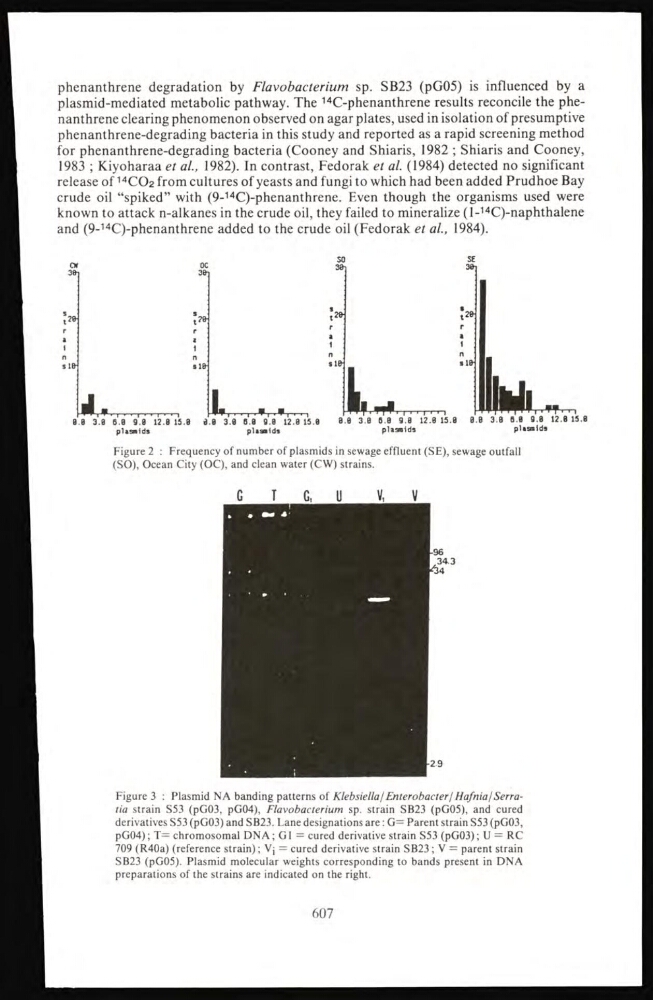
Figure 2 : Frequency of number of plasmids in sewage effluent (SE), sewage outfall
(SO), Ocean City (OC), and clean water (CW) strains.
Figure 3 : Plasmid NA banding patterns of Klebsiella/Enterobacter / Hafnia/Serratia strain S53 (pG03, pG04), Flavobacterium sp. strain SB23 (pG05), and cured
derivatives S53 (pG03) and SB23. Lane designations are : G= Parent strain S53 (pG03,
pG04); T= chromosomal DNA; G1 = cured derivative strain S53 (pG03); U = RC
709 (R40a) (reference strain) ; V i = cured derivative strain SB23 ; V = parent strain
SB23 (pG05). Plasmid molecular weights corresponding to bands present in DNA
preparations of the strains are indicated on the right.
607
plasmid-mediated metabolic pathway. The
14 C-phenanthrene results reconcile the phenanthrene clearing phenomenon observed on agar plates, used in isolation of presumptive
phenanthrene-degrading bacteria in this study and reported as a rapid screening method
for phenanthrene-degrading bacteria (Cooney and Shiaris, 1982 ; Shiaris and Cooney,
1983 ; Kiyoharaa et ai, 1982). In contrast, Fedorak et al. (1984) detected no significant
release of
14 CO 2 from cultures of yeasts and fungi to which had been added Prudhoe Bay
crude oil “spiked” with (9- 14 C)-phenanthrene. Even though the organisms used were
known to attack n-alkanes in the crude oil, they failed to mineralize (l- 14 C)-naphthalene
and (9- 14 C)-phenanthrene added to the crude oil (Fedorak et al., 1984).
Figure 2 : Frequency of number of plasmids in sewage effluent (SE), sewage outfall
(SO), Ocean City (OC), and clean water (CW) strains.
Figure 3 : Plasmid NA banding patterns of Klebsiella/Enterobacter / Hafnia/Serratia strain S53 (pG03, pG04), Flavobacterium sp. strain SB23 (pG05), and cured
derivatives S53 (pG03) and SB23. Lane designations are : G= Parent strain S53 (pG03,
pG04); T= chromosomal DNA; G1 = cured derivative strain S53 (pG03); U = RC
709 (R40a) (reference strain) ; V i = cured derivative strain SB23 ; V = parent strain
SB23 (pG05). Plasmid molecular weights corresponding to bands present in DNA
preparations of the strains are indicated on the right.
607