

seawater, 18°C
cfu ml' 1
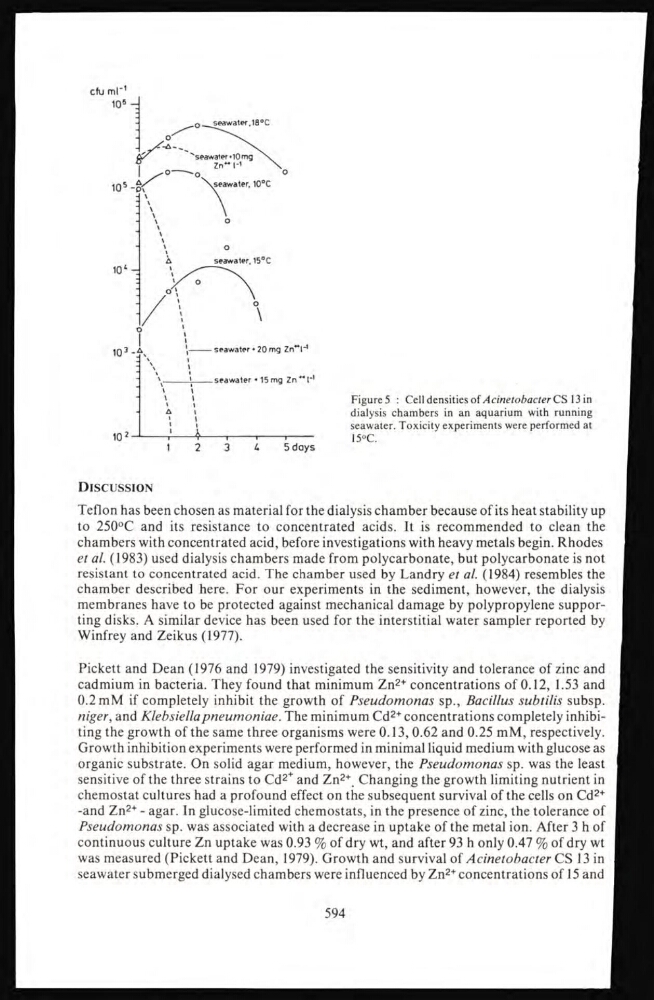
Figure 5 : Cell densities of Acinetobacter CS 13 in
dialysis chambers in an aquarium with running
seawater. Toxicity experiments were performed at
15°C.
DISCUSSION
Teflon has been chosen as material for the dialysis chamber because of its heat stability up
to 250°C and its resistance to concentrated acids. It is recommended to clean the
chambers with concentrated acid, before investigations with heavy metals begin. Rhodes
et al. (1983) used dialysis chambers made from polycarbonate, but polycarbonate is not
resistant to concentrated acid. The chamber used by Landry et al. (1984) resembles the
chamber described here. For our experiments in the sediment, however, the dialysis
membranes have to be protected against mechanical damage by polypropylene supporting disks. A similar device has been used for the interstitial water sampler reported by
Winfrey and Zeikus (1977).
Pickett and Dean (1976 and 1979) investigated the sensitivity and tolerance of zinc and
cadmium in bacteria. They found that minimum Zn
2+ concentrations of 0.12, 1.53 and
0.2 mM if completely inhibit the growth of Pseudomonas sp., Bacillus subtilis subsp.
niger, and Klebsiella pneumoniae. The minimum Cd
2+ concentrations completely inhibiting the growth of the same three organisms were 0.13, 0.62 and 0.25 mM, respectively.
Growth inhibition experiments were performed in minimal liquid medium with glucose as
organic substrate. On solid agar medium, however, the Pseudomonas sp. was the least
sensitive of the three strains to Cd
2+ and Zn
2+ . Changing the growth limiting nutrient in
chemostat cultures had a profound effect on the subsequent survival of the cells on Cd 2+
-and Zn
2+ - agar. In glucose-limited chemostats, in the presence of zinc, the tolerance of
Pseudomonas sp. was associated with a decrease in uptake of the metal ion. After 3 h of
continuous culture Zn uptake was 0.93 % of dry wt, and after 93 h only 0.47 % of dry wt
was measured (Pickett and Dean, 1979). Growth and survival of Acinetobacter CS 13 in
seawater submerged dialysed chambers were influenced by Zn
2+ concentrations of 15 and
594
cfu ml' 1
Figure 5 : Cell densities of Acinetobacter CS 13 in
dialysis chambers in an aquarium with running
seawater. Toxicity experiments were performed at
15°C.
DISCUSSION
Teflon has been chosen as material for the dialysis chamber because of its heat stability up
to 250°C and its resistance to concentrated acids. It is recommended to clean the
chambers with concentrated acid, before investigations with heavy metals begin. Rhodes
et al. (1983) used dialysis chambers made from polycarbonate, but polycarbonate is not
resistant to concentrated acid. The chamber used by Landry et al. (1984) resembles the
chamber described here. For our experiments in the sediment, however, the dialysis
membranes have to be protected against mechanical damage by polypropylene supporting disks. A similar device has been used for the interstitial water sampler reported by
Winfrey and Zeikus (1977).
Pickett and Dean (1976 and 1979) investigated the sensitivity and tolerance of zinc and
cadmium in bacteria. They found that minimum Zn
2+ concentrations of 0.12, 1.53 and
0.2 mM if completely inhibit the growth of Pseudomonas sp., Bacillus subtilis subsp.
niger, and Klebsiella pneumoniae. The minimum Cd
2+ concentrations completely inhibiting the growth of the same three organisms were 0.13, 0.62 and 0.25 mM, respectively.
Growth inhibition experiments were performed in minimal liquid medium with glucose as
organic substrate. On solid agar medium, however, the Pseudomonas sp. was the least
sensitive of the three strains to Cd
2+ and Zn
2+ . Changing the growth limiting nutrient in
chemostat cultures had a profound effect on the subsequent survival of the cells on Cd 2+
-and Zn
2+ - agar. In glucose-limited chemostats, in the presence of zinc, the tolerance of
Pseudomonas sp. was associated with a decrease in uptake of the metal ion. After 3 h of
continuous culture Zn uptake was 0.93 % of dry wt, and after 93 h only 0.47 % of dry wt
was measured (Pickett and Dean, 1979). Growth and survival of Acinetobacter CS 13 in
seawater submerged dialysed chambers were influenced by Zn
2+ concentrations of 15 and
594