

Medium
Composition
Medium
Composition
ZoBell
Peptone
5g
Yeast extract
lg
K2HPO 4
0.5 g
Kusters
Glycerol
10g
FeSO 4
Trace
Casein
0.3g
Agar (Difco)
15 g
KNO3
2g
Seawater*
1 1
K 2 HPO 4
2g
pH
7.0-7.1
MgSO 4
0.05 g
CaCO 3
0.02g
Grein
Soluble starch
10g
FeSC>4
0.01 g
&
Casein (dissolved
Agar (Difco)
18 g
Meyers
in NaOH)
1 g
Seawater
1 1
Seawater
1 1
pH
7.0-7.1
PH
7.0-7.1
Dextrose
10g
Glucose
Glucose
10g
Martin
Peptone
5g
Asparagine
Asparagine
0.5 g
K 2 HPO 4
1 g
K 2 HPO 4
0.5 g
Rose-Bengal
Rose bengal**
Agar (Difco)
15g
Agar (Difco)
15 g
Seawater
11
Seawater
1 1
PH
7.0-7.1
PH
7.0-7.1
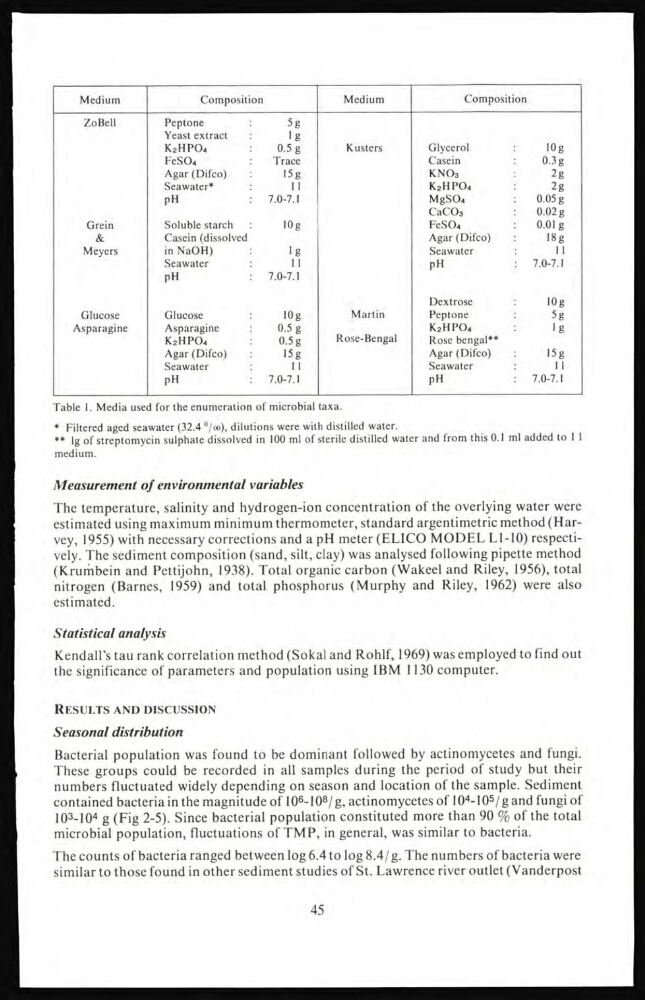
Table 1. Media used for the enumeration of microbial taxa.
* Filtered aged seawater (32.4 ‰), dilutions were with distilled water.
** 1g of streptomycin sulphate dissolved in 100 ml of sterile distilled water and from this 0.1 ml added to 1 1
medium.
Measurement of environmental variables
The temperature, salinity and hydrogen-ion concentration of the overlying water were
estimated using maximum minimum thermometer, standard argentimetric method (Harvey, 1955) with necessary corrections and a pH meter (ELICO MODEL Ll-10) respectively. The sediment composition (sand, silt, clay) was analysed following pipette method
(Krumbein and Pettijohn, 1938). Total organic carbon (Wakeel and Riley, 1956), total
nitrogen (Barnes, 1959) and total phosphorus (Murphy and Riley, 1962) were also
estimated.
Statistical analysis
Kendall’s tau rank correlation method (Sokal and Rohlf, 1969) was employed to find out
the significance of parameters and population using IBM 1130 computer.
RESULTS AND DISCUSSION
Seasonal distribution
Bacterial population was found to be dominant followed by actinomycetes and fungi.
These groups could be recorded in all samples during the period of study but their
numbers fluctuated widely depending on season and location of the sample. Sediment
contained bacteria in the magnitude of 10 6 -10 8 /g, actinomycètes of 10 4 -10 5 /g and fungi of
10
3 -10
4 g (Fig 2-5). Since bacterial population constituted more than 90 % of the total
microbial population, fluctuations of TMP, in general, was similar to bacteria.
The counts of bacteria ranged between log 6.4 to log 8.4/ g. The numbers of bacteria were
similar to those found in other sediment studies of St. Lawrence river outlet (Vanderpost
45
Composition
Medium
Composition
ZoBell
Peptone
5g
Yeast extract
lg
K2HPO 4
0.5 g
Kusters
Glycerol
10g
FeSO 4
Trace
Casein
0.3g
Agar (Difco)
15 g
KNO3
2g
Seawater*
1 1
K 2 HPO 4
2g
pH
7.0-7.1
MgSO 4
0.05 g
CaCO 3
0.02g
Grein
Soluble starch
10g
FeSC>4
0.01 g
&
Casein (dissolved
Agar (Difco)
18 g
Meyers
in NaOH)
1 g
Seawater
1 1
Seawater
1 1
pH
7.0-7.1
PH
7.0-7.1
Dextrose
10g
Glucose
Glucose
10g
Martin
Peptone
5g
Asparagine
Asparagine
0.5 g
K 2 HPO 4
1 g
K 2 HPO 4
0.5 g
Rose-Bengal
Rose bengal**
Agar (Difco)
15g
Agar (Difco)
15 g
Seawater
11
Seawater
1 1
PH
7.0-7.1
PH
7.0-7.1
Table 1. Media used for the enumeration of microbial taxa.
* Filtered aged seawater (32.4 ‰), dilutions were with distilled water.
** 1g of streptomycin sulphate dissolved in 100 ml of sterile distilled water and from this 0.1 ml added to 1 1
medium.
Measurement of environmental variables
The temperature, salinity and hydrogen-ion concentration of the overlying water were
estimated using maximum minimum thermometer, standard argentimetric method (Harvey, 1955) with necessary corrections and a pH meter (ELICO MODEL Ll-10) respectively. The sediment composition (sand, silt, clay) was analysed following pipette method
(Krumbein and Pettijohn, 1938). Total organic carbon (Wakeel and Riley, 1956), total
nitrogen (Barnes, 1959) and total phosphorus (Murphy and Riley, 1962) were also
estimated.
Statistical analysis
Kendall’s tau rank correlation method (Sokal and Rohlf, 1969) was employed to find out
the significance of parameters and population using IBM 1130 computer.
RESULTS AND DISCUSSION
Seasonal distribution
Bacterial population was found to be dominant followed by actinomycetes and fungi.
These groups could be recorded in all samples during the period of study but their
numbers fluctuated widely depending on season and location of the sample. Sediment
contained bacteria in the magnitude of 10 6 -10 8 /g, actinomycètes of 10 4 -10 5 /g and fungi of
10
3 -10
4 g (Fig 2-5). Since bacterial population constituted more than 90 % of the total
microbial population, fluctuations of TMP, in general, was similar to bacteria.
The counts of bacteria ranged between log 6.4 to log 8.4/ g. The numbers of bacteria were
similar to those found in other sediment studies of St. Lawrence river outlet (Vanderpost
45