

hand, direct assays of key enzymes of the Calvin cycle such as RUBPCase would
overcome heterotrophic interferences, but no longer allow to differentiate between
photo- and chemoautotrophic activities.
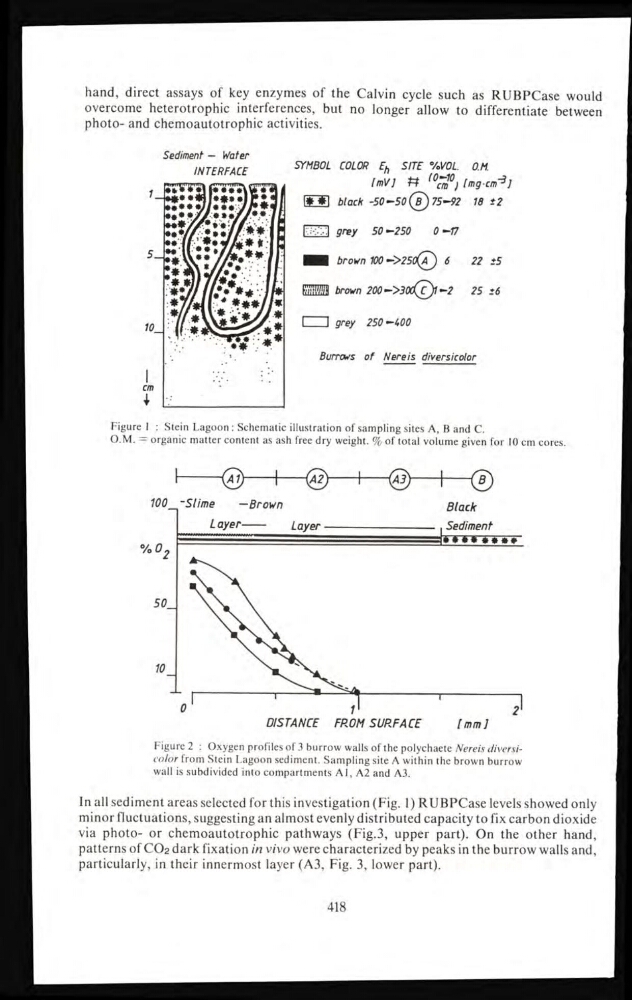
Figure 1 : Stein Lagoon : Schematic illustration of sampling sites A, B and C.
O.M. = organic matter content as ash free dry weight. % of total volume given for 10 cm cores.
Figure 2 : Oxygen profiles of 3 burrow walls of the polychaete Nereis diversicolor from Stein Lagoon sediment. Sampling site A within the brown burrow
wall is subdivided into compartments A1, A2 and A3.
In all sediment areas selected for this investigation (Fig. 1) RUBPCase levels showed only
minor fluctuations, suggesting an almost evenly distributed capacity to fix carbon dioxide
via photo- or chemoautotrophic pathways (Fig.3, upper part). On the other hand,
patterns of CO2 dark fixation in vivo were characterized by peaks in the burrow walls and,
particularly, in their innermost layer (A3, Fig. 3, lower part).
418
overcome heterotrophic interferences, but no longer allow to differentiate between
photo- and chemoautotrophic activities.
Figure 1 : Stein Lagoon : Schematic illustration of sampling sites A, B and C.
O.M. = organic matter content as ash free dry weight. % of total volume given for 10 cm cores.
Figure 2 : Oxygen profiles of 3 burrow walls of the polychaete Nereis diversicolor from Stein Lagoon sediment. Sampling site A within the brown burrow
wall is subdivided into compartments A1, A2 and A3.
In all sediment areas selected for this investigation (Fig. 1) RUBPCase levels showed only
minor fluctuations, suggesting an almost evenly distributed capacity to fix carbon dioxide
via photo- or chemoautotrophic pathways (Fig.3, upper part). On the other hand,
patterns of CO2 dark fixation in vivo were characterized by peaks in the burrow walls and,
particularly, in their innermost layer (A3, Fig. 3, lower part).
418