

in cultures containing NH4 (Tab. 3) indicating that the organisms have the ability as
chemolithotrophs to incorporate CO2. The ability of nitrifiers to oxidize CH4 was also
confirmed by Hyman and Wood (1983).
Methane Concentration (10
-4 mM)
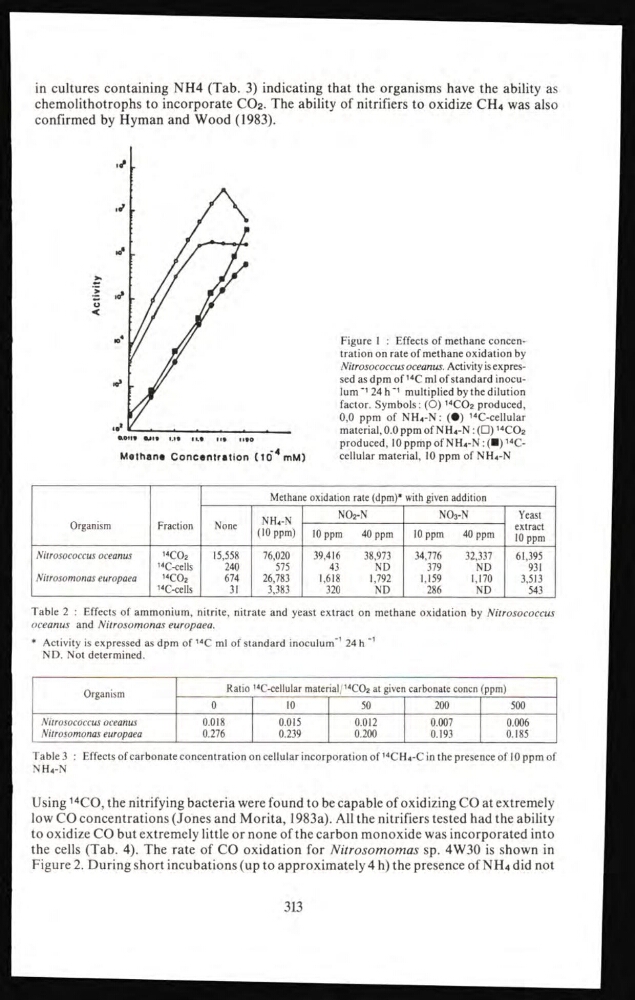
Figure 1 : Effects of methane concentration on rate of methane oxidation by
Nitrosococcus oceanus. Activity is expressed as dpm of 14 C ml of standard inoculum -1 24 h multiplied by the dilution
factor. Symbols: (O) 14 CC 2 produced,
0,0 ppm of NH4-N : (•) 14 C-cellular
material, 0.0 ppm of NH 4 -N : (D)
14 CO 2
produced, 10 ppmp of NH 4 -N : (■) 14 Ccellular material, 10 ppm of NH4-N
Organism
Fraction
Methane oxidation rate (dpm)* with given addition
None
NH4-N
(10 ppm)
NO2-N
NO3-N
Yeast
extract
10 ppm
10 ppm
40 ppm
10 ppm
40 ppm
Nitrosococcus oceanus
14 CO 2
15,558
76,020
39,416
38,973
34,776
32,337
61,395
14 C-cells
240
575
43
ND
379
ND
931
Nitrosomonas europaea
14 CO 2
674
26,783
1,618
1,792
1,159
1,170
3,513
14 C-cells
31
3,383
320
ND
286
ND
543
Table 2 : Effects of ammonium, nitrite, nitrate and yeast extract on methane oxidation by Nitrosococcus
oceanus and Nitrosomonas europaea.
* Activity is expressed as dpm of
14 C ml of standard inoculum"
1 24 h
ND. Not determined.
Organism
Ratio 14 C-cellular material/
14 CO 2 at given carbonate concn (ppm)
0
10
50
200
500
Nitrosococcus oceanus
0.018
0.015
0.012
0.007
0.006
Nitrosomonas europaea
0.276
0.239
0.200
0.193
0.185
Table 3 : Effects of carbonate concentration on cellular incorporation of
14 CH4-C in the presence of 10 ppm of
NH 4 -N
Using
14 CO, the nitrifying bacteria were found to be capable of oxidizing CO at extremely
low CO concentrations (Jones and Morita, 1983a). All the nitrifiers tested had the ability
to oxidize CO but extremely little or none of the carbon monoxide was incorporated into
the cells (Tab. 4). The rate of CO oxidation for Nitrosomomas sp. 4W30 is shown in
Figure 2. During short incubations (up to approximately 4 h) the presence of NH 4 did not
313
chemolithotrophs to incorporate CO2. The ability of nitrifiers to oxidize CH4 was also
confirmed by Hyman and Wood (1983).
Methane Concentration (10
-4 mM)
Figure 1 : Effects of methane concentration on rate of methane oxidation by
Nitrosococcus oceanus. Activity is expressed as dpm of 14 C ml of standard inoculum -1 24 h multiplied by the dilution
factor. Symbols: (O) 14 CC 2 produced,
0,0 ppm of NH4-N : (•) 14 C-cellular
material, 0.0 ppm of NH 4 -N : (D)
14 CO 2
produced, 10 ppmp of NH 4 -N : (■) 14 Ccellular material, 10 ppm of NH4-N
Organism
Fraction
Methane oxidation rate (dpm)* with given addition
None
NH4-N
(10 ppm)
NO2-N
NO3-N
Yeast
extract
10 ppm
10 ppm
40 ppm
10 ppm
40 ppm
Nitrosococcus oceanus
14 CO 2
15,558
76,020
39,416
38,973
34,776
32,337
61,395
14 C-cells
240
575
43
ND
379
ND
931
Nitrosomonas europaea
14 CO 2
674
26,783
1,618
1,792
1,159
1,170
3,513
14 C-cells
31
3,383
320
ND
286
ND
543
Table 2 : Effects of ammonium, nitrite, nitrate and yeast extract on methane oxidation by Nitrosococcus
oceanus and Nitrosomonas europaea.
* Activity is expressed as dpm of
14 C ml of standard inoculum"
1 24 h
ND. Not determined.
Organism
Ratio 14 C-cellular material/
14 CO 2 at given carbonate concn (ppm)
0
10
50
200
500
Nitrosococcus oceanus
0.018
0.015
0.012
0.007
0.006
Nitrosomonas europaea
0.276
0.239
0.200
0.193
0.185
Table 3 : Effects of carbonate concentration on cellular incorporation of
14 CH4-C in the presence of 10 ppm of
NH 4 -N
Using
14 CO, the nitrifying bacteria were found to be capable of oxidizing CO at extremely
low CO concentrations (Jones and Morita, 1983a). All the nitrifiers tested had the ability
to oxidize CO but extremely little or none of the carbon monoxide was incorporated into
the cells (Tab. 4). The rate of CO oxidation for Nitrosomomas sp. 4W30 is shown in
Figure 2. During short incubations (up to approximately 4 h) the presence of NH 4 did not
313