

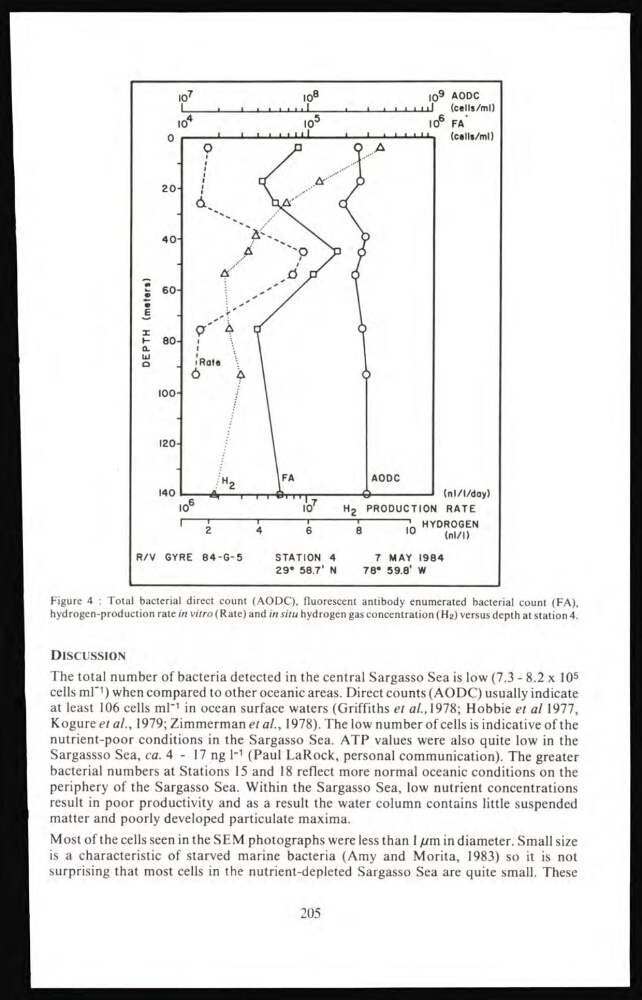
Figure 4 : Total bacterial direct count (AODC), fluorescent antibody enumerated bacterial count (FA),
hydrogen-production rate in vitro (Rate) and in situ hydrogen gas concentration (H2) versus depth at station 4.
DISCUSSION
The total number of bacteria detected in the central Sargasso Sea is low (7.3 - 8.2 x 10
5
cells ml' 1 ) when compared to other oceanic areas. Direct counts (AODC) usually indicate
at least 106 cells ml'
1 in ocean surface waters (Griffiths et al., 1978; Hobbie et al 1977,
Kogure et al., 1979; Zimmerman et al., 1978). The low number of cells is indicative of the
nutrient-poor conditions in the Sargasso Sea. ATP values were also quite low in the
Sargassso Sea, ca. 4 - 17 ng l -1 (Paul LaRock, personal communication). The greater
bacterial numbers at Stations 15 and 18 reflect more normal oceanic conditions on the
periphery of the Sargasso Sea. Within the Sargasso Sea, low nutrient concentrations
result in poor productivity and as a result the water column contains little suspended
matter and poorly developed particulate maxima.
Most of the cells seen in the SEM photographs were less than 1 µm in diameter. Small size
is a characteristic of starved marine bacteria (Amy and Morita, 1983) so it is not
surprising that most cells in the nutrient-depleted Sargasso Sea are quite small. These
205
hydrogen-production rate in vitro (Rate) and in situ hydrogen gas concentration (H2) versus depth at station 4.
DISCUSSION
The total number of bacteria detected in the central Sargasso Sea is low (7.3 - 8.2 x 10
5
cells ml' 1 ) when compared to other oceanic areas. Direct counts (AODC) usually indicate
at least 106 cells ml'
1 in ocean surface waters (Griffiths et al., 1978; Hobbie et al 1977,
Kogure et al., 1979; Zimmerman et al., 1978). The low number of cells is indicative of the
nutrient-poor conditions in the Sargasso Sea. ATP values were also quite low in the
Sargassso Sea, ca. 4 - 17 ng l -1 (Paul LaRock, personal communication). The greater
bacterial numbers at Stations 15 and 18 reflect more normal oceanic conditions on the
periphery of the Sargasso Sea. Within the Sargasso Sea, low nutrient concentrations
result in poor productivity and as a result the water column contains little suspended
matter and poorly developed particulate maxima.
Most of the cells seen in the SEM photographs were less than 1 µm in diameter. Small size
is a characteristic of starved marine bacteria (Amy and Morita, 1983) so it is not
surprising that most cells in the nutrient-depleted Sargasso Sea are quite small. These
205