

interesting to see that at least one glucose compound could be split by each of the bacteria
colonies. Analysis of this type could be used to characterize extracellular enzymatic
activities of bacteria isolated from such ecological niches as macroalgal surfaces, outer
and intestinal surfaces of zooplankton, interfaces, etc... There is some indication that
enrichment of polymers or continuous excretion of certain compounds leads to a stabilization of a corresponding microflora in these environments. For activities and properties
of bacteria living in association with benthic macroalgal mats this has been demonstrated
by Mow-Robinson (1983).
The question still open is whether enzymatic response of bacteria towards conventional
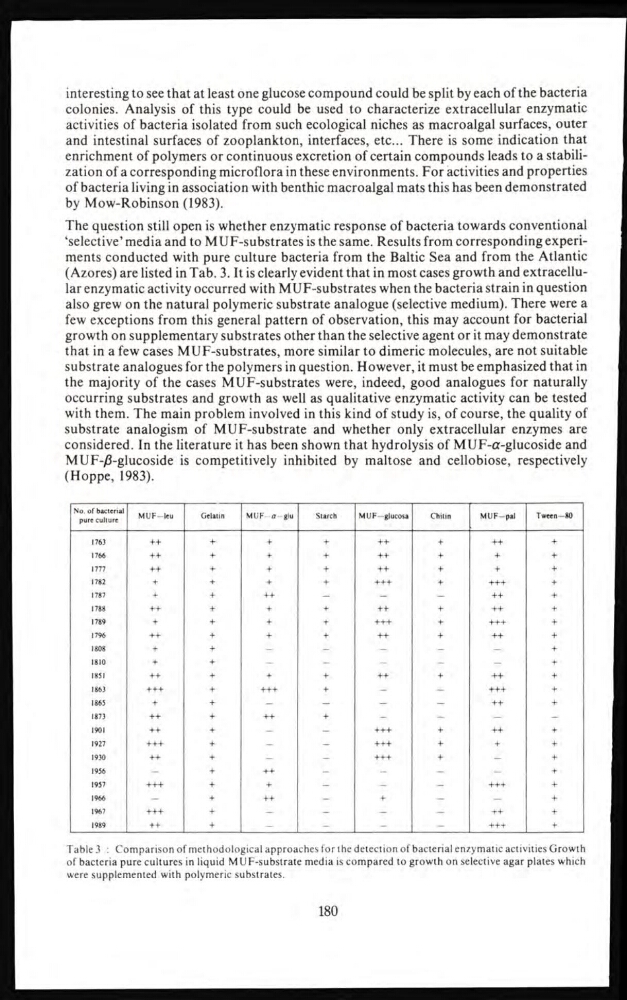
‘selective’ media and to MUF-substrates is the same. Results from corresponding experiments conducted with pure culture bacteria from the Baltic Sea and from the Atlantic
(Azores) are listed in Tab. 3. It is clearly evident that in most cases growth and extracellular enzymatic activity occurred with MUF-substrates when the bacteria strain in question
also grew on the natural polymeric substrate analogue (selective medium). There were a
few exceptions from this general pattern of observation, this may account for bacterial
growth on supplementary substrates other than the selective agent or it may demonstrate
that in a few cases MUF-substrates, more similar to dimeric molecules, are not suitable
substrate analogues for the polymers in question. However, it must be emphasized that in
the majority of the cases MUF-substrates were, indeed, good analogues for naturally
occurring substrates and growth as well as qualitative enzymatic activity can be tested
with them. The main problem involved in this kind of study is, of course, the quality of
substrate analogism of MUF-substrate and whether only extracellular enzymes are
considered. In the literature it has been shown that hydrolysis of MUF-α-glucoside and
MUF-β-glucoside is competitively inhibited by maltose and cellobiose, respectively
(Hoppe, 1983).
No. of bacterial
pure culture
MUF-leu
Gelatin
MUF—α—glu
Starch
MUF—glucosa
Chitin
MUF—pal
Tween—80
1763
++
+
+
+
++
+
++
+
1766
++
+
+
+
++
+
+
+
1777
++
+
+
+
++
+
+
+
1782
+
+
+
+
+++
+
+++
+
1787
+
+
++
-
-
-
++
+
1788
++
+
+
+
++
+
++
+
1789
+
+
+
+
+++
+
+++
+
1796
++
+
+
+
++
+
++
+
1808
+
+
-
-
-
-
-
+
1810
+
+
-
-
-
-
-
+
1831
++
+
+
+
++
+
++
+
1863
+++
+
+++
+
-
-
+++
+
1865
+
+
-
-
-
-
++
+
1873
++
+
++
+
-
-
-
-
1901
++
+
-
-
+++
+
++
+
1927
+++
+
-
-
+++
+
+
+
1930
++
+
-
-
+++
+
-
+
1956
-
+
++
-
-
-
-
+
1957
+++
+
+
-
-
-
+++
+
1966
-
+
++
-
+
-
-
+
1967
+++
+
-
-
-
-
++
+
1989
++
+
-
-
-
-
+++
+
Table 3 : Comparison of methodological approaches for the detection of bacterial enzymatic activities Growth
of bacteria pure cultures in liquid MUF-substrate media is compared to growth on selective agar plates which
were supplemented with polymeric substrates.
180
colonies. Analysis of this type could be used to characterize extracellular enzymatic
activities of bacteria isolated from such ecological niches as macroalgal surfaces, outer
and intestinal surfaces of zooplankton, interfaces, etc... There is some indication that
enrichment of polymers or continuous excretion of certain compounds leads to a stabilization of a corresponding microflora in these environments. For activities and properties
of bacteria living in association with benthic macroalgal mats this has been demonstrated
by Mow-Robinson (1983).
The question still open is whether enzymatic response of bacteria towards conventional
‘selective’ media and to MUF-substrates is the same. Results from corresponding experiments conducted with pure culture bacteria from the Baltic Sea and from the Atlantic
(Azores) are listed in Tab. 3. It is clearly evident that in most cases growth and extracellular enzymatic activity occurred with MUF-substrates when the bacteria strain in question
also grew on the natural polymeric substrate analogue (selective medium). There were a
few exceptions from this general pattern of observation, this may account for bacterial
growth on supplementary substrates other than the selective agent or it may demonstrate
that in a few cases MUF-substrates, more similar to dimeric molecules, are not suitable
substrate analogues for the polymers in question. However, it must be emphasized that in
the majority of the cases MUF-substrates were, indeed, good analogues for naturally
occurring substrates and growth as well as qualitative enzymatic activity can be tested
with them. The main problem involved in this kind of study is, of course, the quality of
substrate analogism of MUF-substrate and whether only extracellular enzymes are
considered. In the literature it has been shown that hydrolysis of MUF-α-glucoside and
MUF-β-glucoside is competitively inhibited by maltose and cellobiose, respectively
(Hoppe, 1983).
No. of bacterial
pure culture
MUF-leu
Gelatin
MUF—α—glu
Starch
MUF—glucosa
Chitin
MUF—pal
Tween—80
1763
++
+
+
+
++
+
++
+
1766
++
+
+
+
++
+
+
+
1777
++
+
+
+
++
+
+
+
1782
+
+
+
+
+++
+
+++
+
1787
+
+
++
-
-
-
++
+
1788
++
+
+
+
++
+
++
+
1789
+
+
+
+
+++
+
+++
+
1796
++
+
+
+
++
+
++
+
1808
+
+
-
-
-
-
-
+
1810
+
+
-
-
-
-
-
+
1831
++
+
+
+
++
+
++
+
1863
+++
+
+++
+
-
-
+++
+
1865
+
+
-
-
-
-
++
+
1873
++
+
++
+
-
-
-
-
1901
++
+
-
-
+++
+
++
+
1927
+++
+
-
-
+++
+
+
+
1930
++
+
-
-
+++
+
-
+
1956
-
+
++
-
-
-
-
+
1957
+++
+
+
-
-
-
+++
+
1966
-
+
++
-
+
-
-
+
1967
+++
+
-
-
-
-
++
+
1989
++
+
-
-
-
-
+++
+
Table 3 : Comparison of methodological approaches for the detection of bacterial enzymatic activities Growth
of bacteria pure cultures in liquid MUF-substrate media is compared to growth on selective agar plates which
were supplemented with polymeric substrates.
180