

concentrations of vitamins in the water of the incubated bottles varied following the same
pattern has the surrounding water, for every vitamin studied. The decrease in the
concentration of vitamins in the water from the bottles during the daytime incubation
undoubtedly signifies that the consumption of these vitamins, by phytoplankton requiring the vitamins, exceeds the availability of vitamins supplied by various kinds of
producers. On the contrary, the increase in concentration of vitamins during the night
incubation obviously signifies that the production of these vitamins surpasses the
consumption by phytoplankton. The consumption rate of thiamine in the water of
incubated bottles ranged from 0.33 to 8.65 mµg/ 1/h, and averaged 4.50 mµg/ 1/h in a 5 m
deep layer and the thermocline for each in situ incubation. On the other hand, the
production rate of thiamine in those bottles ranged from 0.20 to 11.07 mµg/l/h, and
averaged 4.32 mµ g/ 1/h. The consumption of biotin ranged from 0.05 to 1.70 mµg/ 1/h
and averaged 0.61 mµg/l/h, while the biotin production ranged from 0.28 to 0.60
mµg/l/hr and averaged 0.43 mµg/l/h. In the case of vitamin B 12 , the consumption
ranged from 0.09 to 1.63 mµg/ 1/h, while the production ranged from 0.59 to 1.17 mµ/ 1/h
and averaged 0.95 mµg/ 1/h. Generally, for every vitamin, both the consumption rate and
the production rate were higher in the 5 m deep layer than in the thermocline. The diurnal
changes and the successive fluctuations in the concentration of B group vitamins in the
southern basin of Lake Biwa have been previously reported (Kurata A. et al., 1982). The
data obtained in this study strongly supports this earlier work. It has also been that the
primary production rate by an unicellular algal population, especially an ultraphytoplankton population, showed a seasonal inverse relationship of the concentrations
of B group vitamins in the waters of Lake Mergozzo, northern Italy (Kurta A. et al..,
1976). Recently, Pommel (Pommel B., 1975) reported the existence of an inverse relationship in the seasonal changes of the concentration of vitamin B 12 and the population of
Oscillatoria rubescens in lake Leman. The diurnal and successive variations of any kind
of vitamins in the aquatic environments have hardly been reported. However, it appears
that the concentrations of vitamins in aquatic environments generally decrease during the
day and increase during the night, and the phenomenon will be repeated periodically if the
water mass is calm and stagnant. The decrease of vitamin concentrations in the waters of
the euphotic zone must be attributed to photosynthetic activity or primary production by
phytoplankters.
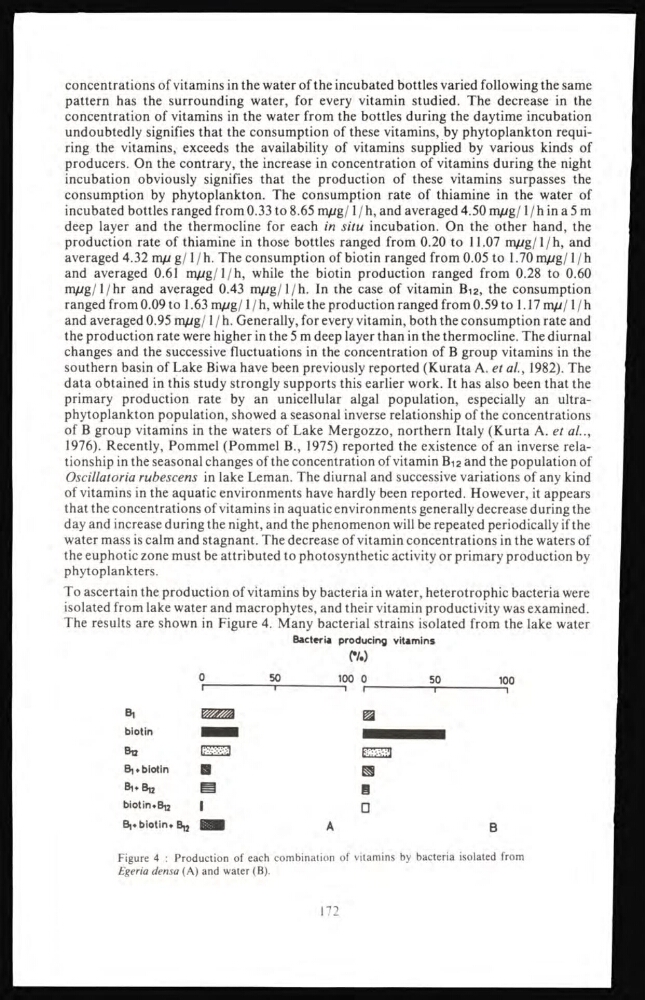
To ascertain the production of vitamins by bacteria in water, heterotrophic bacteria were
isolated from lake water and macrophytes, and their vitamin productivity was examined.
The results are shown in Figure 4. Many bacterial strains isolated from the lake water
Bacteria producing vitamins
P/.)
Figure 4 : Production of each combination of vitamins by bacteria isolated from
Egeria densa (A) and water (B).
172
pattern has the surrounding water, for every vitamin studied. The decrease in the
concentration of vitamins in the water from the bottles during the daytime incubation
undoubtedly signifies that the consumption of these vitamins, by phytoplankton requiring the vitamins, exceeds the availability of vitamins supplied by various kinds of
producers. On the contrary, the increase in concentration of vitamins during the night
incubation obviously signifies that the production of these vitamins surpasses the
consumption by phytoplankton. The consumption rate of thiamine in the water of
incubated bottles ranged from 0.33 to 8.65 mµg/ 1/h, and averaged 4.50 mµg/ 1/h in a 5 m
deep layer and the thermocline for each in situ incubation. On the other hand, the
production rate of thiamine in those bottles ranged from 0.20 to 11.07 mµg/l/h, and
averaged 4.32 mµ g/ 1/h. The consumption of biotin ranged from 0.05 to 1.70 mµg/ 1/h
and averaged 0.61 mµg/l/h, while the biotin production ranged from 0.28 to 0.60
mµg/l/hr and averaged 0.43 mµg/l/h. In the case of vitamin B 12 , the consumption
ranged from 0.09 to 1.63 mµg/ 1/h, while the production ranged from 0.59 to 1.17 mµ/ 1/h
and averaged 0.95 mµg/ 1/h. Generally, for every vitamin, both the consumption rate and
the production rate were higher in the 5 m deep layer than in the thermocline. The diurnal
changes and the successive fluctuations in the concentration of B group vitamins in the
southern basin of Lake Biwa have been previously reported (Kurata A. et al., 1982). The
data obtained in this study strongly supports this earlier work. It has also been that the
primary production rate by an unicellular algal population, especially an ultraphytoplankton population, showed a seasonal inverse relationship of the concentrations
of B group vitamins in the waters of Lake Mergozzo, northern Italy (Kurta A. et al..,
1976). Recently, Pommel (Pommel B., 1975) reported the existence of an inverse relationship in the seasonal changes of the concentration of vitamin B 12 and the population of
Oscillatoria rubescens in lake Leman. The diurnal and successive variations of any kind
of vitamins in the aquatic environments have hardly been reported. However, it appears
that the concentrations of vitamins in aquatic environments generally decrease during the
day and increase during the night, and the phenomenon will be repeated periodically if the
water mass is calm and stagnant. The decrease of vitamin concentrations in the waters of
the euphotic zone must be attributed to photosynthetic activity or primary production by
phytoplankters.
To ascertain the production of vitamins by bacteria in water, heterotrophic bacteria were
isolated from lake water and macrophytes, and their vitamin productivity was examined.
The results are shown in Figure 4. Many bacterial strains isolated from the lake water
Bacteria producing vitamins
P/.)
Figure 4 : Production of each combination of vitamins by bacteria isolated from
Egeria densa (A) and water (B).
172