

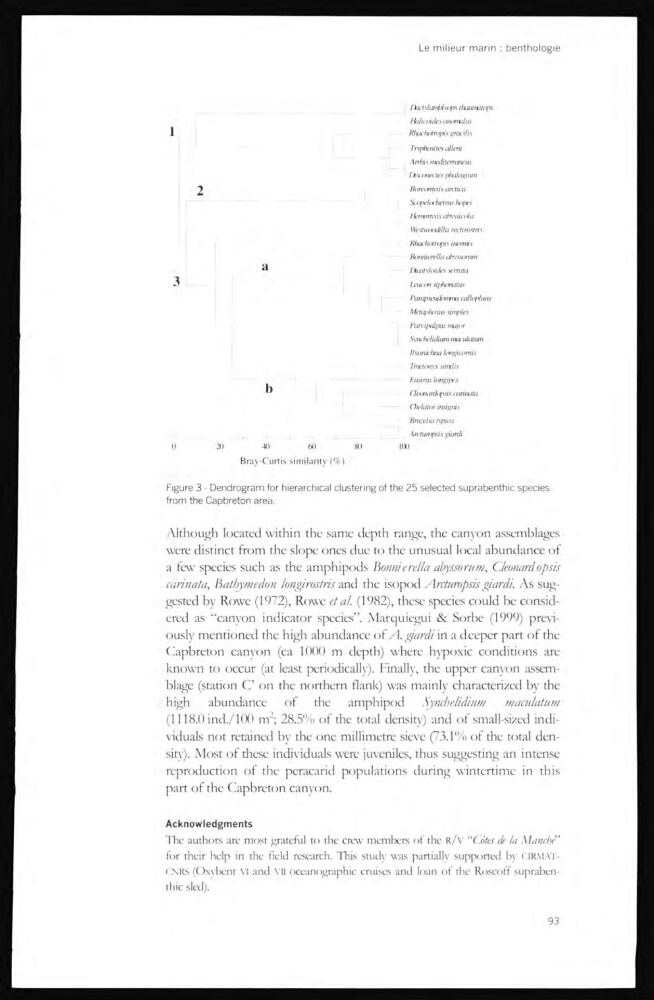
Figure 3 - Dendrogram for hierarchical clustering of the 25 selected suprabenthic species
from the Capbreton area.
Although located within the same depth range, the canyon assemblages
were distinct from the slope ones due to the unusual local abundance of
a few species such as the amphipods Bonnierella abyssorum, Cleonardopsis
carinata, Bathymedon longirostris and the isopod Arcturopsis giardi. As suggested by Rowe (1972), Rowe et al. (1982), these species could be considered as “canyon indicator species”. Marquiegui & Sorbe (1999) previously mentioned the high abundance of A. giardi in a deeper part of the
Capbreton canyon (ca 1000 m depth) whcre hypoxic conditions are
known to occur (at least periodically). Finally, the upper canyon assemblage (station C’ on the northern flank) was mainly characterized by the
high abundance of the amphipod Syncbelidium
maculatum
(1118.0 ind./l 00 m
2 ; 28.5% of the total density) and of small-sized individuals not retained by the one millimetre sieve (73.1% of the total density). Most of these individuals were juveniles, thus suggesting an intense
reproduction of the peracarid populations during wintertime in this
part ot the Capbreton can\on.
Acknowledgments
The authors are most grateful to the crew members of the R/V “Côtes ck ta Manche”
for their help in the field research. This study was partially supported by CIRNLVTCNRS (Oxybent VI and VI! ttceanographic cruises and loan of the Roscoff suprabentliic sled).
93
from the Capbreton area.
Although located within the same depth range, the canyon assemblages
were distinct from the slope ones due to the unusual local abundance of
a few species such as the amphipods Bonnierella abyssorum, Cleonardopsis
carinata, Bathymedon longirostris and the isopod Arcturopsis giardi. As suggested by Rowe (1972), Rowe et al. (1982), these species could be considered as “canyon indicator species”. Marquiegui & Sorbe (1999) previously mentioned the high abundance of A. giardi in a deeper part of the
Capbreton canyon (ca 1000 m depth) whcre hypoxic conditions are
known to occur (at least periodically). Finally, the upper canyon assemblage (station C’ on the northern flank) was mainly characterized by the
high abundance of the amphipod Syncbelidium
maculatum
(1118.0 ind./l 00 m
2 ; 28.5% of the total density) and of small-sized individuals not retained by the one millimetre sieve (73.1% of the total density). Most of these individuals were juveniles, thus suggesting an intense
reproduction of the peracarid populations during wintertime in this
part ot the Capbreton can\on.
Acknowledgments
The authors are most grateful to the crew members of the R/V “Côtes ck ta Manche”
for their help in the field research. This study was partially supported by CIRNLVTCNRS (Oxybent VI and VI! ttceanographic cruises and loan of the Roscoff suprabentliic sled).
93