

dominated by large diatoms since 50% to 70% of Chl a and primary
production belonged to sixe fraction > 20 pm. According to high Cihl a
valucs also rccorded in May 1999 and |une 1998 at the "Gironde” stations, blooms occurred also later in spring and were, contrastingly
composed of small phytoplankton cells (70 to 100% of Chl a and of
primary production (data not shown) belonged to the sizc fraction
<20 µm and 10 to 50% to the size fraction <3 Mm). Phvtoplankton
communities at the “Oceanic” stations were also dominated bv small
cells.
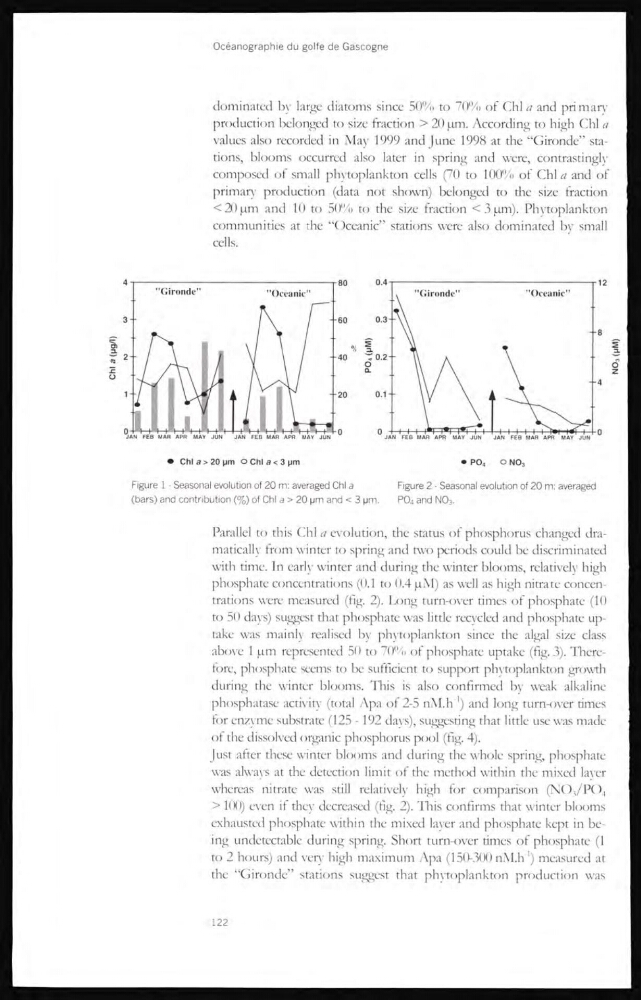
Figure 1 - Seasonal evolution of 20 m: averaged Chl a
Figure 2 - Seasonal evolution of 20 m: averaged
(bars) and contribution (%) of Chl a > 20 pm and < 3 gm.
PO4 and N0 3 .
Parallel to this Chl a evolution, the status of phosphorus changed dramatically frcjm winter to spring and two periods could be discriminated
with time. In early winter and during the winter blooms, relatively high
phosphate concentrations (0.1 to 0.4 p.M) as well as high nitrate concentrations were measured (fig. 2). Long turn-over times of phosphate (10
to 50 days) suggest that phosphate was little recvcled and phosphate uptake was mainly realised by phytoplankton since the algal size class
above 1 pm represented 50 to 70% of phosphate uptake (fig. 3). Therefore, phosphate seems to bc sufficient to support phytoplankton growth
during the winter blooms. This is also confirmed by weak alkaline
phosphatase activity (total Apa of 2-5 nM.h
-1 ) and long turn-over times
for enzyme substrate (125 - 192 days), suggesting that little use was made
of rhe dissolved organic phosphorus pool (fig. 4).
Just after these winter blooms and during the whole spring, phosphate
was always at the detection limit of the method within the mixed laver
whereas nitrate was still relativelv high for comparison (NO 3 /PO
4
,
> 100) even if they decreased (fig. 2). This conftrms that winter blooms
exhausted phosphate within the mixed layer and phosphate kept in being undetectable during spring. Sliort turn-over times of phosphate (1
to 2 hours) and very high maximum /\pa (150-300 nM.h ') measured at
the “Gironde” stations suggest that phytoplankton production was
122
production belonged to sixe fraction > 20 pm. According to high Cihl a
valucs also rccorded in May 1999 and |une 1998 at the "Gironde” stations, blooms occurred also later in spring and were, contrastingly
composed of small phytoplankton cells (70 to 100% of Chl a and of
primary production (data not shown) belonged to the sizc fraction
<20 µm and 10 to 50% to the size fraction <3 Mm). Phvtoplankton
communities at the “Oceanic” stations were also dominated bv small
cells.
Figure 1 - Seasonal evolution of 20 m: averaged Chl a
Figure 2 - Seasonal evolution of 20 m: averaged
(bars) and contribution (%) of Chl a > 20 pm and < 3 gm.
PO4 and N0 3 .
Parallel to this Chl a evolution, the status of phosphorus changed dramatically frcjm winter to spring and two periods could be discriminated
with time. In early winter and during the winter blooms, relatively high
phosphate concentrations (0.1 to 0.4 p.M) as well as high nitrate concentrations were measured (fig. 2). Long turn-over times of phosphate (10
to 50 days) suggest that phosphate was little recvcled and phosphate uptake was mainly realised by phytoplankton since the algal size class
above 1 pm represented 50 to 70% of phosphate uptake (fig. 3). Therefore, phosphate seems to bc sufficient to support phytoplankton growth
during the winter blooms. This is also confirmed by weak alkaline
phosphatase activity (total Apa of 2-5 nM.h
-1 ) and long turn-over times
for enzyme substrate (125 - 192 days), suggesting that little use was made
of rhe dissolved organic phosphorus pool (fig. 4).
Just after these winter blooms and during the whole spring, phosphate
was always at the detection limit of the method within the mixed laver
whereas nitrate was still relativelv high for comparison (NO 3 /PO
4
,
> 100) even if they decreased (fig. 2). This conftrms that winter blooms
exhausted phosphate within the mixed layer and phosphate kept in being undetectable during spring. Sliort turn-over times of phosphate (1
to 2 hours) and very high maximum /\pa (150-300 nM.h ') measured at
the “Gironde” stations suggest that phytoplankton production was
122