

66
DAVID INGLE
nr m
X
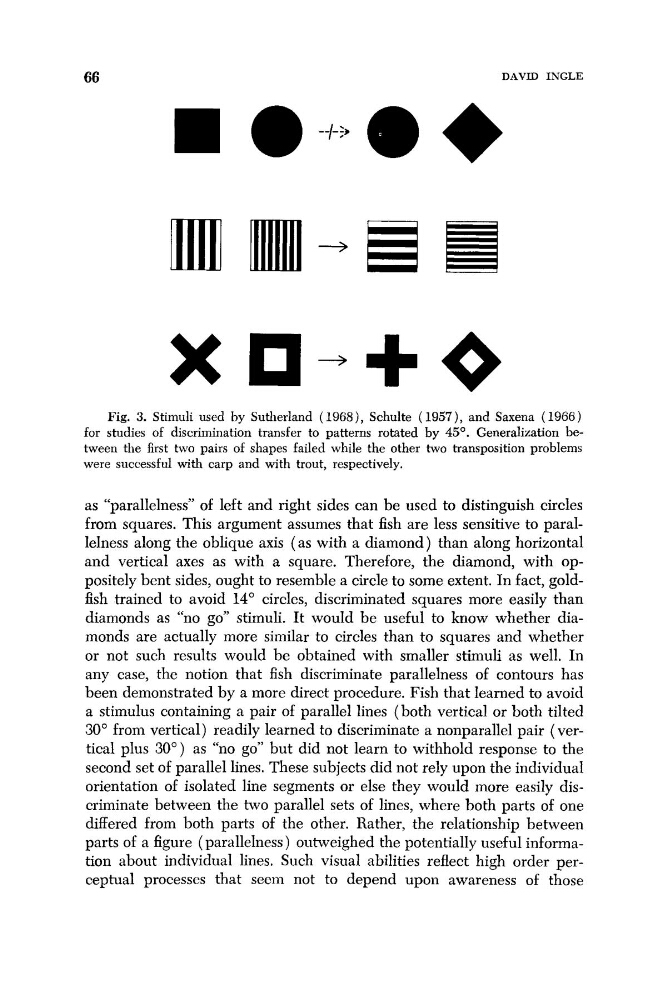
Fig. 3. Stimuli used by Sutherland (1968), Schulte (1957), and Saxena (1966)
for studies of discrimination transfer to patterns rotated by 45’. Generalization between the first two pairs of shapes failed while the other two transposition problems
were successful with carp and with trout, respectively.
as “parallelness” of left and right sides can be used to distinguish circles
from squares. This argument assumes that fish are less sensitive to parallelness along the oblique axis (as with a diamond) than along horizontal
and vertical axes as with a square. Therefore, the diamond, with oppositely bent sides, ought to resemble a circle to some extent. In fact, goldfish trained to avoid 14” circles, discriminated squares more easily than
diamonds as “no go” stimuli. It would be useful to know whether diamonds are actually more similar to circles than to squares and whether
or not such results would be obtained with smaller stimuli as well. In
any case, the notion that fish discriminate parallelness of contours has
been demonstrated by a more direct procedure. Fish that learned to avoid
a stimulus containing a pair of parallel lines (both vertical or both tilted
30” from vertical) readily learned to discriminate a nonparallel pair (vertical plus 30”) as “no go” but did not learn to withhold response to the
second set of parallel lines. These subjects did not rely upon the individual
orientation of isolated line segments or else they would more easily discriminate between the two parallel sets of lines, where both parts of one
differed from both parts of the other. Rather, the relationship between
parts of a figure ( parallelness) outweighed the potentially useful information about individual lines. Such visual abilities reflect high order perceptual processes that seem not to depend upon awareness of those
DAVID INGLE
nr m
X
Fig. 3. Stimuli used by Sutherland (1968), Schulte (1957), and Saxena (1966)
for studies of discrimination transfer to patterns rotated by 45’. Generalization between the first two pairs of shapes failed while the other two transposition problems
were successful with carp and with trout, respectively.
as “parallelness” of left and right sides can be used to distinguish circles
from squares. This argument assumes that fish are less sensitive to parallelness along the oblique axis (as with a diamond) than along horizontal
and vertical axes as with a square. Therefore, the diamond, with oppositely bent sides, ought to resemble a circle to some extent. In fact, goldfish trained to avoid 14” circles, discriminated squares more easily than
diamonds as “no go” stimuli. It would be useful to know whether diamonds are actually more similar to circles than to squares and whether
or not such results would be obtained with smaller stimuli as well. In
any case, the notion that fish discriminate parallelness of contours has
been demonstrated by a more direct procedure. Fish that learned to avoid
a stimulus containing a pair of parallel lines (both vertical or both tilted
30” from vertical) readily learned to discriminate a nonparallel pair (vertical plus 30”) as “no go” but did not learn to withhold response to the
second set of parallel lines. These subjects did not rely upon the individual
orientation of isolated line segments or else they would more easily discriminate between the two parallel sets of lines, where both parts of one
differed from both parts of the other. Rather, the relationship between
parts of a figure ( parallelness) outweighed the potentially useful information about individual lines. Such visual abilities reflect high order perceptual processes that seem not to depend upon awareness of those