

542
M. V. L. BENNETT
(B)
J +
0
102
~
2msec
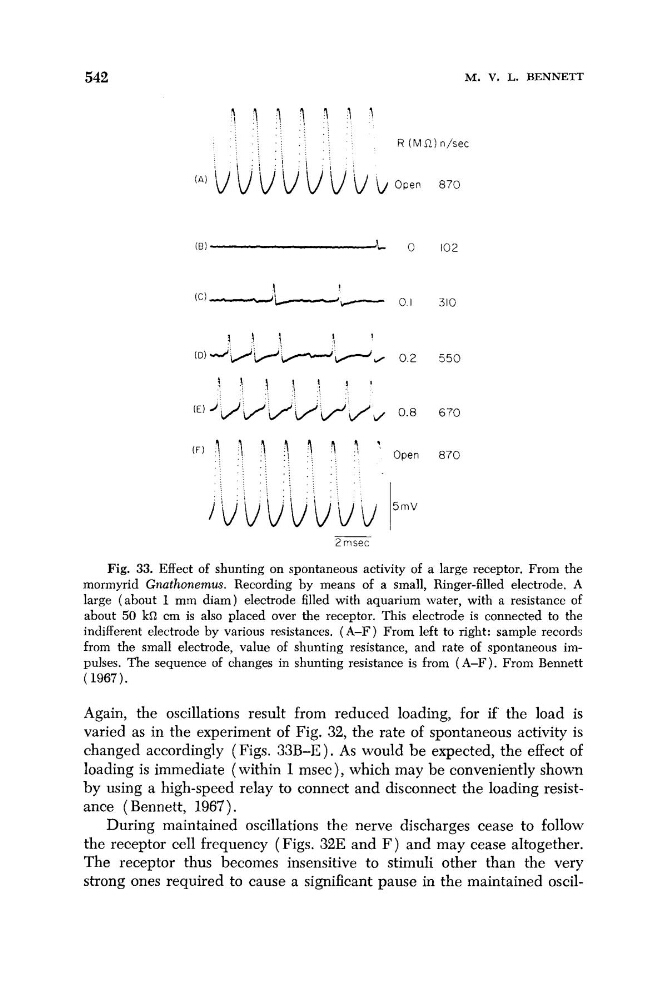
Fig. 33. Effect of shunting on spontaneous activity of a large receptor. From the
morniyrid Gnathonemus. Recording by means of a small, Ringer-filled electrode. A
large (about 1 mm diam) electrode filled with aquarium water, with a resistance of
about 50 kf? cm is also placed over the receptor. This electrode is connected to the
indifferent electrode by various resistances. ( A-F) From left to right: sample records
from the small electrode, value of shunting resistance, and rate of spontaneous impulses. The sequence of changes in shunting resistance is from ( A-F). From Bennett
( 1967 ) .
Again, the oscillations result from reduced loading, for if the load is
varied as in the experiment of Fig. 32, the rate of spontaneous activity is
changed accordingly (Figs. 33B-E). As would be expected, the effect of
loading is immediate (within 1 msec), which may be conveniently shown
by using a high-speed relay to connect and disconnect the loading resistance ( Bennett, 1967).
During maintained oscillations the nerve discharges cease to follow
the receptor cell frequency (Figs. 32E and F ) and may cease altogether.
The receptor thus becomes insensitive to stimuli other than the very
strong ones required to cause a significant pause in the maintained oscil-
M. V. L. BENNETT
(B)
J +
0
102
~
2msec
Fig. 33. Effect of shunting on spontaneous activity of a large receptor. From the
morniyrid Gnathonemus. Recording by means of a small, Ringer-filled electrode. A
large (about 1 mm diam) electrode filled with aquarium water, with a resistance of
about 50 kf? cm is also placed over the receptor. This electrode is connected to the
indifferent electrode by various resistances. ( A-F) From left to right: sample records
from the small electrode, value of shunting resistance, and rate of spontaneous impulses. The sequence of changes in shunting resistance is from ( A-F). From Bennett
( 1967 ) .
Again, the oscillations result from reduced loading, for if the load is
varied as in the experiment of Fig. 32, the rate of spontaneous activity is
changed accordingly (Figs. 33B-E). As would be expected, the effect of
loading is immediate (within 1 msec), which may be conveniently shown
by using a high-speed relay to connect and disconnect the loading resistance ( Bennett, 1967).
During maintained oscillations the nerve discharges cease to follow
the receptor cell frequency (Figs. 32E and F ) and may cease altogether.
The receptor thus becomes insensitive to stimuli other than the very
strong ones required to cause a significant pause in the maintained oscil-