

508
M. V. L. BENNETT
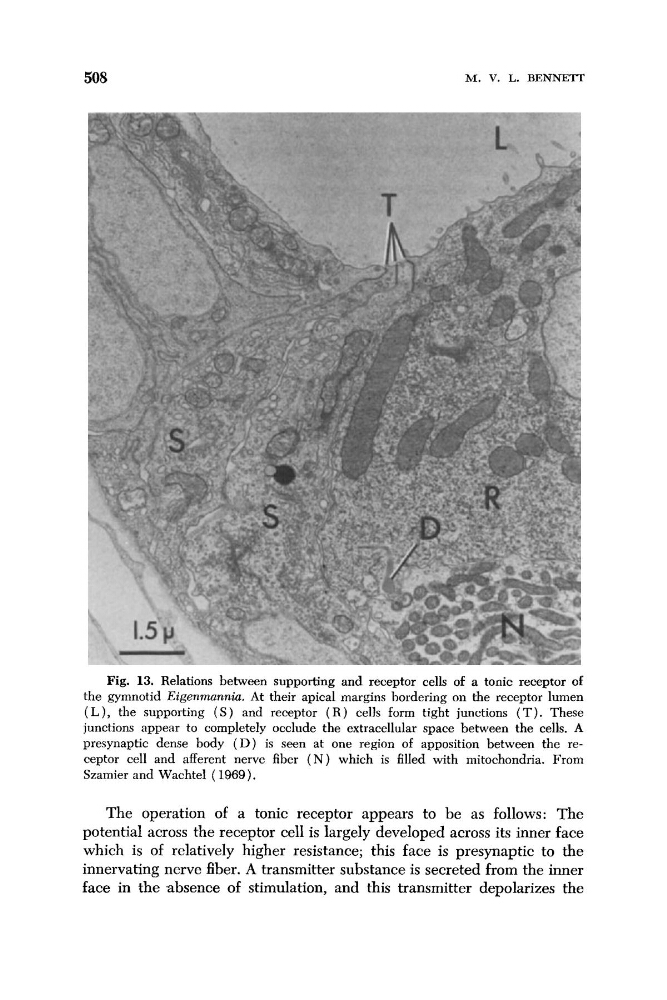
Fig. 13. Relations between supporting and receptor cells of a tonic receptor of
the gymnotid Eigenmannia. At their apical margins bordering on the receptor lumen
( L ) , the supporting ( S ) and receptor ( R ) cells form tight junctions ( T ) . These
junctions appear to completely occlude the extracellular space between the cells. A
presynaptic dense body ( D ) is seen at one region of apposition between the receptor cell and afferent nerve fiber ( N ) which is filled with mitochondria. From
Szamier and Wachtel ( 1969).
The operation of a tonic receptor appears to be as follows: The
potential across the receptor cell is largely developed across its inner face
which is of relatively higher resistance; this face is presynaptic to the
innervating nerve fiber. A transmitter substance is secreted from the inner
face in the absence of stimulation, and this transmitter depolarizes the
M. V. L. BENNETT
Fig. 13. Relations between supporting and receptor cells of a tonic receptor of
the gymnotid Eigenmannia. At their apical margins bordering on the receptor lumen
( L ) , the supporting ( S ) and receptor ( R ) cells form tight junctions ( T ) . These
junctions appear to completely occlude the extracellular space between the cells. A
presynaptic dense body ( D ) is seen at one region of apposition between the receptor cell and afferent nerve fiber ( N ) which is filled with mitochondria. From
Szamier and Wachtel ( 1969).
The operation of a tonic receptor appears to be as follows: The
potential across the receptor cell is largely developed across its inner face
which is of relatively higher resistance; this face is presynaptic to the
innervating nerve fiber. A transmitter substance is secreted from the inner
face in the absence of stimulation, and this transmitter depolarizes the