

476
M. V. L. BENNETT
B....
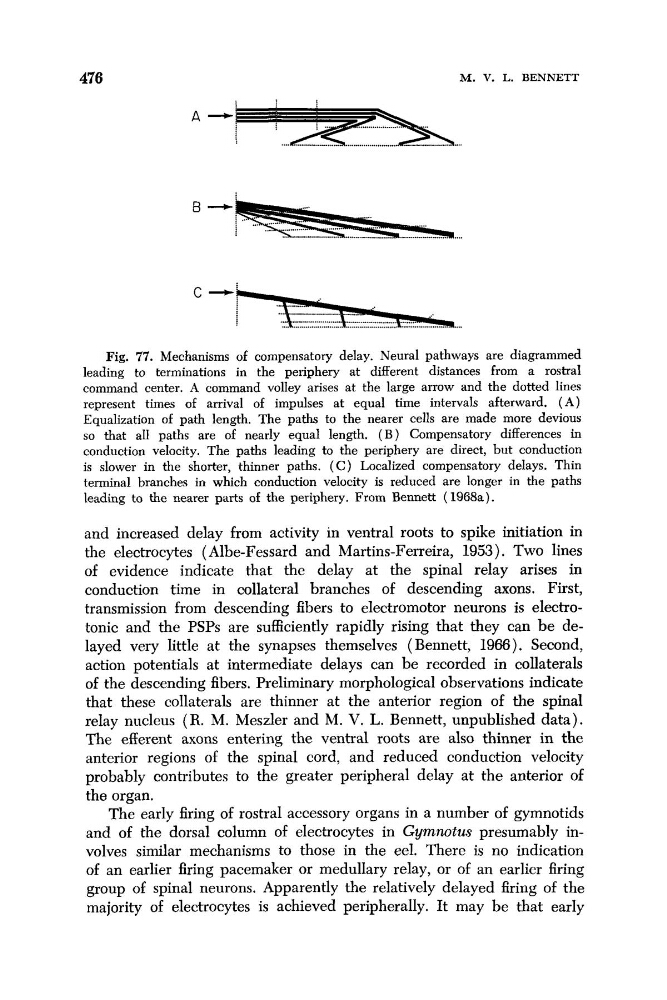
Fig. 77. Mechanisms of compensatory delay. Neural pathways are diagrammed
leading to terminations in the periphery at different distances from a rostral
command center. A command volley arises at the large arrow and the dotted lines
represent times of arrival of impulses at equal time intervals afterward. ( A )
Equalization of path length. The paths to the nearer cells are made more devious
so that all paths are of nearly equal length. ( B ) Compensatory differences in
conduction velocity. The paths leading to the periphery are direct, but conduction
is slower in the shorter, thinner paths. ( C ) Localized compensatory delays. Thin
terminal branches in which conduction velocity is reduced are longer in the paths
leading to the nearer parts of the periphery. From Bennett (1968a).
and increased delay from activity in ventral roots to spike initiation in
the electrocytes ( Albe-Fessard and Martins-Ferreira, 1953). TWO lines
of evidence indicate that the delay at the spinal relay arises in
conduction time in collateral branches of descending axons. First,
transmission from descending fibers to electromotor neurons is electrotonic and the PSPs are sufficiently rapidly rising that they can be delayed very little at the synapses themselves (Bennett, 1966). Second,
action potentials at intermediate delays can be recorded in collaterals
of the descending fibers. Preliminary morphological observations indicate
that these collaterals are thinner at the anterior region of the spinal
relay nucleus (R. M. Meszler and M. V. L. Bennett, unpublished data).
The efferent axons entering the ventral roots are also thinner in the
anterior regions of the spinal cord, and reduced conduction velocity
probably contributes to the greater peripheral delay at the anterior of
the organ.
The early firing of rostral accessory organs in a number of gymnotids
and of the dorsal column of electrocytes in Gymnotus presumably involves similar mechanisms to those in the eel. There is no indication
of an earlier firing pacemaker or medullary relay, or of an earlier firing
group of spinal neurons. Apparently the relatively delayed firing of the
majority of electrocytes is achieved peripherally. It may be that early
M. V. L. BENNETT
B....
Fig. 77. Mechanisms of compensatory delay. Neural pathways are diagrammed
leading to terminations in the periphery at different distances from a rostral
command center. A command volley arises at the large arrow and the dotted lines
represent times of arrival of impulses at equal time intervals afterward. ( A )
Equalization of path length. The paths to the nearer cells are made more devious
so that all paths are of nearly equal length. ( B ) Compensatory differences in
conduction velocity. The paths leading to the periphery are direct, but conduction
is slower in the shorter, thinner paths. ( C ) Localized compensatory delays. Thin
terminal branches in which conduction velocity is reduced are longer in the paths
leading to the nearer parts of the periphery. From Bennett (1968a).
and increased delay from activity in ventral roots to spike initiation in
the electrocytes ( Albe-Fessard and Martins-Ferreira, 1953). TWO lines
of evidence indicate that the delay at the spinal relay arises in
conduction time in collateral branches of descending axons. First,
transmission from descending fibers to electromotor neurons is electrotonic and the PSPs are sufficiently rapidly rising that they can be delayed very little at the synapses themselves (Bennett, 1966). Second,
action potentials at intermediate delays can be recorded in collaterals
of the descending fibers. Preliminary morphological observations indicate
that these collaterals are thinner at the anterior region of the spinal
relay nucleus (R. M. Meszler and M. V. L. Bennett, unpublished data).
The efferent axons entering the ventral roots are also thinner in the
anterior regions of the spinal cord, and reduced conduction velocity
probably contributes to the greater peripheral delay at the anterior of
the organ.
The early firing of rostral accessory organs in a number of gymnotids
and of the dorsal column of electrocytes in Gymnotus presumably involves similar mechanisms to those in the eel. There is no indication
of an earlier firing pacemaker or medullary relay, or of an earlier firing
group of spinal neurons. Apparently the relatively delayed firing of the
majority of electrocytes is achieved peripherally. It may be that early