

16
F. W. MUNZ
Wavelength (nrn)
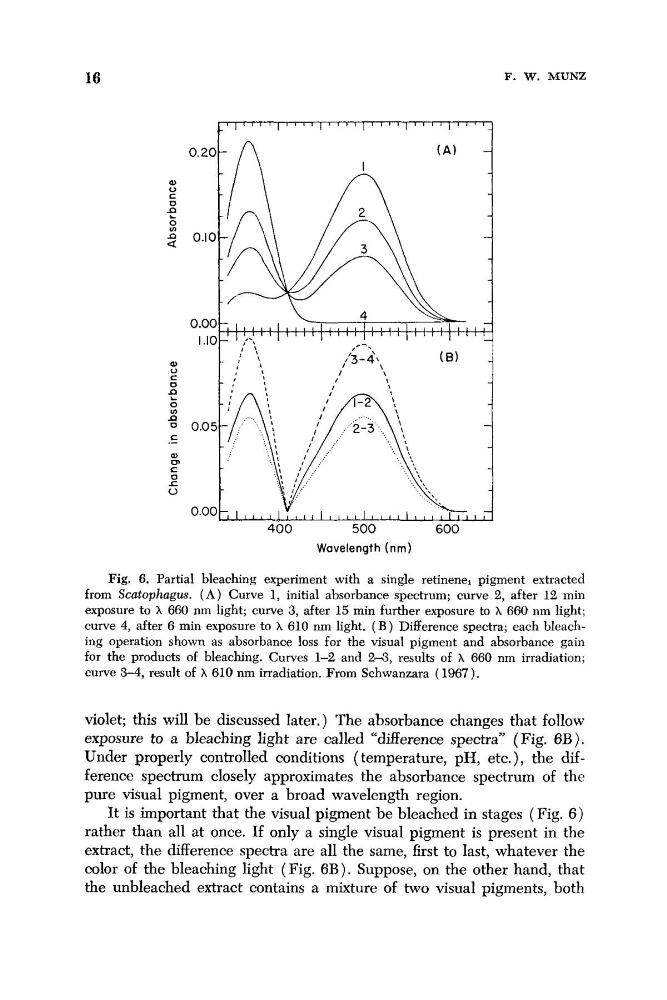
Fig. 6. Partial bleaching experiment with a single retinenel pigment extracted
from Scutophugus. ( A ) Curve 1, initial absorbance spectrum; curve 2, after 12 min
exposure to k 660 nm light; curve 3, after 15 min further exposure to k 660 nm light;
curve 4, after 6 min exposure to k 610 nm light. ( B ) Difference spectra; each bleaching operation shown as absorbance loss for the visual pigment and absorbance gain
for the products of bleaching. Curves 1-2 and 2-3, results of k 660 nm irradiation;
curve 3-4, result of k 610 nm irradiation. From Schwanzara ( 1967).
violet; this will be discussed later.) The absorbance changes that follow
exposure to a bleaching light are called ''difference spectra" ( Fig. 6B).
Under properly controlled conditions (temperature, pH, etc.), the difference spectrum closely approximates the absorbance spectrum of the
pure visual pigment, over a broad wavelength region.
It is important that the visual pigment be bleached in stages (Fig. 6)
rather than all at once. If only a single visual pigment is present in the
extract, the difference spectra are all the same, first to last, whatever the
color of the bleaching light (Fig. 6B). Suppose, on the other hand, that
the unbleached extract contains a mixture of two visual pigments, both
F. W. MUNZ
Wavelength (nrn)
Fig. 6. Partial bleaching experiment with a single retinenel pigment extracted
from Scutophugus. ( A ) Curve 1, initial absorbance spectrum; curve 2, after 12 min
exposure to k 660 nm light; curve 3, after 15 min further exposure to k 660 nm light;
curve 4, after 6 min exposure to k 610 nm light. ( B ) Difference spectra; each bleaching operation shown as absorbance loss for the visual pigment and absorbance gain
for the products of bleaching. Curves 1-2 and 2-3, results of k 660 nm irradiation;
curve 3-4, result of k 610 nm irradiation. From Schwanzara ( 1967).
violet; this will be discussed later.) The absorbance changes that follow
exposure to a bleaching light are called ''difference spectra" ( Fig. 6B).
Under properly controlled conditions (temperature, pH, etc.), the difference spectrum closely approximates the absorbance spectrum of the
pure visual pigment, over a broad wavelength region.
It is important that the visual pigment be bleached in stages (Fig. 6)
rather than all at once. If only a single visual pigment is present in the
extract, the difference spectra are all the same, first to last, whatever the
color of the bleaching light (Fig. 6B). Suppose, on the other hand, that
the unbleached extract contains a mixture of two visual pigments, both