

8. THE LATERAL LINE ORGAN MECHANORECEPTORS
243
of each receptor cell. This is effected by a gelatinous structure called the
cupula which rests upon the sensory epithelium and to which the
sensory hairs are attached. There are two types of lateral line mechanoreceptors: In canal organs the sensory area is situated at the bottom of a
canal sunk down below the skin in a system of canals which is particularly
well developed on the head (Jakubowski, 1967). Epidermal organs, as
the name implies, are situated in the skin with the cupula extending into
the outside water.
A. Methods of Ultrastructural Study
It is relevant here to give a brief description of electron microscopic
techniques. Canal organs in the teleost Lota btu were exposed by dissection in the anesthetized and curarized animal, the fixation fluid [1%
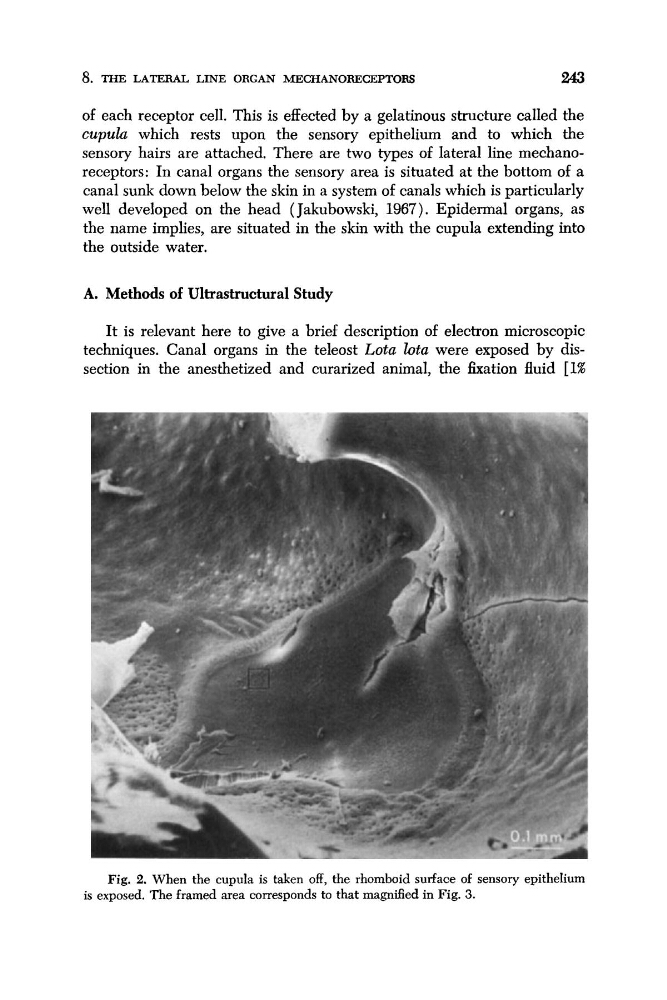
Fig. 2. When the cupula is taken off, the rhomboid surface of sensory epithelium
is exposed. The framed area corresponds to that magnified in Fig. 3.
243
of each receptor cell. This is effected by a gelatinous structure called the
cupula which rests upon the sensory epithelium and to which the
sensory hairs are attached. There are two types of lateral line mechanoreceptors: In canal organs the sensory area is situated at the bottom of a
canal sunk down below the skin in a system of canals which is particularly
well developed on the head (Jakubowski, 1967). Epidermal organs, as
the name implies, are situated in the skin with the cupula extending into
the outside water.
A. Methods of Ultrastructural Study
It is relevant here to give a brief description of electron microscopic
techniques. Canal organs in the teleost Lota btu were exposed by dissection in the anesthetized and curarized animal, the fixation fluid [1%
Fig. 2. When the cupula is taken off, the rhomboid surface of sensory epithelium
is exposed. The framed area corresponds to that magnified in Fig. 3.