

1. THE PITUITARY GLAND
57
PAS + ve cells in the pars intermedia of the elver (young eel) are activated during the upstream migration from the sea (Vollrath, 1966); since
at the same time as they move into freshwater these animals also become
more heavily pigmented, it is impossible to know whether this indicates
an osmoregulatory or a pigmentary function for the PAS + ve cells.
A variety of observations seems to relate the pars intermedia to reproductive changes. For example, in Zoarces viuiparus the PAS + ve cells
increase in number and activity during oogenesis and during the breeding
season ( Uztan, 1966a), and in Carassius the PbH + ve cells become more
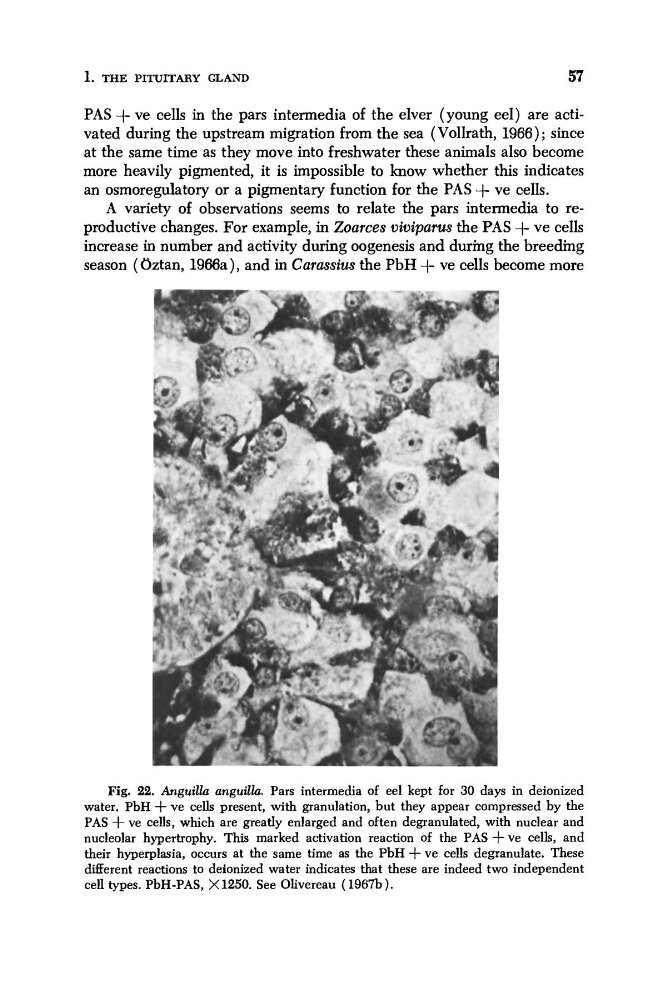
Fig. 22. Anguilla unguih. Pars intermedia of eel kept for 30 days in deionized
water. PbH + ve cells present, with granulation, but they appear compressed by the
PAS + ve cells, which are greatly enlarged and often degranulated, with nuclear and
nucleolar hypertrophy. This marked activation reaction of the PAS + ve cells, and
their hyperplasia, occurs at the same time as the PbH + ve cells degranulate. These
different reactions to deionized water indicates that these are indeed two independent
cell types. PbH-PAS, X1250. See Olivereau ( 1967b).
57
PAS + ve cells in the pars intermedia of the elver (young eel) are activated during the upstream migration from the sea (Vollrath, 1966); since
at the same time as they move into freshwater these animals also become
more heavily pigmented, it is impossible to know whether this indicates
an osmoregulatory or a pigmentary function for the PAS + ve cells.
A variety of observations seems to relate the pars intermedia to reproductive changes. For example, in Zoarces viuiparus the PAS + ve cells
increase in number and activity during oogenesis and during the breeding
season ( Uztan, 1966a), and in Carassius the PbH + ve cells become more
Fig. 22. Anguilla unguih. Pars intermedia of eel kept for 30 days in deionized
water. PbH + ve cells present, with granulation, but they appear compressed by the
PAS + ve cells, which are greatly enlarged and often degranulated, with nuclear and
nucleolar hypertrophy. This marked activation reaction of the PAS + ve cells, and
their hyperplasia, occurs at the same time as the PbH + ve cells degranulate. These
different reactions to deionized water indicates that these are indeed two independent
cell types. PbH-PAS, X1250. See Olivereau ( 1967b).