

56
J. N. BALL AND BRIDGET I. BAKER
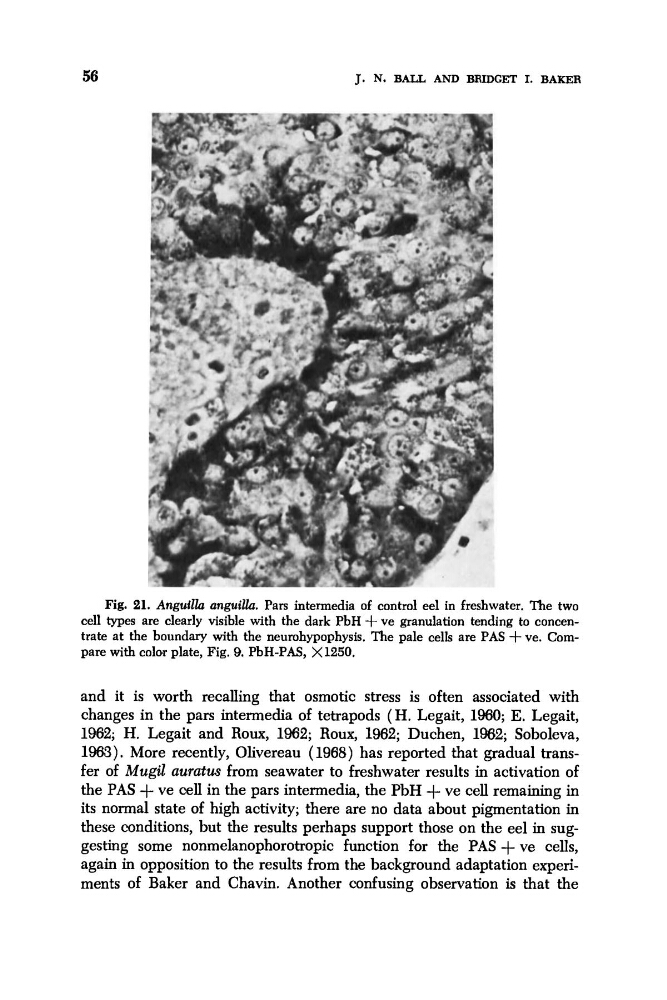
Fig. 21. Anguilla anguilla. Pars intermedia of control eel in freshwater. The two
cell types are clearly visible with the dark PbH + ve granulation tending to concentrate at the boundary with the neurohypophysis. The pale cells are PAS + ve. Compare with color plate, Fig. 9. PbH-PAS, X 1250.
and it is worth recalling that osmotic stress is often associated with
changes in the pars intermedia of tetrapods (H. Legait, 1960; E. Legait,
1962; H. Legait and ROUX, 1962; Roux, 1962; Duchen, 1962; Soboleva,
1963). More recently, Olivereau (1968) has reported that gradual transfer of Mugil uurutus from seawater to freshwater results in activation of
the PAS + ve cell in the pars intermedia, the PbH + ve cell remaining in
its normal state of high activity; there are no data about pigmentation in
these conditions, but the results perhaps support those on the eel in suggesting some nonmelanophorotropic function for the PAS + ve cells,
again in opposition to the results from the background adaptation experiments of Baker and Chavin. Another confusing observation is that the
J. N. BALL AND BRIDGET I. BAKER
Fig. 21. Anguilla anguilla. Pars intermedia of control eel in freshwater. The two
cell types are clearly visible with the dark PbH + ve granulation tending to concentrate at the boundary with the neurohypophysis. The pale cells are PAS + ve. Compare with color plate, Fig. 9. PbH-PAS, X 1250.
and it is worth recalling that osmotic stress is often associated with
changes in the pars intermedia of tetrapods (H. Legait, 1960; E. Legait,
1962; H. Legait and ROUX, 1962; Roux, 1962; Duchen, 1962; Soboleva,
1963). More recently, Olivereau (1968) has reported that gradual transfer of Mugil uurutus from seawater to freshwater results in activation of
the PAS + ve cell in the pars intermedia, the PbH + ve cell remaining in
its normal state of high activity; there are no data about pigmentation in
these conditions, but the results perhaps support those on the eel in suggesting some nonmelanophorotropic function for the PAS + ve cells,
again in opposition to the results from the background adaptation experiments of Baker and Chavin. Another confusing observation is that the