

7. THE ULTIMOBRANCHIAL GLANDS
383
recently discovered hormone, calcitonin, which, in mammals, opposes the
action of parathormone (Copp, 1968a,b, 1969a).
1. ELASMOBRANGIS
Camp (1917) has given a very good description of the embryological
development, location, and morphology of the gland in the dogfish,
Squalus acanthias. The gland is found on the left side only between the
pericardium and the ventral surface of the pharynx just anterior to its
junction with the esophagus. It is located in the triangle formed by the
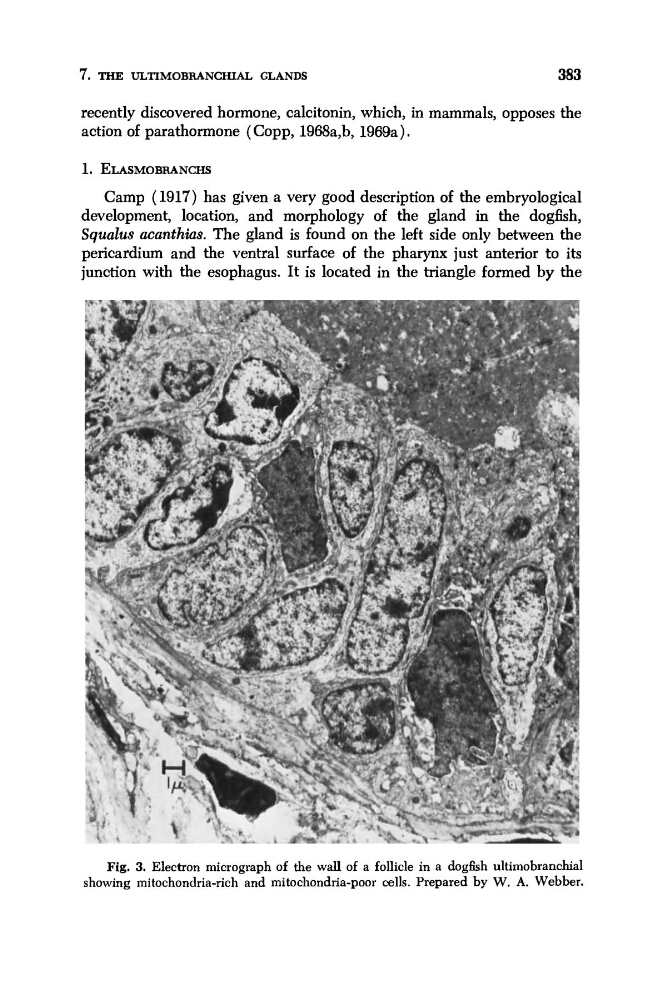
Fig. 3. Electron micrograph of the wall of a follicle in a dogfish ultimobranchial
showing mitochondria-rich and mitochondria-poor cells. Prepared by W. A. Webber.
383
recently discovered hormone, calcitonin, which, in mammals, opposes the
action of parathormone (Copp, 1968a,b, 1969a).
1. ELASMOBRANGIS
Camp (1917) has given a very good description of the embryological
development, location, and morphology of the gland in the dogfish,
Squalus acanthias. The gland is found on the left side only between the
pericardium and the ventral surface of the pharynx just anterior to its
junction with the esophagus. It is located in the triangle formed by the
Fig. 3. Electron micrograph of the wall of a follicle in a dogfish ultimobranchial
showing mitochondria-rich and mitochondria-poor cells. Prepared by W. A. Webber.