

280
AUGUST EPPLE
I
EP
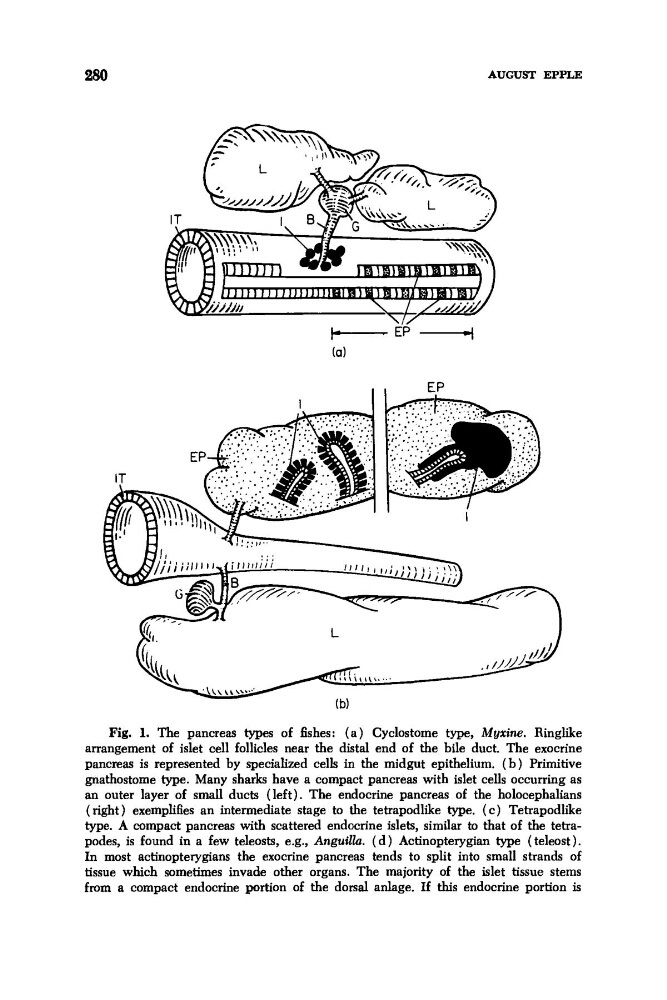
Fig. 1. The pancreas types of fishes: ( a ) Cyclostome type, Myxine. Ringlike
arrangement of islet cell follicles near the distal end of the bile duct. The exocrine
pancreas is represented by specialized cells in the midgut epithelium. ( b ) Primitive
gnathostome type. Many sharks have a compact pancreas with islet cells occurring as
an outer layer of small ducts (left). The endocrine pancreas of the holocephalians
(right) exemplifies an intermediate stage to the tetrapodlike type. ( c ) Tetrapodlike
type. A compact pancreas with scattered endocrine islets, similar to that of the tetrapodes, is found in a few teleosts, e.g., Anguillu. ( d ) Actinopterygian type (teleost).
In most actinopterygians the exocrine pancreas tends to split into small strands of
tissue which sometimes invade other organs. The majority of the islet tissue stems
from a compact endocrine portion of the dorsal anlage. If this endocrine portion is
AUGUST EPPLE
I
EP
Fig. 1. The pancreas types of fishes: ( a ) Cyclostome type, Myxine. Ringlike
arrangement of islet cell follicles near the distal end of the bile duct. The exocrine
pancreas is represented by specialized cells in the midgut epithelium. ( b ) Primitive
gnathostome type. Many sharks have a compact pancreas with islet cells occurring as
an outer layer of small ducts (left). The endocrine pancreas of the holocephalians
(right) exemplifies an intermediate stage to the tetrapodlike type. ( c ) Tetrapodlike
type. A compact pancreas with scattered endocrine islets, similar to that of the tetrapodes, is found in a few teleosts, e.g., Anguillu. ( d ) Actinopterygian type (teleost).
In most actinopterygians the exocrine pancreas tends to split into small strands of
tissue which sometimes invade other organs. The majority of the islet tissue stems
from a compact endocrine portion of the dorsal anlage. If this endocrine portion is