

1. THE PITUITARY GLAND
15
In some species, usually marine, the prolactin cells may appear chromophobic, especially after poor fixation; and when the eel enters seawater
the r ] granules first become smaller (Knowles and Vollrath, 1966b,d) and
then virtually disappear, leaving apparently inactive chromophobic cells
( Olivereau, 19s6a). Conversely, the granulation is sparse in elvers newly
arrived in freshwater from the sea (Knowles and Vollrath, 1966c) and the
cells may appear totally chromophobic in young eels (Baker, 196S), but
in the freshwater phase of larger eels they are always well granulated
( Olivereau, 1963a, 1967a,b).
There are a few observations on changes in the r ] cells in relation to
life history. They are strongly granulated and erythrosinophilic in newly
born Poecilia latipinna and are already differentiated in the gland of the
embryo within the maternal ovarian follicle; they differentiate early in
gestation in the guppy embryo (Poecilia reticuhta) at first with granules
smaller than in the adult, and with an active-type endoplasmic reticulum
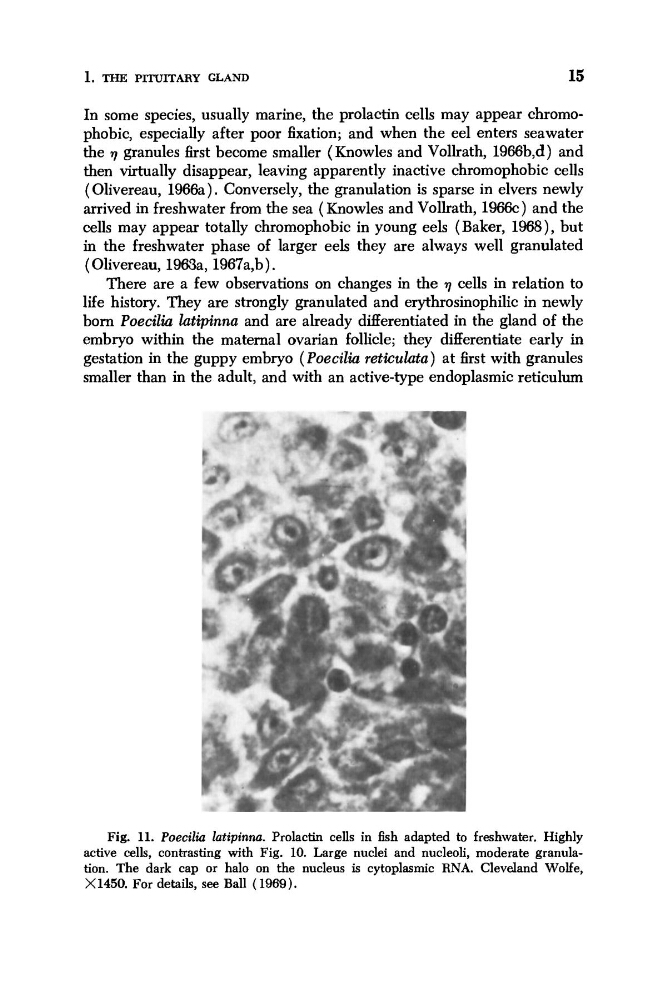
Fig. 11. Poeciliu latipinna. Prolactin cells in fish adapted to freshwater. Highly
active cells, contrasting with Fig. 10. Large nuclei and nucleoli, moderate granulation. The dark cap or halo on the nucleus is cytoplasmic RNA. Cleveland Wolfe,
X1450. For details, see Ball ( 1969).
15
In some species, usually marine, the prolactin cells may appear chromophobic, especially after poor fixation; and when the eel enters seawater
the r ] granules first become smaller (Knowles and Vollrath, 1966b,d) and
then virtually disappear, leaving apparently inactive chromophobic cells
( Olivereau, 19s6a). Conversely, the granulation is sparse in elvers newly
arrived in freshwater from the sea (Knowles and Vollrath, 1966c) and the
cells may appear totally chromophobic in young eels (Baker, 196S), but
in the freshwater phase of larger eels they are always well granulated
( Olivereau, 1963a, 1967a,b).
There are a few observations on changes in the r ] cells in relation to
life history. They are strongly granulated and erythrosinophilic in newly
born Poecilia latipinna and are already differentiated in the gland of the
embryo within the maternal ovarian follicle; they differentiate early in
gestation in the guppy embryo (Poecilia reticuhta) at first with granules
smaller than in the adult, and with an active-type endoplasmic reticulum
Fig. 11. Poeciliu latipinna. Prolactin cells in fish adapted to freshwater. Highly
active cells, contrasting with Fig. 10. Large nuclei and nucleoli, moderate granulation. The dark cap or halo on the nucleus is cytoplasmic RNA. Cleveland Wolfe,
X1450. For details, see Ball ( 1969).