

430
JOHAN B. STEEN
0 2 = ( 0 . 2 t A P l a
02=100a
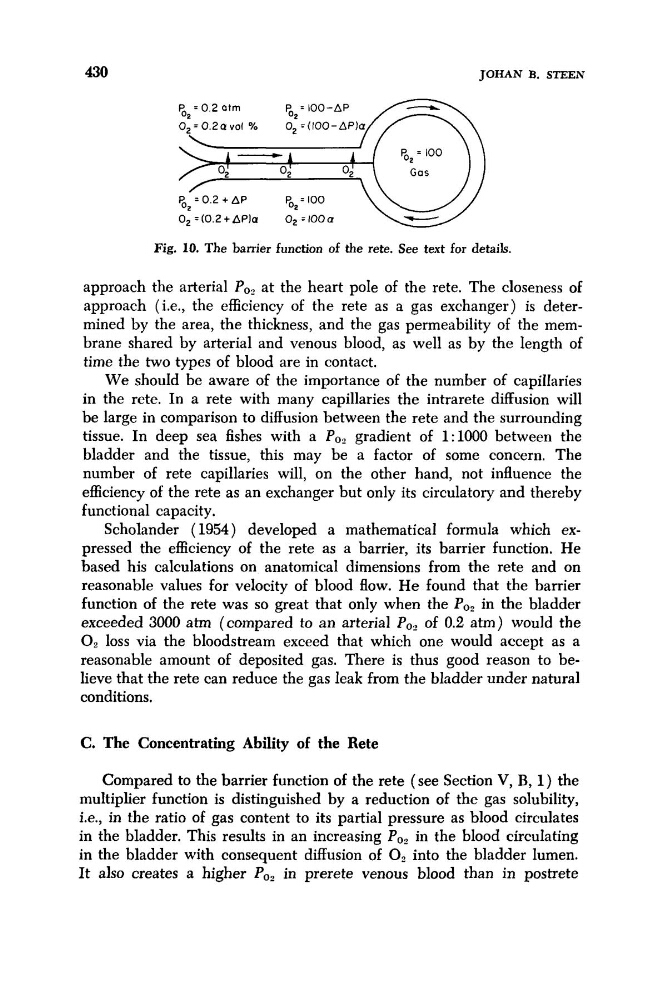
Fig. 10. The barrier function of the rete. See text for details.
approach the arterial Po? at the heart pole of the rete. The closeness of
approach (i.e., the efficiency of the rete as a gas exchanger) is determined by the area, the thickness, and the gas permeability of the membrane shared by arterial and venous blood, as well as by the length of
time the two types of blood are in contact.
We should be aware of the importance of the number of capillaries
in the rete. In a rete with many capillaries the intrarete diffusion will
be large in comparison to diffusion between the rete and the surrounding
tissue. In deep sea fishes with a Po? gradient of 1:lOOO between the
bladder and the tissue, this may be a factor of some concern. The
number of rete capillaries will, on the other hand, not influence the
efficiency of the rete as an exchanger but only its circulatory and thereby
functional capacity.
Scholander (1954) developed a mathematical formula which expressed the efficiency of the rete as a barrier, its barrier function. He
based his calculations on anatomical dimensions from the rete and on
reasonable values for velocity of blood flow. He found that the barrier
function of the rete was so great that only when the Po, in the bladder
exceeded 3000 atm (compared to an arterial Po, of 0.2 atm) would the
O? loss via the bloodstream exceed that which one would accept as a
reasonable amount of deposited gas. There is thus good reason to believe that the rete can reduce the gas leak from the bladder under natural
conditions.
C. The Concentrating Ability of the Rete
Compared to the barrier function of the rete (see Section V, B, 1 ) the
multiplier function is distinguished by a reduction of the gas solubility,
i.e., in the ratio of gas content to its partial pressure as blood circulates
in the bladder. This results in an increasing Po, in the blood circulating
in the bladder with consequent diffusion of 0, into the bladder lumen.
It also creates a higher Po, in prerete venous blood than in postrete
JOHAN B. STEEN
0 2 = ( 0 . 2 t A P l a
02=100a
Fig. 10. The barrier function of the rete. See text for details.
approach the arterial Po? at the heart pole of the rete. The closeness of
approach (i.e., the efficiency of the rete as a gas exchanger) is determined by the area, the thickness, and the gas permeability of the membrane shared by arterial and venous blood, as well as by the length of
time the two types of blood are in contact.
We should be aware of the importance of the number of capillaries
in the rete. In a rete with many capillaries the intrarete diffusion will
be large in comparison to diffusion between the rete and the surrounding
tissue. In deep sea fishes with a Po? gradient of 1:lOOO between the
bladder and the tissue, this may be a factor of some concern. The
number of rete capillaries will, on the other hand, not influence the
efficiency of the rete as an exchanger but only its circulatory and thereby
functional capacity.
Scholander (1954) developed a mathematical formula which expressed the efficiency of the rete as a barrier, its barrier function. He
based his calculations on anatomical dimensions from the rete and on
reasonable values for velocity of blood flow. He found that the barrier
function of the rete was so great that only when the Po, in the bladder
exceeded 3000 atm (compared to an arterial Po, of 0.2 atm) would the
O? loss via the bloodstream exceed that which one would accept as a
reasonable amount of deposited gas. There is thus good reason to believe that the rete can reduce the gas leak from the bladder under natural
conditions.
C. The Concentrating Ability of the Rete
Compared to the barrier function of the rete (see Section V, B, 1 ) the
multiplier function is distinguished by a reduction of the gas solubility,
i.e., in the ratio of gas content to its partial pressure as blood circulates
in the bladder. This results in an increasing Po, in the blood circulating
in the bladder with consequent diffusion of 0, into the bladder lumen.
It also creates a higher Po, in prerete venous blood than in postrete