

416
JOHAN B. STEEN
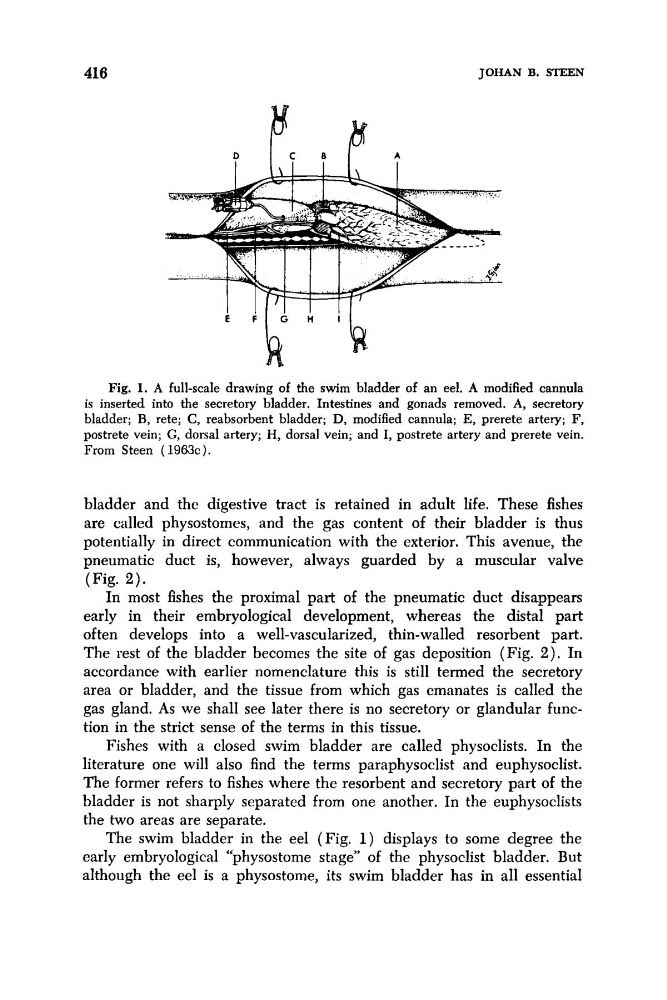
Fig. 1. A full-scale drawing of the swim bladder of an eel. A modified cannula
is inserted into the secretory bladder. Intestines and gonads removed. A, secretory
bladder; B, rete; C, reabsorbent bladder; D, modified cannula; E, prerete artery; F,
postrete vein; G, dorsal artery; H, dorsal vein; and I, postrete artery and prerete vein.
From Steen ( 1 9 6 3 ~ ) .
bladder and the digestive tract is retained in adult life. These fishes
are called physostomes, and the gas content of their bladder is thus
potentially in direct communication with the exterior. This avenue, the
pneumatic duct is, however, always guarded by a muscular valve
(Fig. 2).
In most fishes the proximal part of the pneumatic duct disappears
early in their embryological development, whereas the distal part
often develops into a well-vascularized, thin-walled resorbent part.
The rest of the bladder becomes the site of gas deposition (Fig. 2). In
accordance with earlier nomenclature this is still termed the secretory
area or bladder, and the tissue from which gas emanates is called the
gas gland. As we shall see later there is no secretory or glandular function in the strict sense of the terms in this tissue.
Fishes with a closed swim bladder are called physoclists. In the
literature one will also find the terms paraphysoclist and euphysoclist.
The former refers to fishes where the resorbent and secretory part of the
bladder is not sharply separated from one another. In the euphysoclists
the two areas are separate.
The swim bladder in the eel (Fig. 1 ) displays to some degree the
early embryological “physostome stage” of the physoclist bladder. But
although the eel is a physostome, its swim bladder has in all essential
JOHAN B. STEEN
Fig. 1. A full-scale drawing of the swim bladder of an eel. A modified cannula
is inserted into the secretory bladder. Intestines and gonads removed. A, secretory
bladder; B, rete; C, reabsorbent bladder; D, modified cannula; E, prerete artery; F,
postrete vein; G, dorsal artery; H, dorsal vein; and I, postrete artery and prerete vein.
From Steen ( 1 9 6 3 ~ ) .
bladder and the digestive tract is retained in adult life. These fishes
are called physostomes, and the gas content of their bladder is thus
potentially in direct communication with the exterior. This avenue, the
pneumatic duct is, however, always guarded by a muscular valve
(Fig. 2).
In most fishes the proximal part of the pneumatic duct disappears
early in their embryological development, whereas the distal part
often develops into a well-vascularized, thin-walled resorbent part.
The rest of the bladder becomes the site of gas deposition (Fig. 2). In
accordance with earlier nomenclature this is still termed the secretory
area or bladder, and the tissue from which gas emanates is called the
gas gland. As we shall see later there is no secretory or glandular function in the strict sense of the terms in this tissue.
Fishes with a closed swim bladder are called physoclists. In the
literature one will also find the terms paraphysoclist and euphysoclist.
The former refers to fishes where the resorbent and secretory part of the
bladder is not sharply separated from one another. In the euphysoclists
the two areas are separate.
The swim bladder in the eel (Fig. 1 ) displays to some degree the
early embryological “physostome stage” of the physoclist bladder. But
although the eel is a physostome, its swim bladder has in all essential