

400
K JELL JOHANSEN
0
1 0
20
30 0
100
200
300
400
CO, tension (mmHg)
Oxygen tension (mmHg)
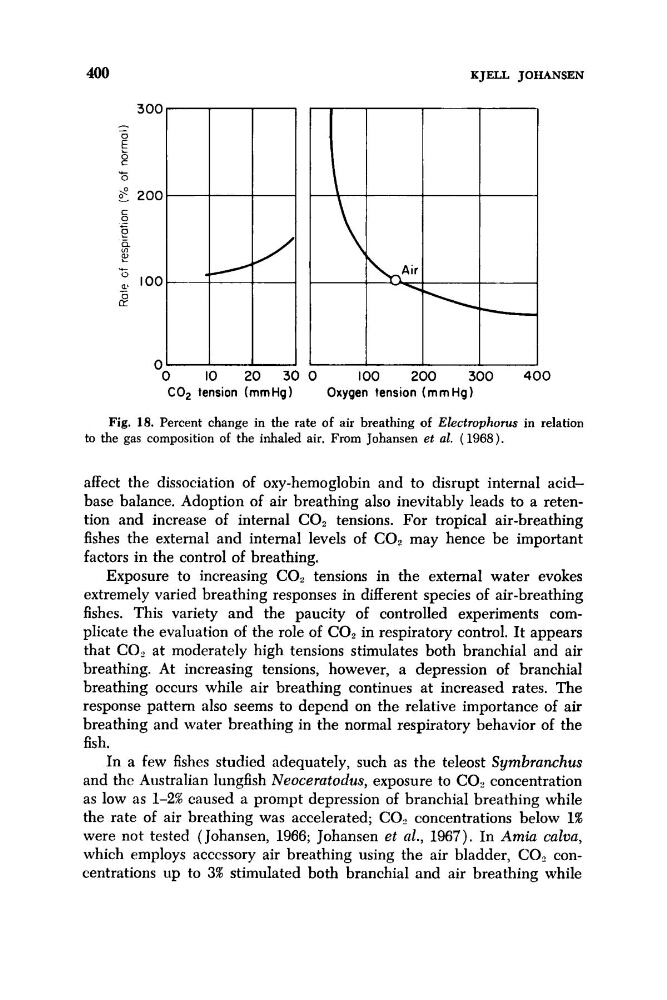
Fig. 18. Percent change in the rate of air breathing of EIectrophorus in relation
to the gas composition of the inhaled air. From Johansen et al. (1968).
affect the dissociation of oxy-hemoglobin and to disrupt internal acidbase balance. Adoption of air breathing also inevitably leads to a retention and increase of internal C 0 2 tensions. For tropical air-breathing
fishes the external and internal levels of CO, may hence be important
factors in the control of breathing.
Exposure to increasing CO, tensions in the external water evokes
extremely varied breathing responses in different species of air-breathing
fishes. This variety and the paucity of controlled experiments complicate the evaluation of the role of C 0 2 in respiratory control. It appears
that CO, at moderately high tensions stimulates both branchial and air
breathing. At increasing tensions, however, a depression of branchial
breathing occurs while air breathing continues at increased rates. The
response pattern also seems to depend on the relative importance of air
breathing and water breathing in the normal respiratory behavior of the
fish.
In a few fishes studied adequately, such as the teleost Symbranchus
and the Australian lungfish Neoceratodus, exposure to CO, concentration
as low as 1-2% caused a prompt depression of branchial breathing while
the rate of air breathing was accelerated; CO, concentrations below 1%
were not tested (Johansen, 1966; Johansen et al., 1967). In Amia calva,
which employs accessory air breathing using the air bladder, CO, concentrations up to 3% stimulated both branchial and air breathing while
K JELL JOHANSEN
0
1 0
20
30 0
100
200
300
400
CO, tension (mmHg)
Oxygen tension (mmHg)
Fig. 18. Percent change in the rate of air breathing of EIectrophorus in relation
to the gas composition of the inhaled air. From Johansen et al. (1968).
affect the dissociation of oxy-hemoglobin and to disrupt internal acidbase balance. Adoption of air breathing also inevitably leads to a retention and increase of internal C 0 2 tensions. For tropical air-breathing
fishes the external and internal levels of CO, may hence be important
factors in the control of breathing.
Exposure to increasing CO, tensions in the external water evokes
extremely varied breathing responses in different species of air-breathing
fishes. This variety and the paucity of controlled experiments complicate the evaluation of the role of C 0 2 in respiratory control. It appears
that CO, at moderately high tensions stimulates both branchial and air
breathing. At increasing tensions, however, a depression of branchial
breathing occurs while air breathing continues at increased rates. The
response pattern also seems to depend on the relative importance of air
breathing and water breathing in the normal respiratory behavior of the
fish.
In a few fishes studied adequately, such as the teleost Symbranchus
and the Australian lungfish Neoceratodus, exposure to CO, concentration
as low as 1-2% caused a prompt depression of branchial breathing while
the rate of air breathing was accelerated; CO, concentrations below 1%
were not tested (Johansen, 1966; Johansen et al., 1967). In Amia calva,
which employs accessory air breathing using the air bladder, CO, concentrations up to 3% stimulated both branchial and air breathing while