

8. THE REGULATION OF BREATHING
351
r
- 1 2 0 -
c
E
-
g 100 -
: 8 0 -
c
3
cl
L
^ \
d
0
?
u 6 0 -
I
I
4 0
80
120
160
g 100 l 2 " C
0
?
u 60
A
^ \
d
I
I
4 0
80
120
160
Environrnentol
(rnrn Hg)
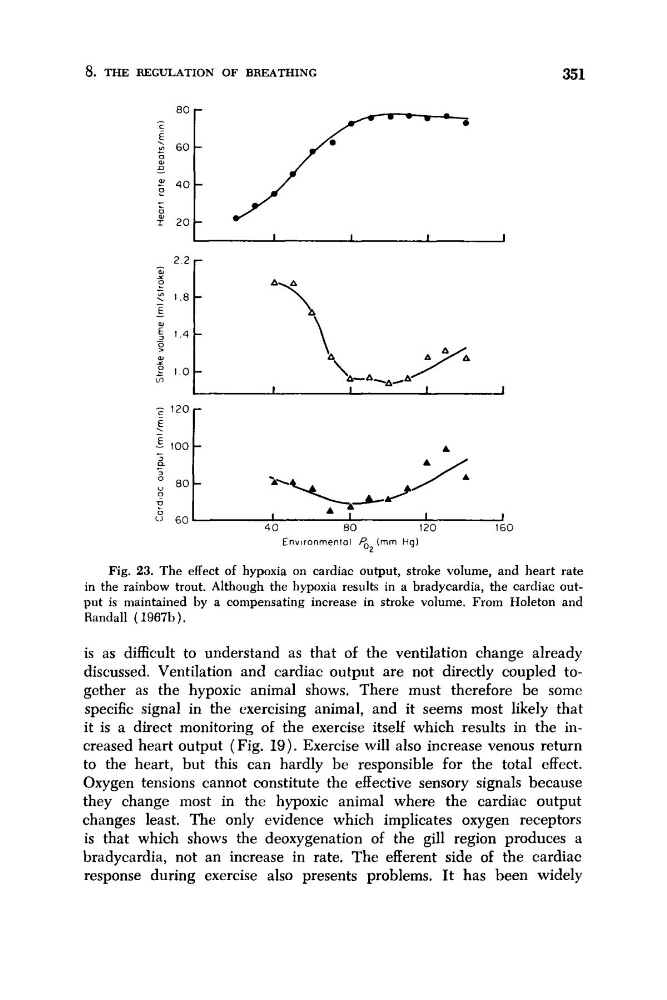
Fig. 23. The effect of hypoxia on cardiac output, stroke volume, and heart rate
in the rainbow trout. Although the hypoxia results in a bradycardia, the cardiac output is maintained by a compensating increase in stroke volume. From Holeton and
Randall ( 1967b).
is as difficult to understand as that of the ventilation change already
discussed. Ventilation and cardiac output are not directly coupled together as the hypoxic animal shows. There must therefore be some
specific signal in the exercising animal, and it seems most likely that
it is a direct monitoring of the exercise itself which results in the increased heart output ( Fig. 19). Exercise will also increase venous return
to the heart, but this can hardly be responsible for the total effect.
Oxygen tensions cannot constitute the effective sensory signals because
they change most in the hypoxic animal where the cardiac output
changes least. The only evidence which implicates oxygen receptors
is that which shows the deoxygenation of the gill region produces a
bradycardia, not an increase in rate. The efferent side of the cardiac
response during exercise also presents problems. It has been widely
351
r
- 1 2 0 -
c
E
-
g 100 -
: 8 0 -
c
3
cl
L
^ \
d
0
?
u 6 0 -
I
I
4 0
80
120
160
g 100 l 2 " C
0
?
u 60
A
^ \
d
I
I
4 0
80
120
160
Environrnentol
(rnrn Hg)
Fig. 23. The effect of hypoxia on cardiac output, stroke volume, and heart rate
in the rainbow trout. Although the hypoxia results in a bradycardia, the cardiac output is maintained by a compensating increase in stroke volume. From Holeton and
Randall ( 1967b).
is as difficult to understand as that of the ventilation change already
discussed. Ventilation and cardiac output are not directly coupled together as the hypoxic animal shows. There must therefore be some
specific signal in the exercising animal, and it seems most likely that
it is a direct monitoring of the exercise itself which results in the increased heart output ( Fig. 19). Exercise will also increase venous return
to the heart, but this can hardly be responsible for the total effect.
Oxygen tensions cannot constitute the effective sensory signals because
they change most in the hypoxic animal where the cardiac output
changes least. The only evidence which implicates oxygen receptors
is that which shows the deoxygenation of the gill region produces a
bradycardia, not an increase in rate. The efferent side of the cardiac
response during exercise also presents problems. It has been widely