

7. GAS EXCHANGE IN FISH
271
40
30
I
a-"
-
3 20
N
0
0
10
C
Freshwater (I 5OC )
: :
5
1 0
15
Pco, (mm Hg)
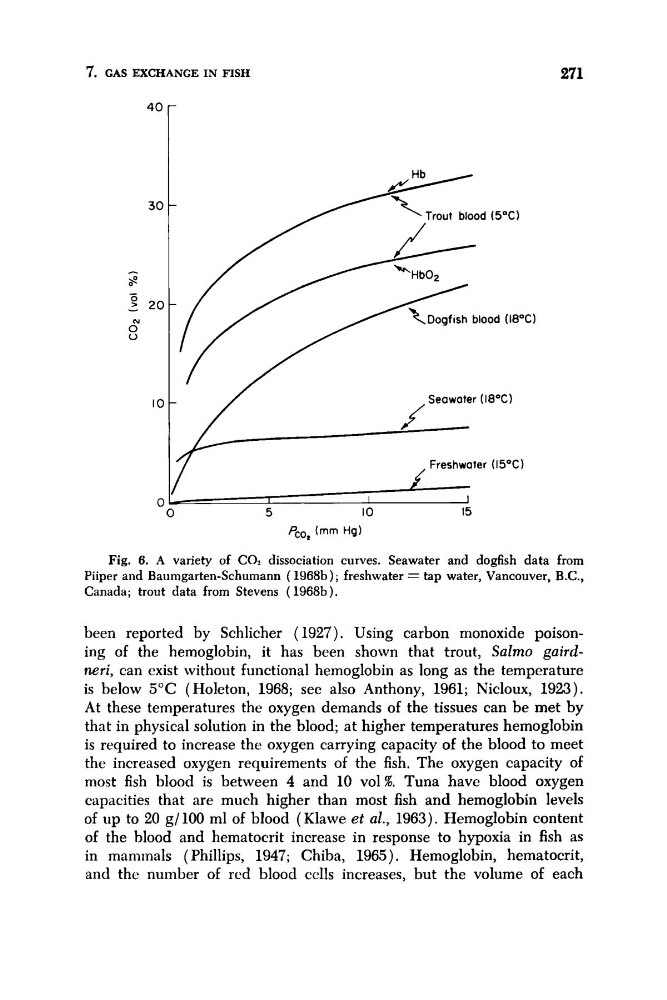
Fig. 6. A variety of CO? dissociation curves. Seawater and dogfish data from
Piiper and Baumgarten-Schumann ( 1968b) ; freshwater = tap water, Vancouver, B.C.,
Canada; trout data from Stevens (1968b).
been reported by Schlicher ( 1927). Using carbon monoxide poisoning of the hemoglobin, it has been shown that trout, SaZmo gairdneri, can exist without functional hemoglobin as long as the temperature
is below 5°C (Holeton, 1968; see also Anthony, 1961; Nicloux, 1923).
At these temperatures the oxygen demands of the tissues can be met by
that in physical solution in the blood; at higher temperatures hemoglobin
is required to increase the oxygen carrying capacity of the blood to meet
the increased oxygen requirements of the fish. The oxygen capacity of
most fish blood is between 4 and 10 ~ 0 1 % .
Tuna have blood oxygen
capacities that are much higher than most fish and hemoglobin levels
of up to 20 g/100 ml of blood (Klawe et al., 1963). Hemoglobin content
of the blood and hematocrit increase in response to hypoxia in fish as
in mammals ( Phillips, 1947; Chiba, 1965). Hemoglobin, hematocrit,
and the number of red blood cells increases, but the volume of each
271
40
30
I
a-"
-
3 20
N
0
0
10
C
Freshwater (I 5OC )
: :
5
1 0
15
Pco, (mm Hg)
Fig. 6. A variety of CO? dissociation curves. Seawater and dogfish data from
Piiper and Baumgarten-Schumann ( 1968b) ; freshwater = tap water, Vancouver, B.C.,
Canada; trout data from Stevens (1968b).
been reported by Schlicher ( 1927). Using carbon monoxide poisoning of the hemoglobin, it has been shown that trout, SaZmo gairdneri, can exist without functional hemoglobin as long as the temperature
is below 5°C (Holeton, 1968; see also Anthony, 1961; Nicloux, 1923).
At these temperatures the oxygen demands of the tissues can be met by
that in physical solution in the blood; at higher temperatures hemoglobin
is required to increase the oxygen carrying capacity of the blood to meet
the increased oxygen requirements of the fish. The oxygen capacity of
most fish blood is between 4 and 10 ~ 0 1 % .
Tuna have blood oxygen
capacities that are much higher than most fish and hemoglobin levels
of up to 20 g/100 ml of blood (Klawe et al., 1963). Hemoglobin content
of the blood and hematocrit increase in response to hypoxia in fish as
in mammals ( Phillips, 1947; Chiba, 1965). Hemoglobin, hematocrit,
and the number of red blood cells increases, but the volume of each