

3. AUTONOMIC NERVOUS SYSTEMS
127
pattern, an ability which is highly developcd in various flatfish. The
presence of such responses indicates that the sympathetic system can be
used to pick out single or, at most, small groups of chromatophores as
required, showing a finencss of control which is not usually attributed
to the sympathetic system.
There is no clear evidence for the existence of a “spinal parasympathetic” autonomic outflow in fish. But Friedman (1935) has shown that
stimulation of posterior spinal nerves in skates causes erection of the
claspers by both muscular contraction and vasodilatation and elicits seV
4
Ac h
-,-._._.___._,.
........................ . , Ach + Dilator ]IRIS
Ill
* Arh + Constrictor
-.-.-......--. e A c h + G I L L VESSELS
Ir
, .........
1 ,
?
+-?STOMACH
Ach ......... i ._...... .-..eAch -1 HE ART
S W I M BLADDER
‘ ......... ...., , .. W A c h + Secretory cells
;*Ach
- Secretory 1 vessels
)--r*NE
- Resorotive
/
I
C t N E - Rcsorptivc
High
Mid
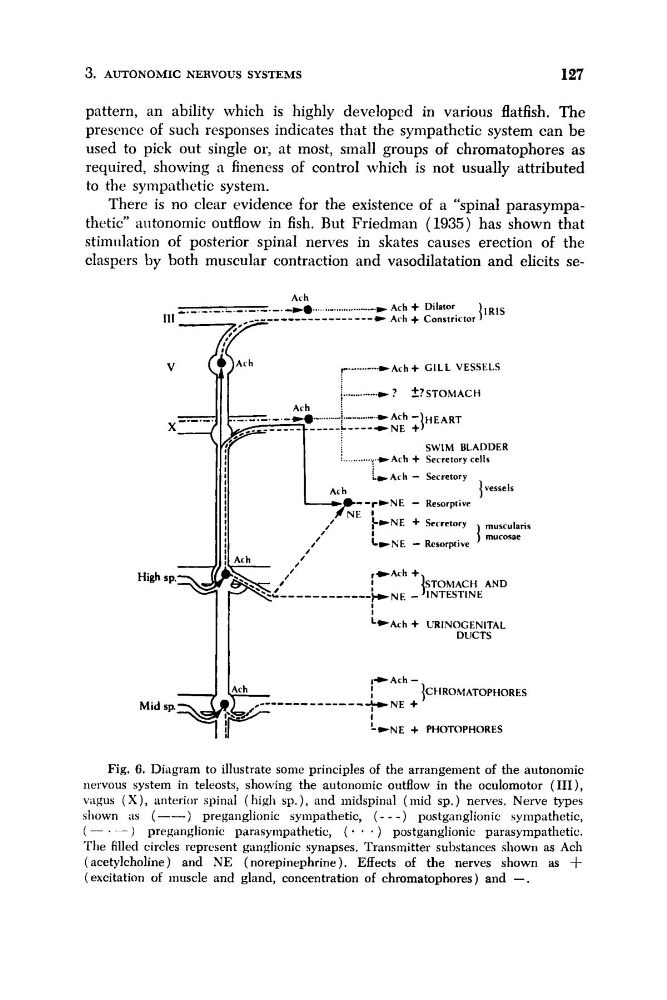
Fig. 6. Diagram to illustrate some principles of the arrangement of the autonomic
nervous system in teleosts, showing the autonomic outflow in the oculomotor (111),
viigus ( X ) , anterior spinal (high sp.), and midspinal (mid sp.) nerves. Nerve types
shown iis (--)
preganglionic sympathetic, ( - - - ) postganglionic sympathetic,
( - . - ) preganglionic parasympathetic, ( * 9 . ) postganglionic parasympathetic.
The filled circles reprcbsent ganglionic synapses. Transmitter substances shown as Ach
(acetylcholine) and NE (norepinephrine). Effects of the nerves shown as +
(excitation of inuscle and gland, concentration of chromatophores) and -.
127
pattern, an ability which is highly developcd in various flatfish. The
presence of such responses indicates that the sympathetic system can be
used to pick out single or, at most, small groups of chromatophores as
required, showing a finencss of control which is not usually attributed
to the sympathetic system.
There is no clear evidence for the existence of a “spinal parasympathetic” autonomic outflow in fish. But Friedman (1935) has shown that
stimulation of posterior spinal nerves in skates causes erection of the
claspers by both muscular contraction and vasodilatation and elicits seV
4
Ac h
-,-._._.___._,.
........................ . , Ach + Dilator ]IRIS
Ill
* Arh + Constrictor
-.-.-......--. e A c h + G I L L VESSELS
Ir
, .........
1 ,
?
+-?STOMACH
Ach ......... i ._...... .-..eAch -1 HE ART
S W I M BLADDER
‘ ......... ...., , .. W A c h + Secretory cells
;*Ach
- Secretory 1 vessels
)--r*NE
- Resorotive
/
I
C t N E - Rcsorptivc
High
Mid
Fig. 6. Diagram to illustrate some principles of the arrangement of the autonomic
nervous system in teleosts, showing the autonomic outflow in the oculomotor (111),
viigus ( X ) , anterior spinal (high sp.), and midspinal (mid sp.) nerves. Nerve types
shown iis (--)
preganglionic sympathetic, ( - - - ) postganglionic sympathetic,
( - . - ) preganglionic parasympathetic, ( * 9 . ) postganglionic parasympathetic.
The filled circles reprcbsent ganglionic synapses. Transmitter substances shown as Ach
(acetylcholine) and NE (norepinephrine). Effects of the nerves shown as +
(excitation of inuscle and gland, concentration of chromatophores) and -.