

ANTdROTIO BENTHOS
61
Antarctic. Hedgpeth (1969a), however, believed that in general there
were somewhat higher proportions in the Antarctic.
Gigantism amongst species and even some genera is a marked
character of the Antarctic species. However, as Hedgpeth (1969) points
out there are also many very small forms, some of the smallest pycnogonids known being endemic to the Antarctic.
In spite of the large number of species of pycnogonids recorded from
the Antarctic most collections have had a preponderance of only a few
species. Thus, in the Discovery collections examined by Gordon (1932),
out of 1 800 specimens at least 1 200 belonged to the genus Nymphon
and of these over three-quarters belonged to the two most common
species, N . australis Hodgson and N. charcoti Bouvier. Calman (1915)
reporting on the collections made by the Terra Nova had 240 specimens
of Nymphon australis out of a total of about 600 specimens.
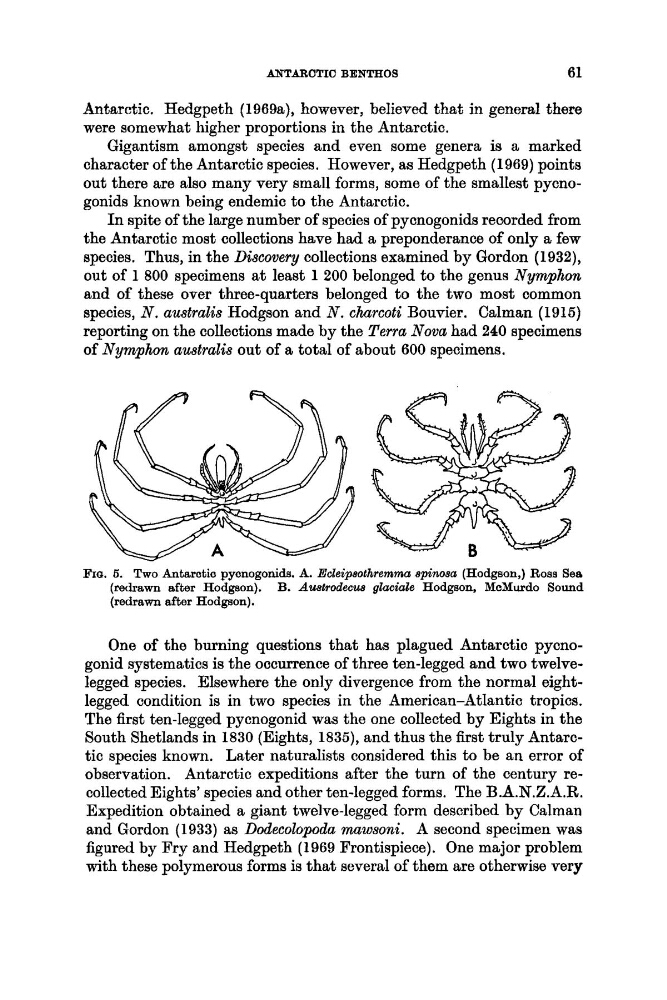
FIG. 5. Two Antarctic pycnogonids. A. Ecleipaotkemmo apinom (Hodgson,) Ross See
B. Auatrodecue glaciale Hodgson, McMurdo Sound
(redrawn after Hodgson).
(redrawn after Hodgson).
One of the burning questions that has plagued Antarctic pycnogonid systematics is the occurrence of three ten-legged and two twelvelegged species. Elsewhere the only divergence from the normal eightlegged condition is in two species in the American-AtIantic tropics.
The first ten-legged pycnogonid was the one collected by Eights in the
South Shetlands in 1830 (Eights, 1835), and thus the first truly Antarctic species known. Later naturalists considered this to be an error of
observation. Antarctic expeditions after the turn of the century recollected Eights’ species and other ten-legged forms. The B.A.N.Z.A.R.
Expedition obtained a giant twelve-legged form described by Calman
and Gordon (1933) as Dodecolopoda mawsoni. A second specimen was
figured by Fry and Hedgpeth (1969 Frontispiece). One major problem
with these polymerous forms is that several of them are otherwise very
61
Antarctic. Hedgpeth (1969a), however, believed that in general there
were somewhat higher proportions in the Antarctic.
Gigantism amongst species and even some genera is a marked
character of the Antarctic species. However, as Hedgpeth (1969) points
out there are also many very small forms, some of the smallest pycnogonids known being endemic to the Antarctic.
In spite of the large number of species of pycnogonids recorded from
the Antarctic most collections have had a preponderance of only a few
species. Thus, in the Discovery collections examined by Gordon (1932),
out of 1 800 specimens at least 1 200 belonged to the genus Nymphon
and of these over three-quarters belonged to the two most common
species, N . australis Hodgson and N. charcoti Bouvier. Calman (1915)
reporting on the collections made by the Terra Nova had 240 specimens
of Nymphon australis out of a total of about 600 specimens.
FIG. 5. Two Antarctic pycnogonids. A. Ecleipaotkemmo apinom (Hodgson,) Ross See
B. Auatrodecue glaciale Hodgson, McMurdo Sound
(redrawn after Hodgson).
(redrawn after Hodgson).
One of the burning questions that has plagued Antarctic pycnogonid systematics is the occurrence of three ten-legged and two twelvelegged species. Elsewhere the only divergence from the normal eightlegged condition is in two species in the American-AtIantic tropics.
The first ten-legged pycnogonid was the one collected by Eights in the
South Shetlands in 1830 (Eights, 1835), and thus the first truly Antarctic species known. Later naturalists considered this to be an error of
observation. Antarctic expeditions after the turn of the century recollected Eights’ species and other ten-legged forms. The B.A.N.Z.A.R.
Expedition obtained a giant twelve-legged form described by Calman
and Gordon (1933) as Dodecolopoda mawsoni. A second specimen was
figured by Fry and Hedgpeth (1969 Frontispiece). One major problem
with these polymerous forms is that several of them are otherwise very