

416
U, B. COWEY AND J. R. SARGENT
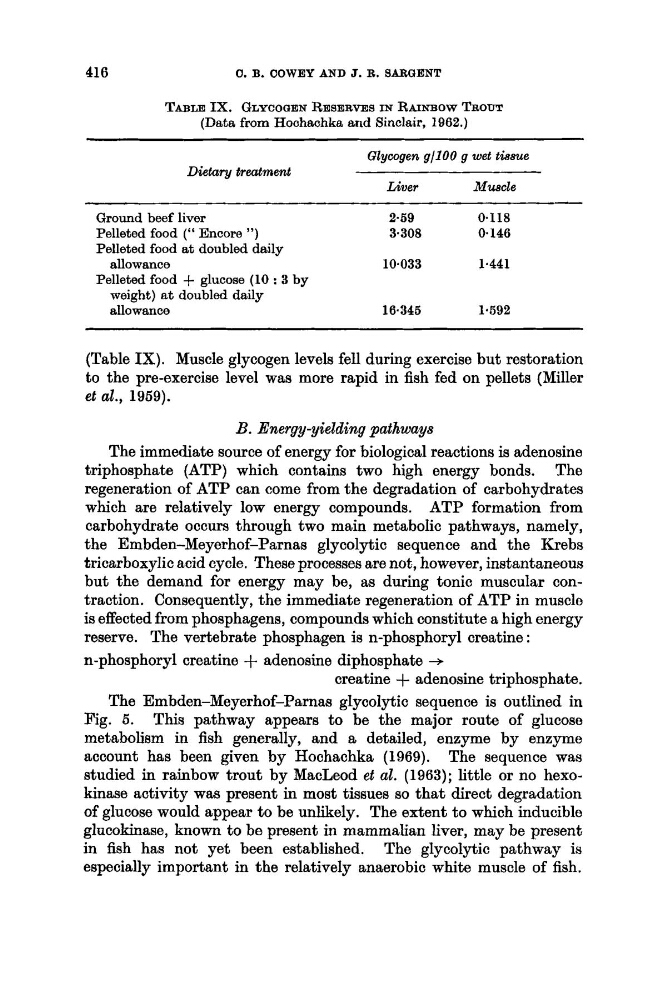
TABLE IX. GLYCOGEN RESERVES IN RAINBOW TROUT
(Data from Hochachka and Sinclair, 1962.)
Glycogen g/lOO g wet tiesue
Liver
Muscle
Dietary treatment
Ground beef liver
2.59
0.118
Pelleted food (" Encore ")
3.308
0.146
Pelleted food at doubled daily
allowance
10.033
1.441
Pelleted food + glucose (10 : 3 by
weight) at doubled daily
allowance
16.345
1.592
(Table IX). Muscle glycogen levels fell during exercise but restoration
to the pre-exercise level was more rapid in fish fed on pellets (Miller
et at., 1959).
B. Energy-yielding pathway8
The immediate source of energy for biological reactions is adenosine
triphosphate (ATP) which contains two high energy bonds. The
regeneration of ATP can come from the degradation of carbohydrates
which are relatively low energy compounds. ATP formation from
carbohydrate occurs through two main metabolic pathways, namely,
the Embden-Meyerhof-Parnas glycolytic sequence and the Krebs
tricarboxylic acid cycle. These processes are not, however, instantaneous
but the demand for energy may be, as during tonic muscular contraction. Consequently, the immediate regeneration of ATP in muscle
is effected from phosphagens, compounds which constitute a high energy
reserve. The vertebrate phosphagen is n-phosphoryl creatine :
n-phosphoryl creatine + adenosine diphosphate +creatine + adenosine triphosphate.
The Embden-Meyerhof-Parnas glycolytic sequence is outlined in
Fig. 5. This pathway appears to be the major route of glucose
metabolism in fish generally, and a detailed, enzyme by enzyme
account has been given by Hochachka (1969). The sequence was
studied in rainbow trout by MacLeod et al. (1963); little or no hexokinase activity was present in most tissues so that direct degradation
of glucose would appear to be unlikely. The extent to which inducible
glucokinase, known to be present in mammalian liver, may be present
in fish has not yet been established. The glycolytic pathway is
especially important in the relatively anaerobic white muscle of fish.
U, B. COWEY AND J. R. SARGENT
TABLE IX. GLYCOGEN RESERVES IN RAINBOW TROUT
(Data from Hochachka and Sinclair, 1962.)
Glycogen g/lOO g wet tiesue
Liver
Muscle
Dietary treatment
Ground beef liver
2.59
0.118
Pelleted food (" Encore ")
3.308
0.146
Pelleted food at doubled daily
allowance
10.033
1.441
Pelleted food + glucose (10 : 3 by
weight) at doubled daily
allowance
16.345
1.592
(Table IX). Muscle glycogen levels fell during exercise but restoration
to the pre-exercise level was more rapid in fish fed on pellets (Miller
et at., 1959).
B. Energy-yielding pathway8
The immediate source of energy for biological reactions is adenosine
triphosphate (ATP) which contains two high energy bonds. The
regeneration of ATP can come from the degradation of carbohydrates
which are relatively low energy compounds. ATP formation from
carbohydrate occurs through two main metabolic pathways, namely,
the Embden-Meyerhof-Parnas glycolytic sequence and the Krebs
tricarboxylic acid cycle. These processes are not, however, instantaneous
but the demand for energy may be, as during tonic muscular contraction. Consequently, the immediate regeneration of ATP in muscle
is effected from phosphagens, compounds which constitute a high energy
reserve. The vertebrate phosphagen is n-phosphoryl creatine :
n-phosphoryl creatine + adenosine diphosphate +creatine + adenosine triphosphate.
The Embden-Meyerhof-Parnas glycolytic sequence is outlined in
Fig. 5. This pathway appears to be the major route of glucose
metabolism in fish generally, and a detailed, enzyme by enzyme
account has been given by Hochachka (1969). The sequence was
studied in rainbow trout by MacLeod et al. (1963); little or no hexokinase activity was present in most tissues so that direct degradation
of glucose would appear to be unlikely. The extent to which inducible
glucokinase, known to be present in mammalian liver, may be present
in fish has not yet been established. The glycolytic pathway is
especially important in the relatively anaerobic white muscle of fish.