

FISH NUTRITION
416
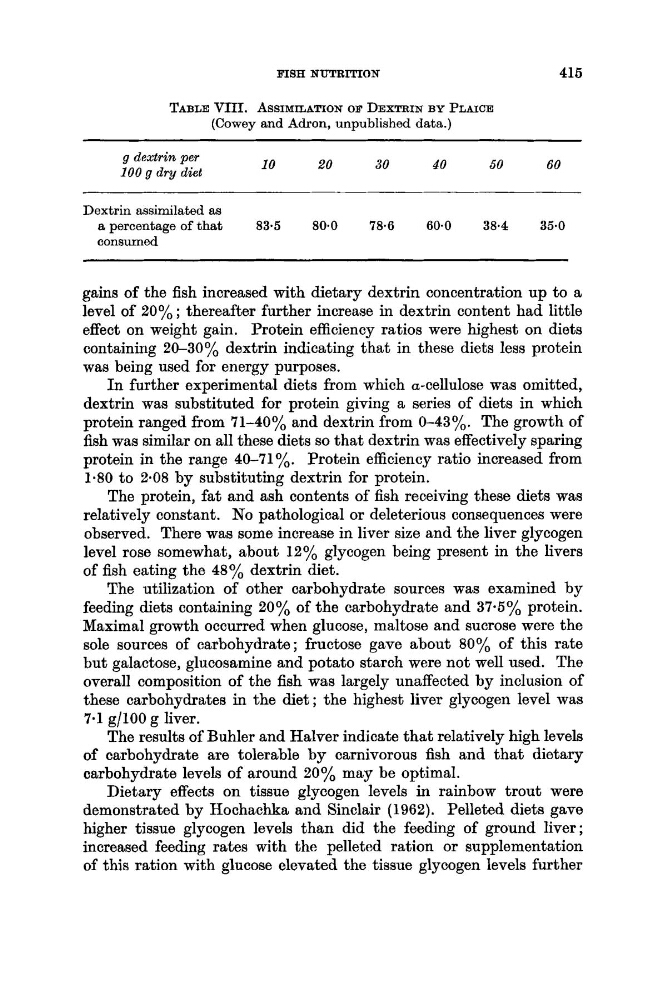
TABLE VIII. ASSIMILATION OF DEXTRIN BY PLAICE
(Cowey and Adron, unpublished data.)
g dextrin per
100 g dry diet
10
20
30
40
50
60
Dextrin assimilated as
a percentage of that
83.5
80.0
78.6
60.0
38.4
35.0
consumed
gains of the fish increased with dietary dextrin concentration up to a
level of 20% ; thereafter further increase in dextrin content had little
effect on weight gain. Protein efficiency ratios were highest on diets
containing 20-30% dextrin indicating that in these diets less protein
was being used for energy purposes.
In further experimental diets from which a-cellulose was omitted,
dextrin was substituted for protein giving a series of diets in which
protein ranged from 71-40y0 and dextrin from 0-43%. The growth of
fish was similar on all these diets so that dextrin was effectively sparing
protein in the range 40-71%. Protein efficiency ratio increased from
1.80 to 2.08 by substituting dextrin for protein.
The protein, fat and ash contents of fish receiving these diets was
relatively constant. No pathological or deleterious consequences were
observed. There was some increase in liver size and the liver glycogen
level rose somewhat, about 12% glycogen being present in the livers
of fish eating the 48% dextrin diet.
The utilization of other carbohydrate sources was examined by
feeding diets containing 20% of the carbohydrate and 37.5% protein.
Maximal growth occurred when glucose, maltose and sucrose were the
sole sources of carbohydrate; fructose gave about SOYo of this rate
but galactose, glucosamine and potato starch were not well used. The
overall composition of the fish was largely unaffected by inclusion of
these carbohydrates in the diet; the highest liver glycogen level was
7.1 g/lOO g liver.
The results of Buhler and Halver indicate that relatively high levels
of carbohydrate are tolerable by carnivorous fish and that dietary
carbohydrate levels of around 20% may be optimal.
Dietary effects on tissue glycogen levels in rainbow trout were
demonstrated by Hochachka and Sinclair (1962). Pelleted diets gave
higher tissue glycogen levels than did the feeding of ground liver;
increased feeding rates with the pelleted ration or supplementation
of this ration with glucose elevated the tissue glycogen levels further
416
TABLE VIII. ASSIMILATION OF DEXTRIN BY PLAICE
(Cowey and Adron, unpublished data.)
g dextrin per
100 g dry diet
10
20
30
40
50
60
Dextrin assimilated as
a percentage of that
83.5
80.0
78.6
60.0
38.4
35.0
consumed
gains of the fish increased with dietary dextrin concentration up to a
level of 20% ; thereafter further increase in dextrin content had little
effect on weight gain. Protein efficiency ratios were highest on diets
containing 20-30% dextrin indicating that in these diets less protein
was being used for energy purposes.
In further experimental diets from which a-cellulose was omitted,
dextrin was substituted for protein giving a series of diets in which
protein ranged from 71-40y0 and dextrin from 0-43%. The growth of
fish was similar on all these diets so that dextrin was effectively sparing
protein in the range 40-71%. Protein efficiency ratio increased from
1.80 to 2.08 by substituting dextrin for protein.
The protein, fat and ash contents of fish receiving these diets was
relatively constant. No pathological or deleterious consequences were
observed. There was some increase in liver size and the liver glycogen
level rose somewhat, about 12% glycogen being present in the livers
of fish eating the 48% dextrin diet.
The utilization of other carbohydrate sources was examined by
feeding diets containing 20% of the carbohydrate and 37.5% protein.
Maximal growth occurred when glucose, maltose and sucrose were the
sole sources of carbohydrate; fructose gave about SOYo of this rate
but galactose, glucosamine and potato starch were not well used. The
overall composition of the fish was largely unaffected by inclusion of
these carbohydrates in the diet; the highest liver glycogen level was
7.1 g/lOO g liver.
The results of Buhler and Halver indicate that relatively high levels
of carbohydrate are tolerable by carnivorous fish and that dietary
carbohydrate levels of around 20% may be optimal.
Dietary effects on tissue glycogen levels in rainbow trout were
demonstrated by Hochachka and Sinclair (1962). Pelleted diets gave
higher tissue glycogen levels than did the feeding of ground liver;
increased feeding rates with the pelleted ration or supplementation
of this ration with glucose elevated the tissue glycogen levels further