

470
N. BAIAKRISEINAN NAIR AND DL SARASWATHY
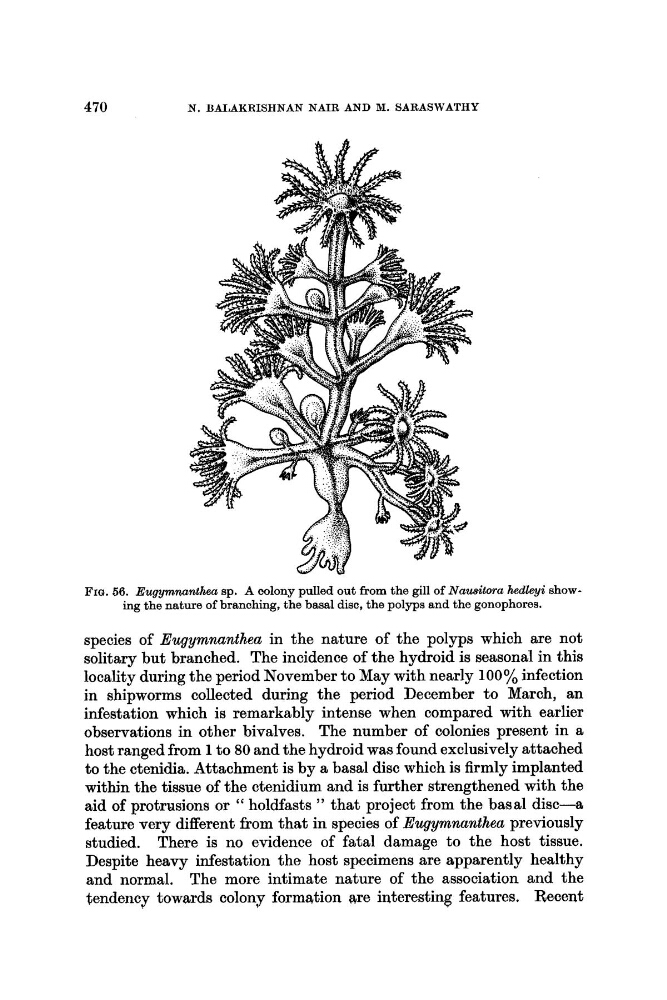
FIG. 56. Eugymnanthea sp. A colony pulled out from the gill of Nausitora hedleyi showing the nature of branching, the basal disc, the polyps and the gonophores.
species of Eugymnanthea in the nature of the polyps which are not
solitary but branched. The incidence of the hydroid is seasonal in this
locality during the period November to May with nearly 100% infection
in shipworms collected during the period December to March, an
infestation which is remarkably intense when compared with earlier
observations in other bivalves. The number of colonies present in a
host ranged from 1 to 80 and the hydroid was found exclusively attached
to the ctenidia. Attachment is by a basal disc which is firmly implanted
within the tissue of the ctenidium and is further strengthened with the
aid of protrusions or " holdfasts " that project from the basal disc-a
feature very different from that in species of Eugymnanthea previously
studied. There is no evidence of fatal damage to the host tissue.
Despite heavy infestation the host specimens are apparently healthy
and normal. The more intimate nature of the association and the
tendency towards colony formation are interesting features. Recent
N. BAIAKRISEINAN NAIR AND DL SARASWATHY
FIG. 56. Eugymnanthea sp. A colony pulled out from the gill of Nausitora hedleyi showing the nature of branching, the basal disc, the polyps and the gonophores.
species of Eugymnanthea in the nature of the polyps which are not
solitary but branched. The incidence of the hydroid is seasonal in this
locality during the period November to May with nearly 100% infection
in shipworms collected during the period December to March, an
infestation which is remarkably intense when compared with earlier
observations in other bivalves. The number of colonies present in a
host ranged from 1 to 80 and the hydroid was found exclusively attached
to the ctenidia. Attachment is by a basal disc which is firmly implanted
within the tissue of the ctenidium and is further strengthened with the
aid of protrusions or " holdfasts " that project from the basal disc-a
feature very different from that in species of Eugymnanthea previously
studied. There is no evidence of fatal damage to the host tissue.
Despite heavy infestation the host specimens are apparently healthy
and normal. The more intimate nature of the association and the
tendency towards colony formation are interesting features. Recent