

THE BIOLOGY OF WOOD-BORING TEREDINID MOLLUSCS
467
of Limnoria, a lower salinity with higher temperature is better for
Teredo. The author also noticed that Limnoria can protect piling from
Teredo if the latter do not attack too heavily during the first season. A
similar view has been expressed by Cormio (1947).
That heavy crustacean attack may assist in the destruction of shipworms has also been reported (Walsh, 1920; Miller, 1926; Roch, 1937)
although the process involved has not been clearly explained. It is
probable that heavy crustacean attack may lay bare the ends of the
teredinid tubes exposing them to mechanical damage and even killing
the animals.
0. Parasites and associates
The role of molluscs as hosts of zoo-parasites has been well known
for over two centuries. Much detailed work has been done in recent
years regarding the host-parasite relationships. Great interest has been
shown in the symbionts of marine molluscs, partly owing to the
economic implications and also on account of a general surge of interest
in marine biology. Even here, greater attention was naturally paid to
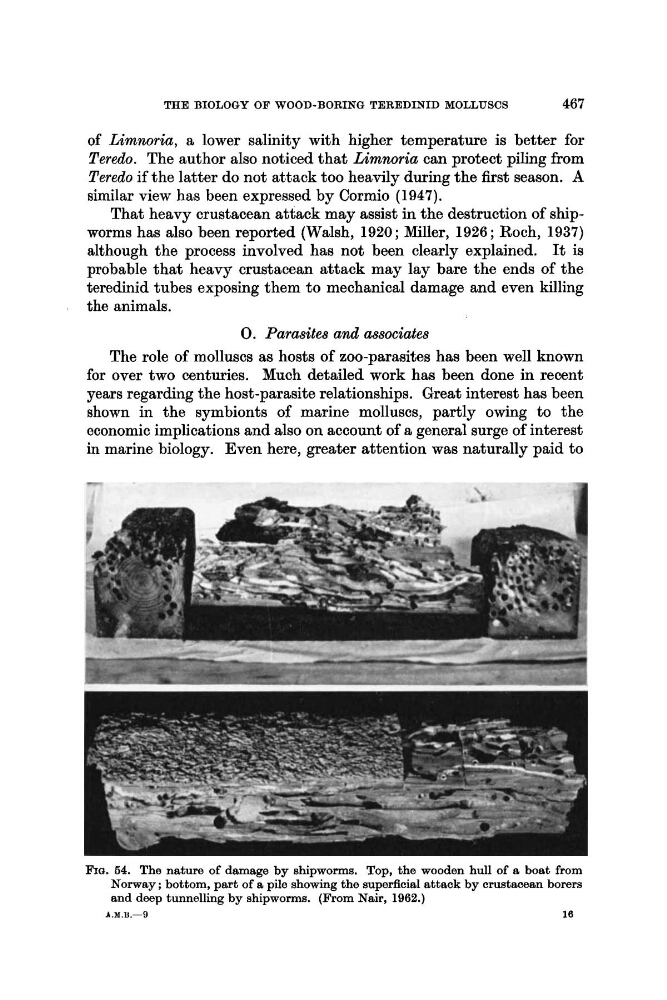
FIG. 54. The nature of damage by shipworms. Top, the wooden hull of a boat from
Norway; bottom, part of a pile showing the superficial attack by crustacean borers
and deep tunnelling by shipworms. (From Nair, 1962.)
A.X.H.-9
16
467
of Limnoria, a lower salinity with higher temperature is better for
Teredo. The author also noticed that Limnoria can protect piling from
Teredo if the latter do not attack too heavily during the first season. A
similar view has been expressed by Cormio (1947).
That heavy crustacean attack may assist in the destruction of shipworms has also been reported (Walsh, 1920; Miller, 1926; Roch, 1937)
although the process involved has not been clearly explained. It is
probable that heavy crustacean attack may lay bare the ends of the
teredinid tubes exposing them to mechanical damage and even killing
the animals.
0. Parasites and associates
The role of molluscs as hosts of zoo-parasites has been well known
for over two centuries. Much detailed work has been done in recent
years regarding the host-parasite relationships. Great interest has been
shown in the symbionts of marine molluscs, partly owing to the
economic implications and also on account of a general surge of interest
in marine biology. Even here, greater attention was naturally paid to
FIG. 54. The nature of damage by shipworms. Top, the wooden hull of a boat from
Norway; bottom, part of a pile showing the superficial attack by crustacean borers
and deep tunnelling by shipworms. (From Nair, 1962.)
A.X.H.-9
16